Feedback
How do you ask for feedback people will give?
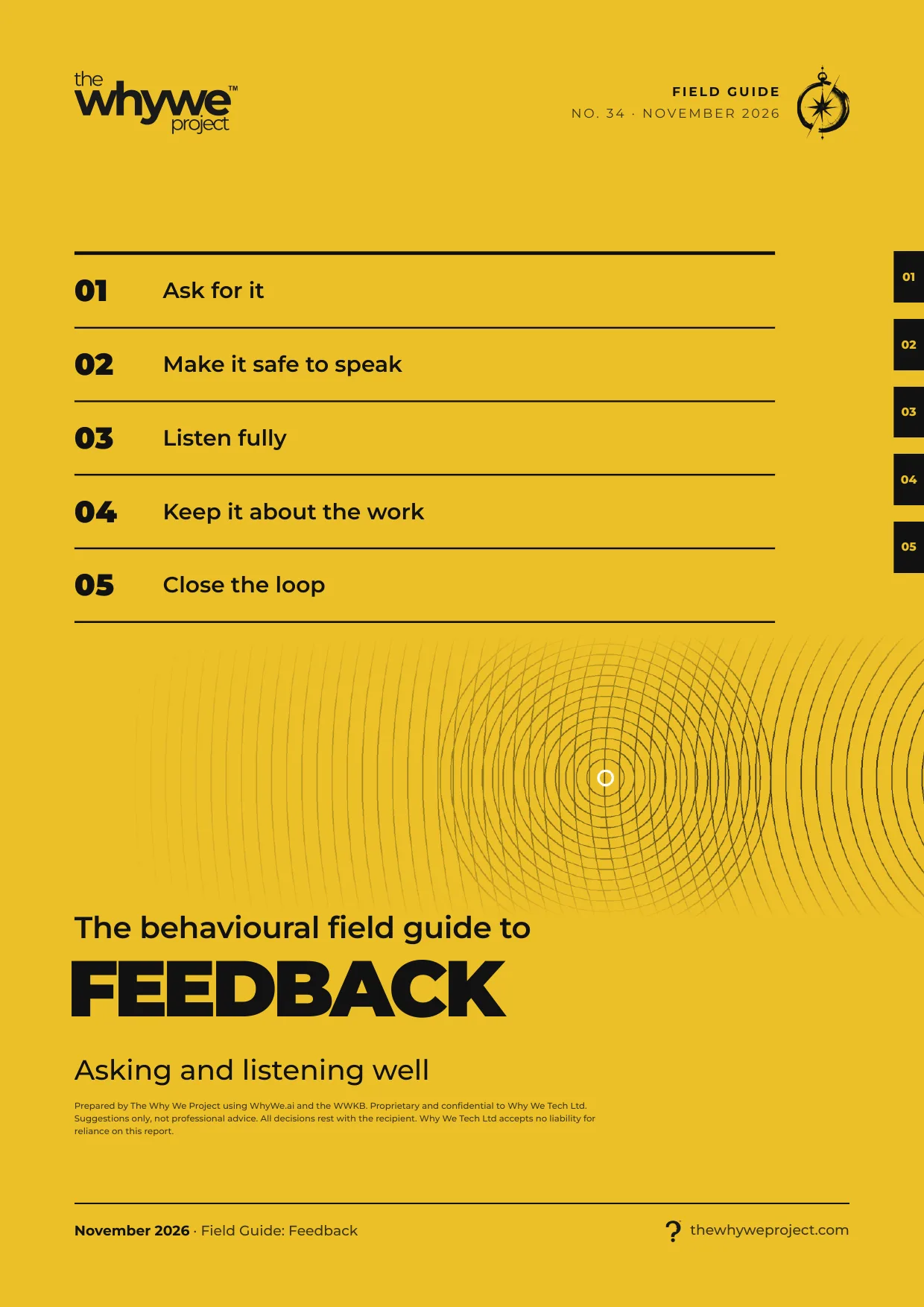
Ask for advice rather than a verdict, with one specific question soon after the moment, and make honest answers safe by going first and thanking the first voice. Listen until you understand, reflecting back before offering solutions, keep any feedback you give on the work and the next step, and close the loop by telling people what changed and explaining any no with care.
What the report found
- Ask for it. People seek feedback by asking and by watching, and they ask more where relationships are good. How an organisation asks matters too: customers asked for advice felt closer to it, while those asked for their expectations felt more distant, and customers who took part in a satisfaction survey went on to buy more.
- Make it safe to speak. Across 136 samples, feeling safe to take interpersonal risks went with learning, sharing information and better performance. Managers who were open to ideas heard more of them, and people who held back most often feared being seen in a negative light.
- Listen fully. Listening with empathy and without judgement eased speakers' anxiety and left their views more considered. Reflecting back made people feel more understood than advice did, and a few dozen one to one customer interviews uncovered about nine in ten needs.
- Keep it about the work. Feedback improves performance on average, but in over a third of cases it lowered it, and it worked less well as attention moved from the task to the person. The most useful feedback answers three questions: where am I going, how am I going and where to next.
- Close the loop. Customers thought more highly of firms that let users shape or choose products, and that effect faded when the choice was not honoured. When a suggestion could not be taken up, a considerate explanation kept people speaking up.
Who it is for
For team leaders, managers, service and product teams, researchers and anyone who asks colleagues or customers how they are doing, or gives feedback in return.
How we work
Field Guides turn the evidence into principles, each with the research, a worked example and what to try and watch out for. Every claim is graded, and where researchers disagree, as they do on whether praise or correction helps people more, both sides are set out before we say where we stand.
Cite this report
The Why We Project (2026) Feedback: Asking and listening well. Field Guide No. 34. Dubai: Why We Tech Ltd. Available at: thewhyweproject.com
In these themes
- Motivation and Goals
What moves people to start, to continue and to finish.