Friction
What is a sludge audit?
A sludge audit maps every step, document and minute a process demands, asks why each exists and cuts what adds nothing. Small cuts can matter: eight minutes of help with a US student aid form raised college enrolment from 34 to 42 per cent, and the UAE saved customers over 12 million hours by removing more than 4,000 government procedures.
What the report found
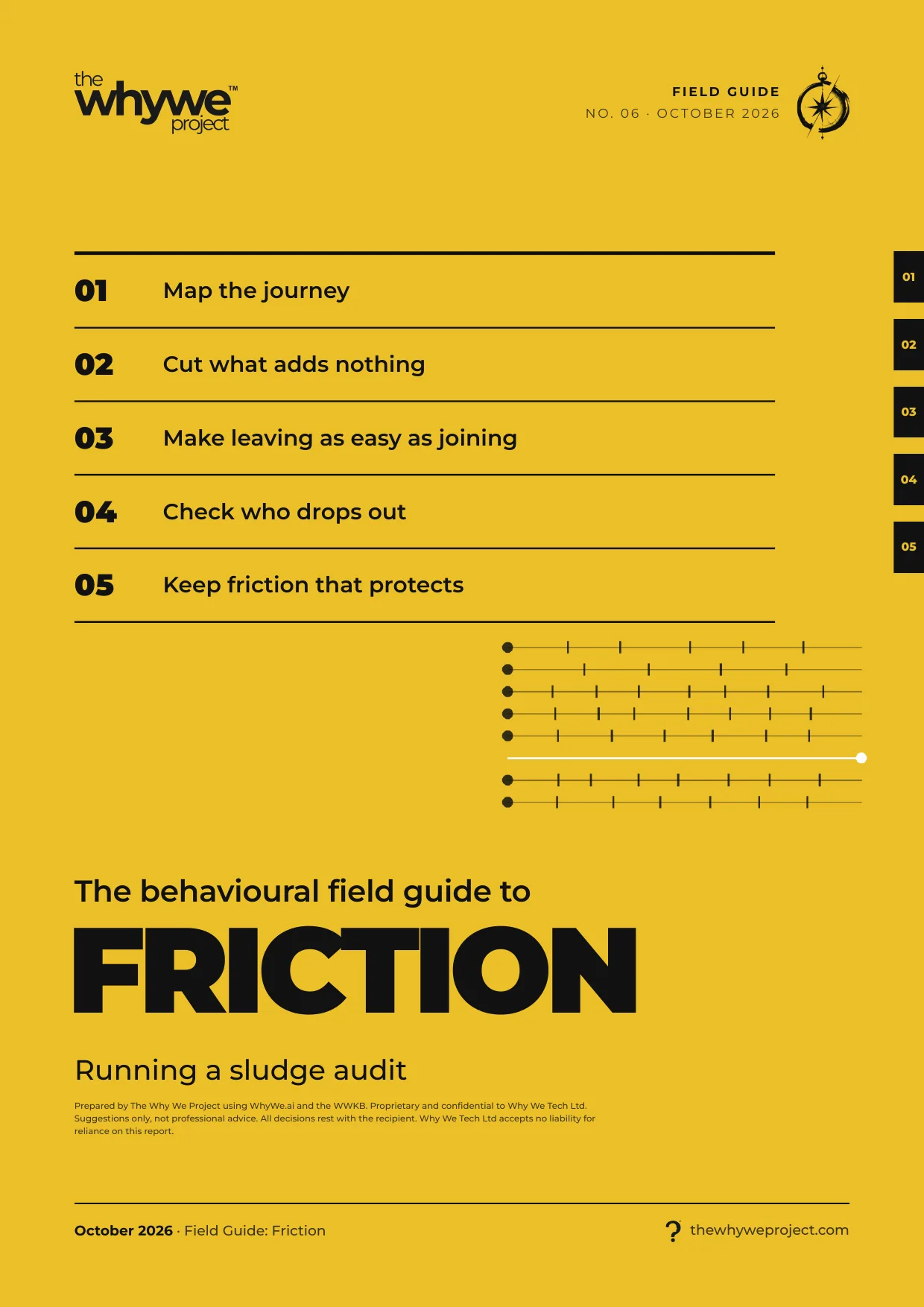
- Map the journey before changing it. A sludge audit counts every step, document and minute a task takes, and asks why each exists. Most sludge is invisible to the people who designed it.
- Cut what adds nothing. Eight minutes of help filling in a US student aid form raised college enrolment from 34 to 42 per cent. The UAE's first phase of cutting bureaucracy removed more than 4,000 procedures and saved customers over 12 million hours.
- Make leaving as easy as joining. A subscription that takes one tap to start should take no more effort to end. Symmetry is the simplest test of fairness.
- Check who drops out. Friction does not fall equally. It sorts people by time, confidence and familiarity with forms, and can screen out the very people a process was built for.
- Keep friction that protects. A pause before a large or risky decision can help, and people value a service more when they can see the work behind it. The aim is not zero friction, but friction that serves the user.
Who it is for
For anyone who designs forms, checkouts, sign-ups, claims or cancellations, in business or government.
How we work
Field Guides turn behavioural science into practical principles, each with the evidence, a worked example and what to watch out for. Every claim is graded Established, Emerging or Untested, and where researchers disagree, as they do on whether all friction should go, both sides are set out before we say where we stand.
Cite this report
The Why We Project (2026) Friction: Running a sludge audit. Field Guide No. 06. Dubai: Why We Tech Ltd. Available at: thewhyweproject.com