Green Choices
How do you help people make sustainable choices?
Set up the choice before writing the message. Make the green option the default with a clear way out, offer more of it and put it within reach, show its impact in money or familiar units at the moment of choice, share true figures about what others do, and lead with the benefit people came for, letting the green benefit add to it.
What the report found
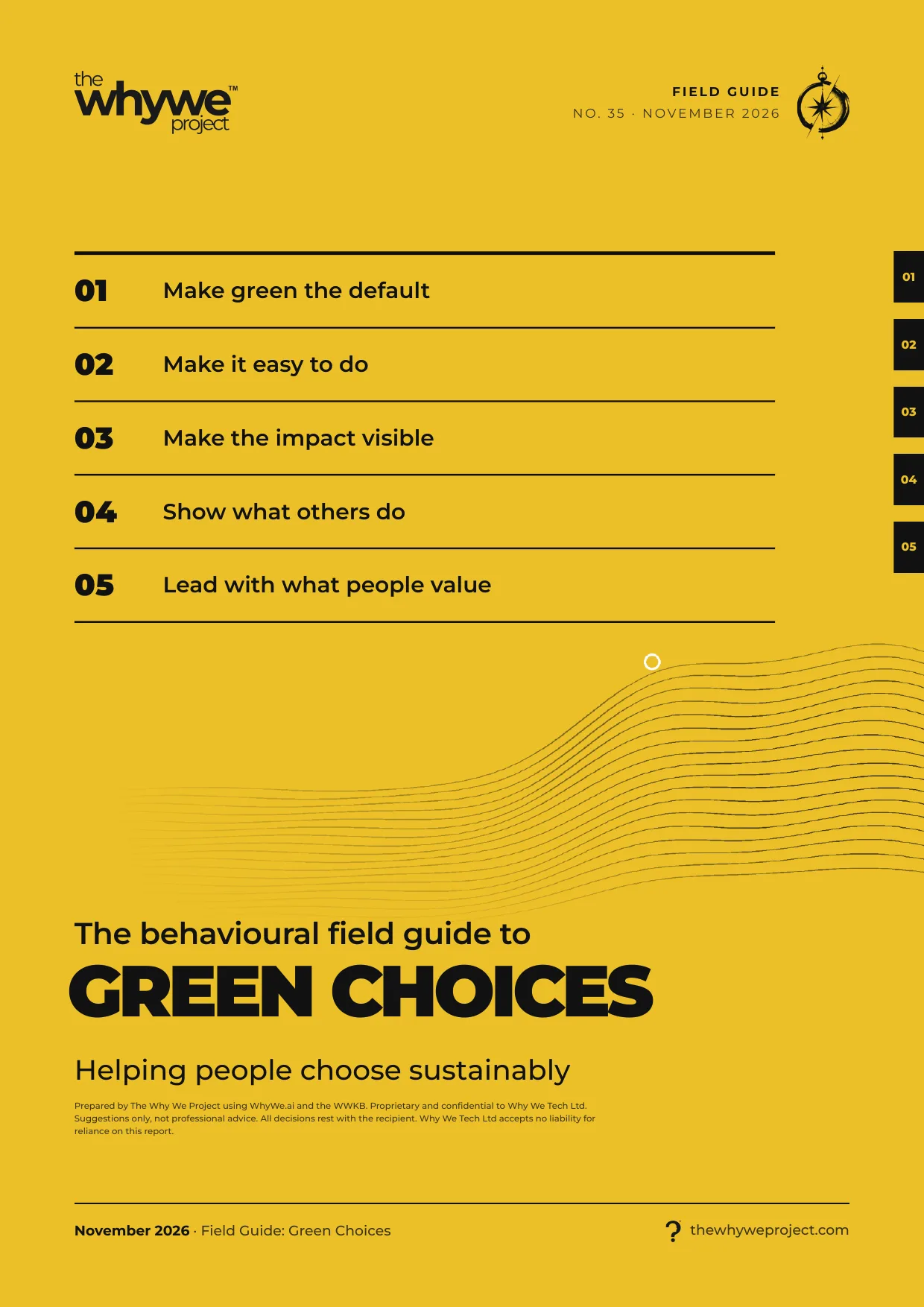
- Make green the default. When green electricity was the standard option, about four in five household and business customers kept it for at least four years. A double sided printing default cut paper use by about 15 per cent where a moral appeal had no measurable effect.
- Make it easy to do. Doubling the share of vegetarian dishes on offer raised vegetarian sales without lowering overall sales. Desk bins raised the share of paper recycled from under a third to more than four in five.
- Make the impact visible. People underestimated the energy used by everyday activities, most of all for the largest uses. Money saved and familiar units helped, and real time feedback while showering cut resource use for that task by about a fifth.
- Show what others do. Hotel guests reused towels more when told most guests did so, and reports comparing households with their neighbours cut energy use, most among the heaviest users. Telling people a green habit is growing doubled meatless orders at a café.
- Lead with what people value. Green claims helped most where gentleness was the benefit people wanted. A free tyre check framed around money drew fewer drivers than an environmental or neutral offer, and acting green made people feel good.
Who it is for
For product, service and retail teams, facilities and canteen managers, energy and utility marketers, and anyone who wants to make the sustainable option the easy one.
How we work
Field Guides turn the evidence into principles, each with the research, a worked example and what to try and watch out for. Every claim is graded, and where researchers disagree, as they do on whether one green step leads to another, both sides are set out before we say where we stand.
Cite this report
The Why We Project (2026) Green Choices: Helping people choose sustainably. Field Guide No. 35. Dubai: Why We Tech Ltd. Available at: thewhyweproject.com
In these themes
- Choice and Decision-Making
How we choose, and how the way options are laid out chooses for us.