Habits
How long does it take to form a habit?
In the best known study, a new daily habit took a median of 66 days to become automatic, with a range from 18 to 254 days. Habits form fastest when a simple routine is tied to a clear cue, repeated in the same setting and rewarding from the start. Missing a single day did not undo progress.
What the report found
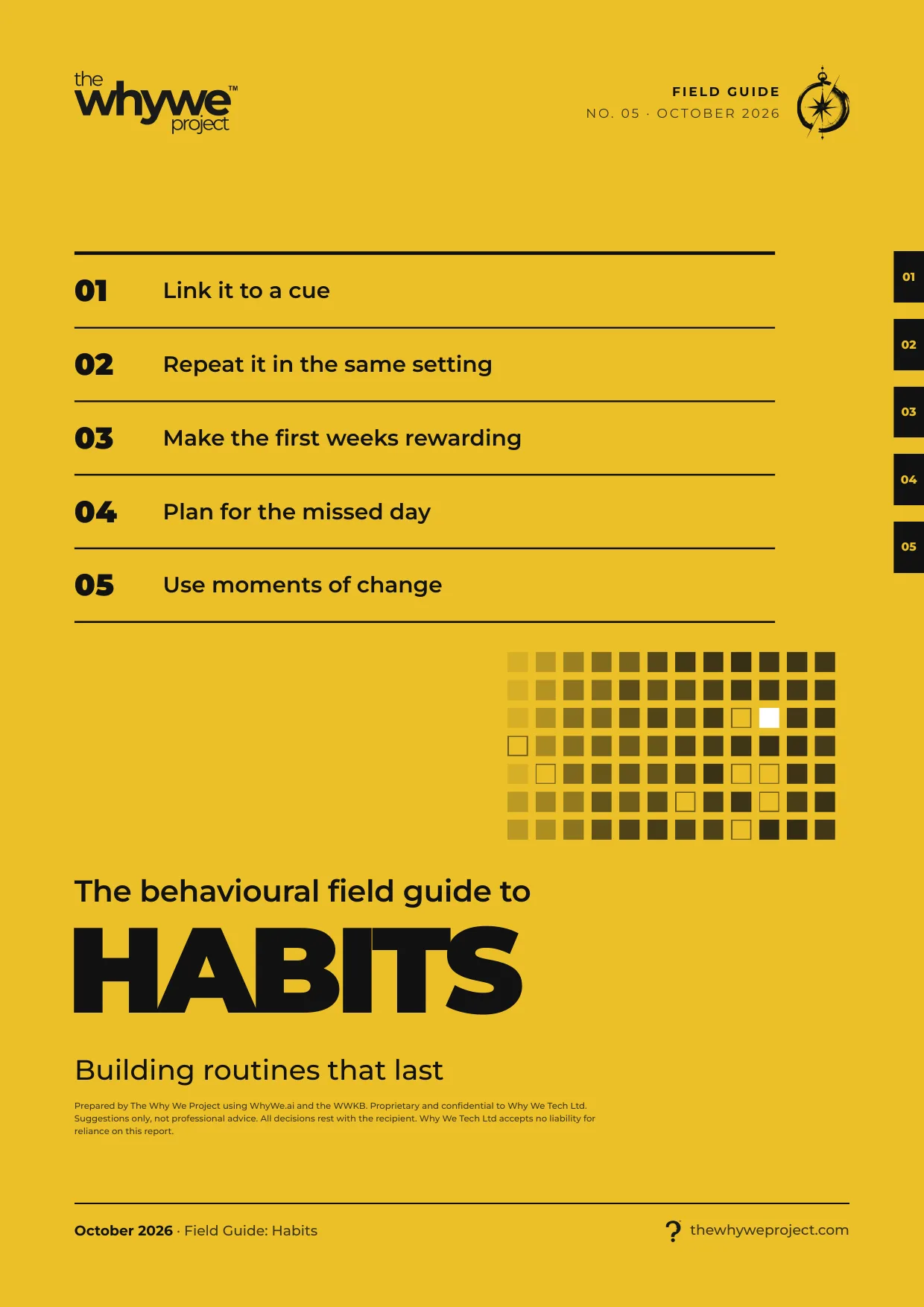
- Link it to a cue. Asking people to write down the date and time they would get a flu jab raised vaccination from 33 to 37 per cent. A plan in the form "when this happens, I will do that" turns intention into action.
- Repeat it in the same setting. Much of daily behaviour is repeated in the same place at the same time. In a study of people forming a new daily habit, it took a median of 66 days to become automatic, with a range of 18 to 254.
- Make the first weeks rewarding. Immediate enjoyment predicted whether people kept going better than long-term benefits did. Keeping gripping audiobooks for the gym raised gym visits by 51 per cent at first.
- Plan for the missed day. Missing a single day did not undo a forming habit. In a study of 61,293 gym members, the best of 54 programmes rewarded people for coming back after a missed workout.
- Use moments of change. New jobs, homes and years disrupt old cues, and campaigns to change habits worked better for people who had recently moved home.
Who it is for
For anyone trying to build a routine, for themselves, their team or their customers, from a gym or an app to a bank or an employer.
How we work
Field Guides turn behavioural science into practical principles, each with the evidence, a worked example and what to watch out for. Every claim is graded Established, Emerging or Untested, and where researchers disagree, as they do on how long a habit takes and whether incentives help, both sides are set out before we say where we stand.
Cite this report
The Why We Project (2026) Habits: Building routines that last. Field Guide No. 05. Dubai: Why We Tech Ltd. Available at: thewhyweproject.com