Loyalty
Do loyalty programmes create loyalty?
Mostly not on their own. Members of a large programme showed no more loyalty than their brands' size predicted, and heavy buyers did not change. But design features work: a car wash card with a two-stamp head start was completed by 34 per cent of customers, against 19 per cent for a card with no head start.
What the report found
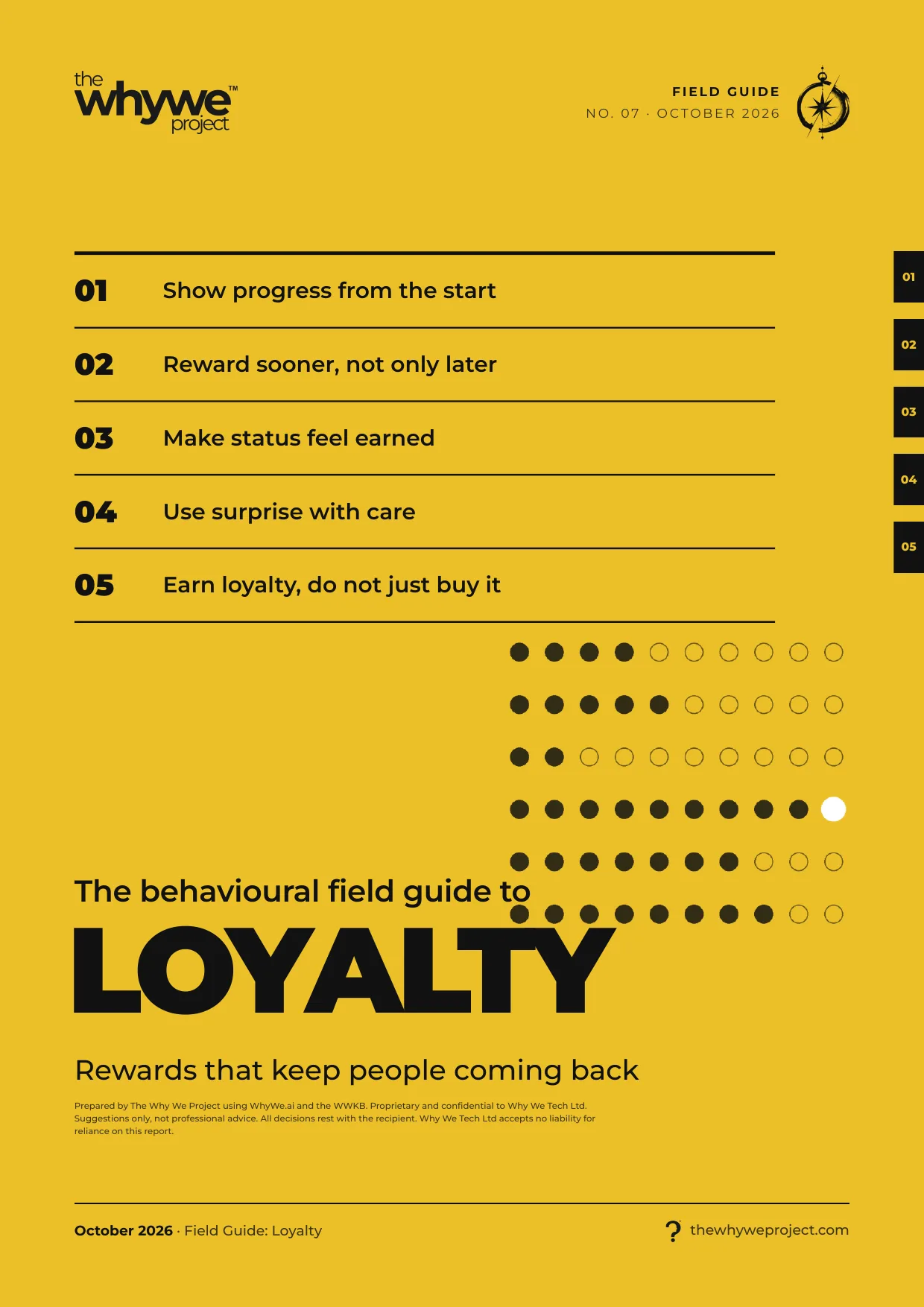
- Show progress from the start. A car wash card needing 8 stamps was completed by 19 per cent of customers. A card needing 10, with 2 already stamped, was completed by 34 per cent.
- Reward sooner, not only later. People speed up as a reward comes into view, and immediate rewards keep them going better than distant ones. Points that take too long to earn tend to sit unspent.
- Make status feel earned. Tiers make members feel special, but only if few reach them. A tier beneath the top one made top-tier members feel more special still.
- Use surprise with care. An uncertain reward can be as motivating as a certain one, and costs less. But rewards that rely on chance can feel like gambling.
- Earn loyalty, do not just buy it. Studies of large programmes found that members bought much as their brand's size would predict. The strongest effects were among occasional customers, not the most loyal.
Who it is for
For anyone who runs a loyalty scheme, points programme, membership tier or app reward, from a café to an airline.
How we work
Field Guides turn behavioural science into practical principles, each with the evidence, a worked example and what to watch out for. Every claim is graded Established, Emerging or Untested, and where researchers disagree, as they do on whether schemes create loyalty at all, both sides are set out before we say where we stand.
Cite this report
The Why We Project (2026) Loyalty: Rewards that keep people coming back. Field Guide No. 07. Dubai: Why We Tech Ltd. Available at: thewhyweproject.com