Personalisation
How do you personalise without being creepy?
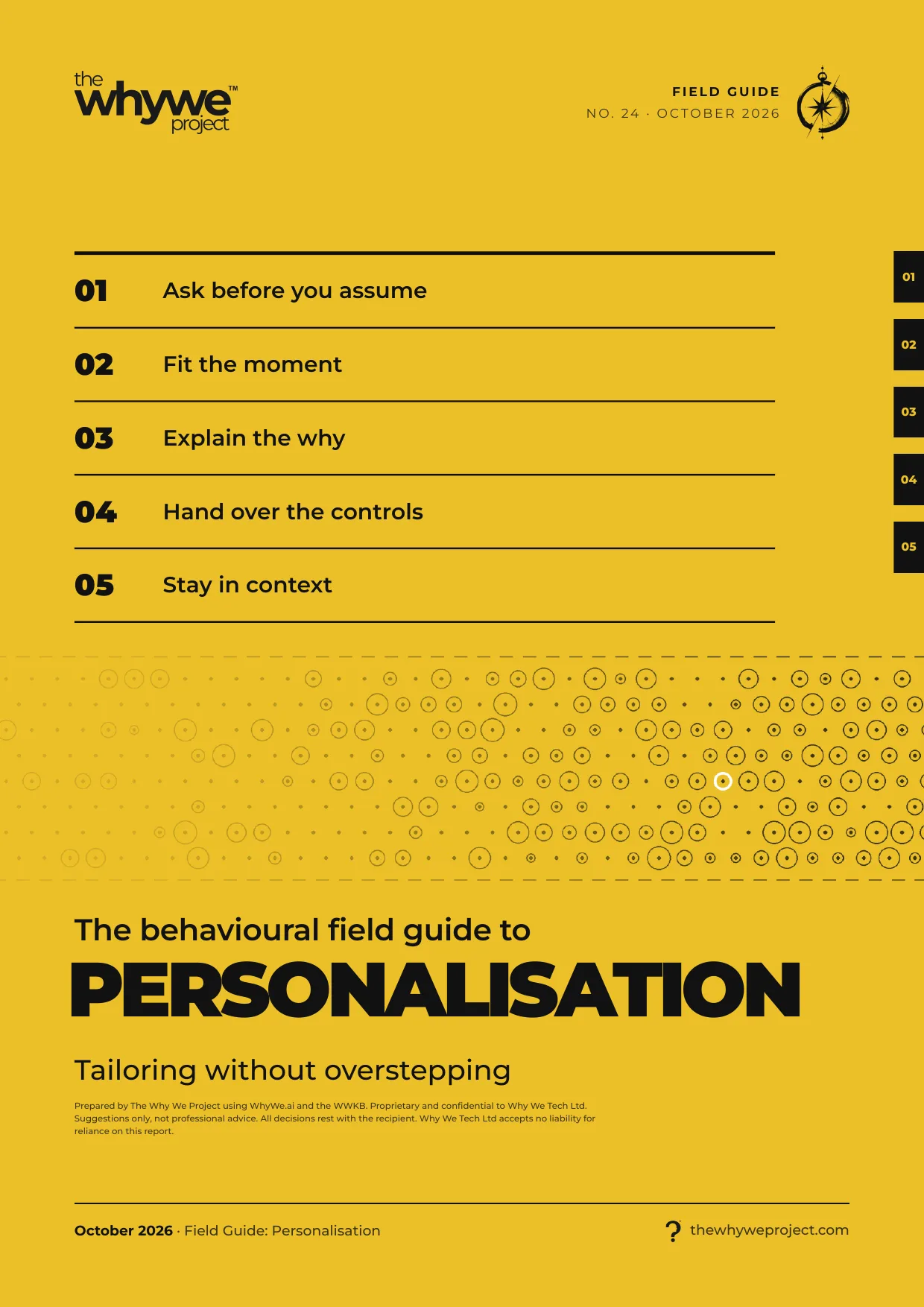
Ask people what they want before inferring it, and use what they tell you first. Match the depth of tailoring to the stage of their decision, and give specific reminders a short life. Put a short, true reason beside each suggestion, offer real controls to see, adjust, pause and delete what you hold, collect information openly and use it only for the purpose people expect.
What the report found
- Ask before you assume. People were more comfortable with tailoring built on what they had told a site than on what the site had inferred. Products tailored to the preferences people stated raised willingness to pay, and recommendations built from stated preferences cut search effort and improved choices.
- Fit the moment. Tailoring works best when it matches where a person is in a decision. Reminder ads showing a specific product did worse than general ones early in a search, and highly personal banners worked just after a visit but faded fast. A small touch, a name in an email subject line, raised opening by a fifth.
- Explain the why. Saying why someone sees a suggestion helped when the reason was one people found acceptable and they trusted the platform. Highly personal offers with no stated reason met resistance, especially when people saw little value in the offer.
- Hand over the controls. When a social networking site gave its users more control over their personal information, they became nearly twice as likely to click on personalised ads. People also used an algorithm more readily when they could adjust its output, even slightly.
- Stay in context. Information used where people expect it builds trust; information gathered quietly or carried into unexpected places erodes it. Collect openly, earn trust before going deep, and follow the widely agreed principles for handling personal data.
Who it is for
For online shops, apps and media services, marketing and customer relationship teams, product and data teams, and anyone who tailors what customers see.
How we work
Field Guides turn the evidence into principles, each with the research, a worked example and what to try and watch out for. Every claim is graded, and where researchers disagree, as they do on whether giving people control settles privacy worries, both sides are set out before we say where we stand.
Cite this report
The Why We Project (2026) Personalisation: Tailoring without overstepping. Field Guide No. 24. Dubai: Why We Tech Ltd. Available at: thewhyweproject.com