Proof
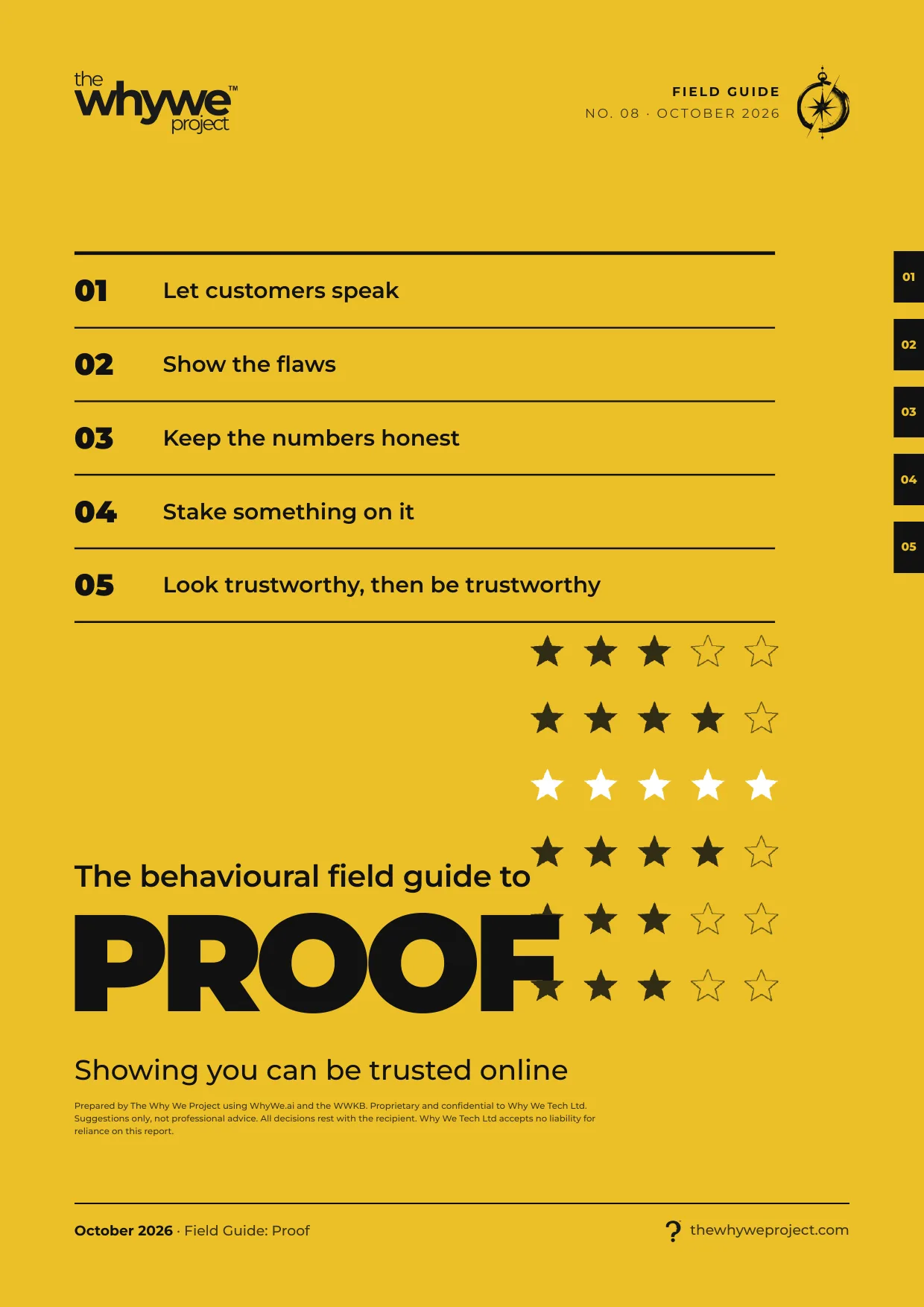
How can a business show it can be trusted online?
The most persuasive proof is the hardest to fake: real reviews from verified buyers, including mixed ones, promises such as warranties and free returns that would cost the seller if broken, and service that matches the look of the site. Perfect scores and inflated counts tend to invite doubt, and trust is lost more easily than it is won.
What the report found
- Let customers speak. Reviews move sales, and bad reviews tend to move them more than good ones. What other buyers say is the proof people look for first.
- Show the flaws. In one large study, the chance of buying peaked for products rated between 4.0 and 4.7 stars, and fell as ratings approached a perfect 5.
- Keep the numbers honest. People favour products with many reviews, even when the numbers point the other way. Verified reviews and clear disclosure of paid praise protect the value of every review.
- Stake something on it. Claims are cheap. Guarantees, warranties and independent checks are believed because they would cost a dishonest seller dearly.
- Look trustworthy, then be trustworthy. People judge a website within a fraction of a second, mostly on its look. But trust is easier to lose than to win.
Who it is for
For online sellers, marketplaces, delivery apps, brands working with creators and anyone who asks strangers to trust them with money.
How we work
Field Guides turn behavioural science into practical principles. Every claim is graded Established, Emerging or Untested. Each principle comes with the evidence, a worked example from the UAE and what to try and watch out for, and the guide ends with a worksheet and a checklist.
Cite this report
The Why We Project (2026) Proof: Showing you can be trusted online. Field Guide No. 08. Dubai: Why We Tech Ltd. Available at: thewhyweproject.com