Retail spaces
How does store layout change what people buy?
Most items bought on big shopping trips are unplanned, so layout does much of the deciding. Shoppers keep to a store's outer loop; drawing them farther raised unplanned spending by about half in one field experiment. Shelf location matters more than facings, and removing sweets from checkouts cut purchases of them by 17 per cent.
What the report found
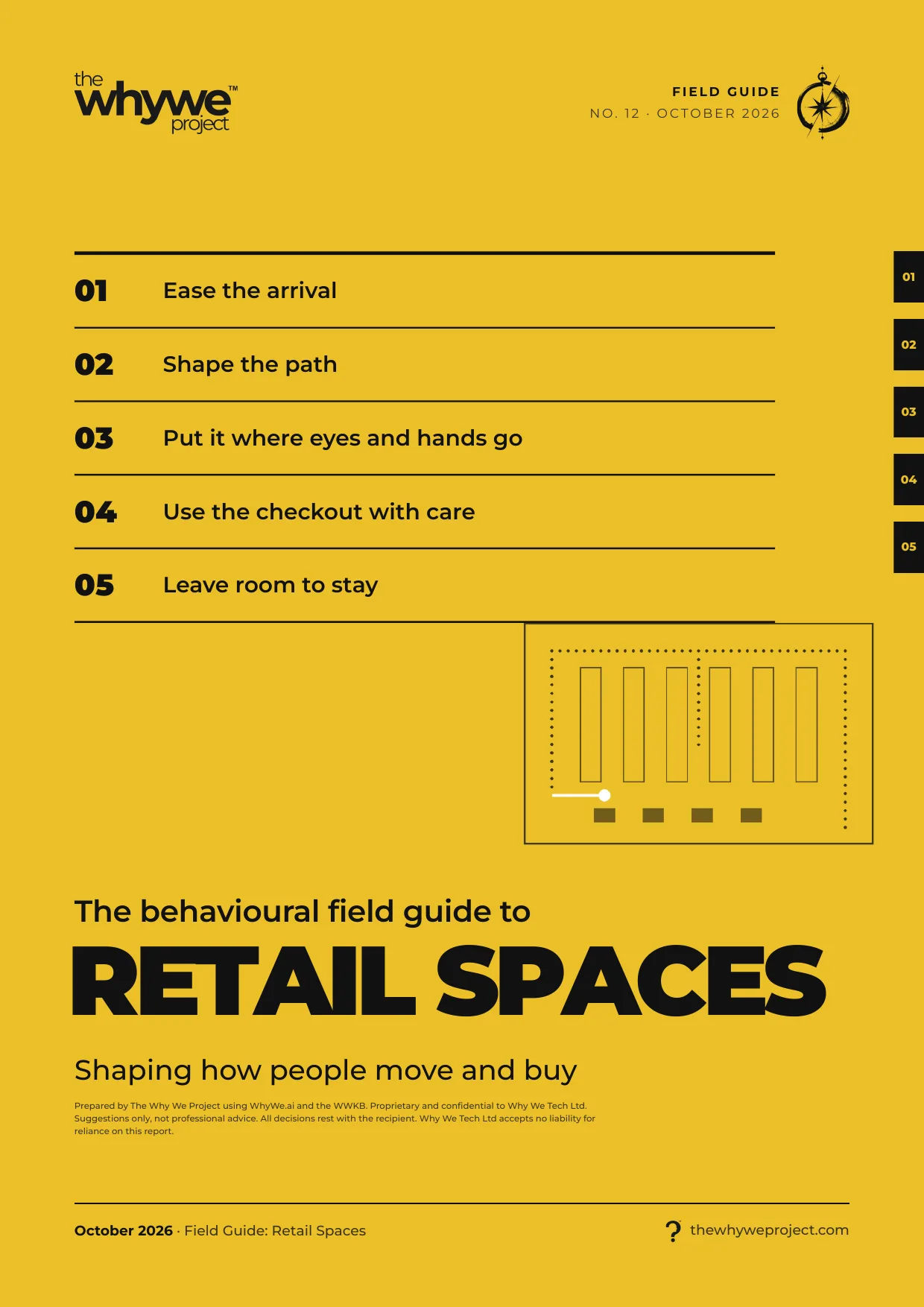
- Ease the arrival. People need a few steps to adjust when they come in, and a pleasant first impression makes them more willing to stay and explore.
- Shape the path. Shoppers keep to the main loop and dip into aisles. In one field experiment, sending them farther from their planned route raised unplanned spending by about half.
- Put it where eyes and hands go. Where a product sits on the shelf matters more to its sales than how many facings it gets, and people drift towards the centre of a display.
- Use the checkout with care. When UK supermarkets moved sweets away from tills, purchases of those foods fell by 17 per cent at once and stayed about 15 per cent lower a year later.
- Leave room to stay. Crowding lowers satisfaction, and in the Gulf the mall is a place people go to walk, meet and spend time, not only to buy.
Who it is for
For retailers, store designers, mall operators, merchandisers and anyone who decides where things go in a physical shop.
How we work
Field Guides turn the evidence into principles, each with the research, a worked example and what to try and watch out for. Every claim is graded, and where researchers disagree, as they do on selling impulse goods at the till, both sides are set out before we say where we stand.
Cite this report
The Why We Project (2026) Retail spaces: Shaping how people move and buy. Field Guide No. 12. Dubai: Why We Tech Ltd. Available at: thewhyweproject.com