Reviews
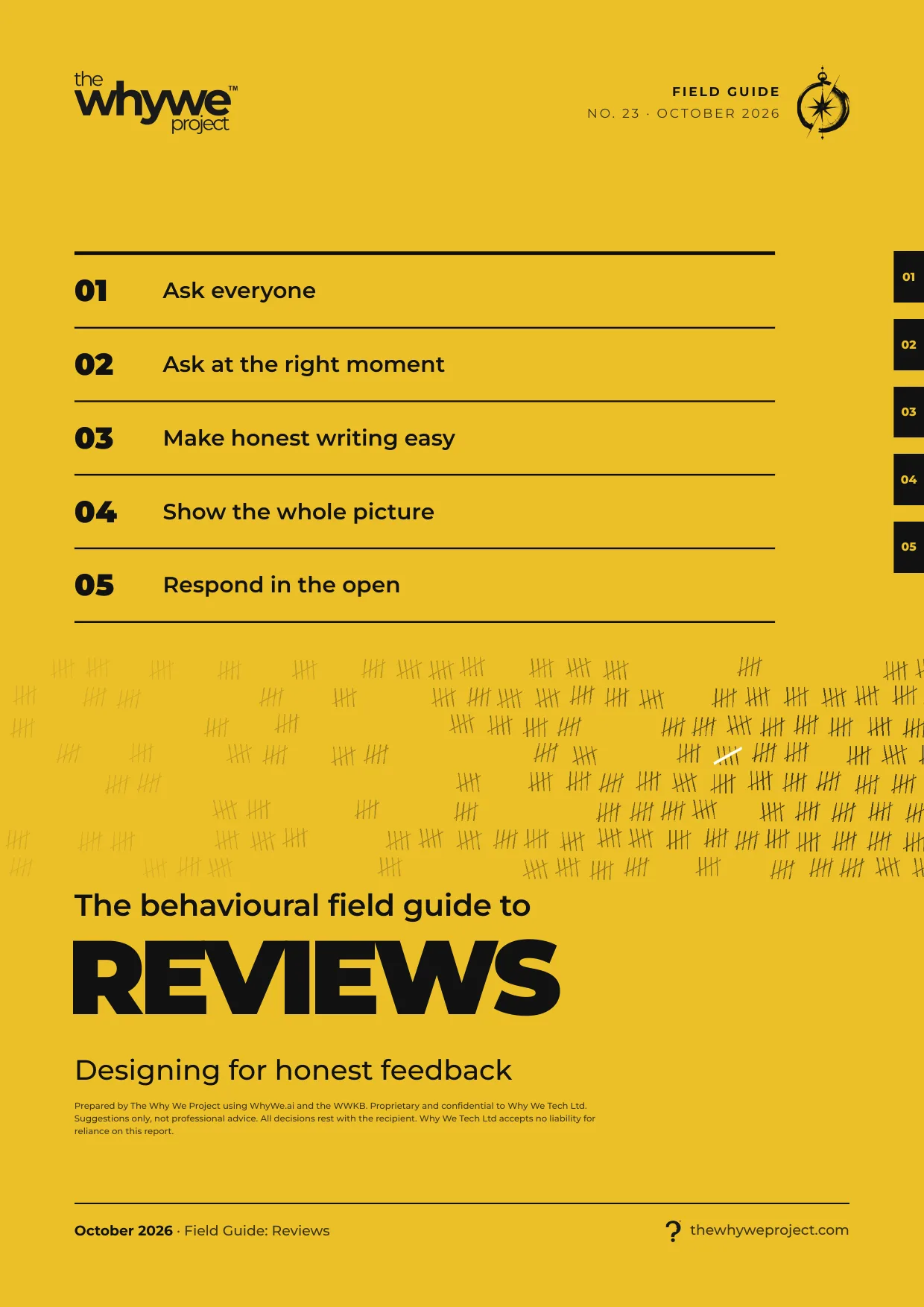
How do you design a review system people trust?
Invite every customer, not only those you expect to be pleased, and ask soon after they have used what they bought. Ask for a rating before showing other people's scores, and ask a few specific questions that draw out detail. Show the spread of ratings, the number of reviews and the dates beside every average, keep critical reviews in view, reply to them specifically and publish the rules by which reviews are gathered, checked and scored.
What the report found
- Ask everyone. People with strong views are the most likely to write unprompted, which gives many review pages a J shape: many top marks, some lowest marks and few in between. Inviting every customer brought in more reviews, with ratings that held steady over time.
- Ask at the right moment. People remember an experience by its high point and its end. Ask soon after real use, and where both sides review each other, reveal both reviews together: in a large experiment this raised the number of reviews and reduced tit for tat ratings.
- Make honest writing easy. Ask for a rating before showing other people's scores, since one early positive vote raised final scores by a quarter in a large experiment. Ask specific questions that draw out detail, which readers find most helpful.
- Show the whole picture. Show the spread of ratings, the number of reviews and the dates, and keep critical reviews. People were most likely to buy at ratings a little below a perfect score, and they read the count as well as the average.
- Respond in the open. Hotels that began replying to reviews went on to receive slightly higher ratings and more reviews. Moderate positive and negative reviews in the same way, label any review that was rewarded, and explain how scores are worked out.
Who it is for
For online shops, hotels and restaurants, app makers, service firms, marketplaces, product and customer experience teams, and anyone who collects or shows customer reviews.
How we work
Field Guides turn the evidence into principles, each with the research, a worked example and what to try and watch out for. Every claim is graded, and where researchers disagree, as they do on whether people should be rewarded for writing reviews, both sides are set out before we say where we stand.
Cite this report
The Why We Project (2026) Reviews: Designing for honest feedback. Field Guide No. 23. Dubai: Why We Tech Ltd. Available at: thewhyweproject.com