Storytelling
Why do stories persuade better than facts?
Stories absorb people, and absorbed readers feel more, argue less and shift towards the story's view. One named person drew about twice the giving of a statistical appeal, and words linked into a story were far better remembered. Statistics still move beliefs more; stories move intentions more, so the strongest messages use both.
What the report found
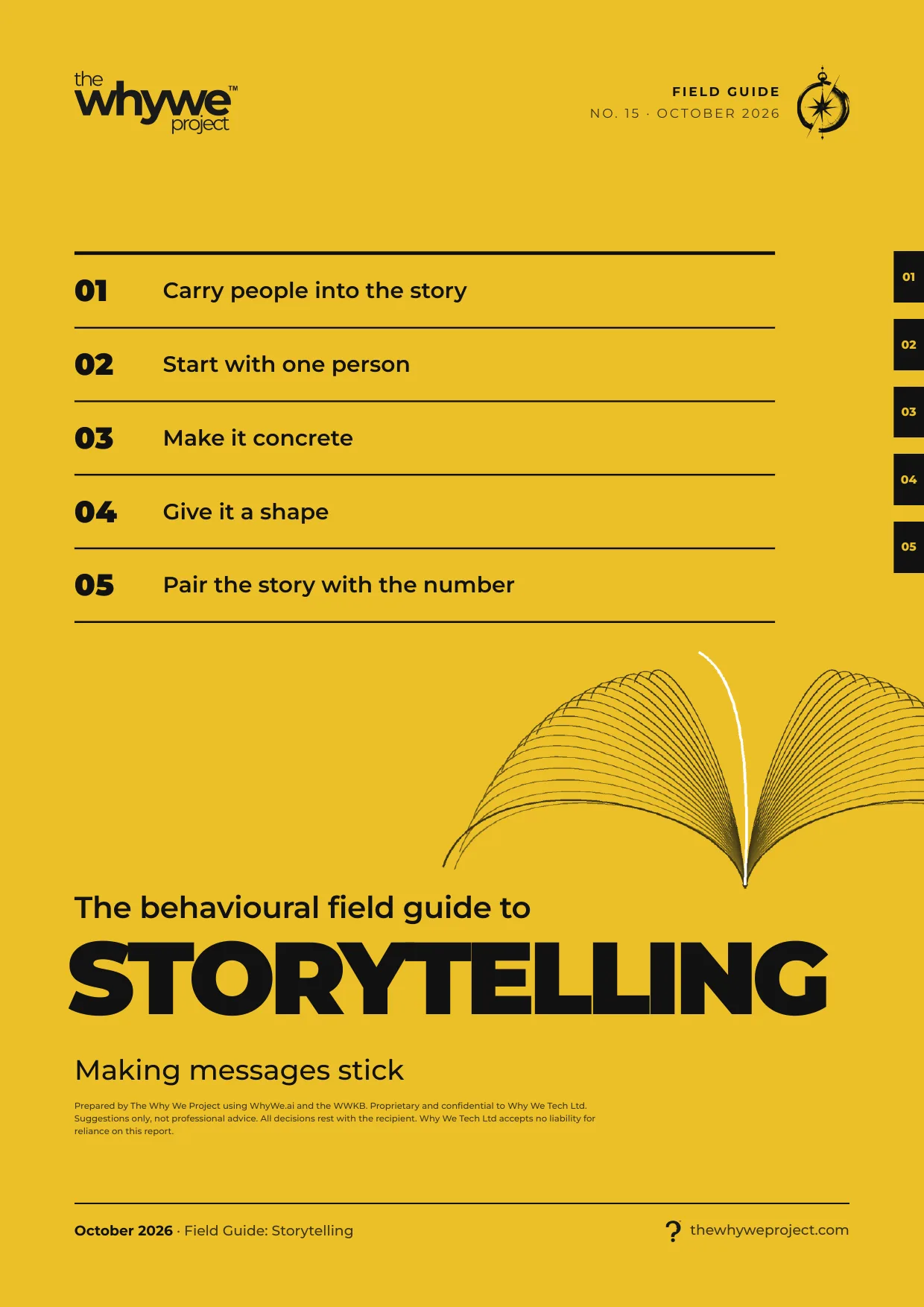
- Carry people into the story. Being absorbed in a story is linked to warmer feelings, firmer beliefs and fewer counterarguments. Across 76 articles, the strongest link was with how people felt.
- Start with one person. In one field study, people gave about twice as much to help one named child as they gave in response to a statistical appeal. The effect is real but modest, and strongest when there is a single person to meet.
- Make it concrete. People who linked word lists into little stories later recalled 93 per cent of the words, against 13 per cent for those who simply rehearsed them.
- Give it a shape. A story needs a person, a problem and a turn. Among 108 television advertisements, those with a fuller dramatic structure were rated more favourably.
- Pair the story with the number. Statistics tend to move beliefs and stories tend to move intentions. Use each for its job, lead with the person and let one clear number confirm the scale.
Who it is for
For marketers, communicators, founders, fundraisers, educators and anyone who needs a message to be understood, remembered and acted on.
How we work
Field Guides turn the evidence into principles, each with the research, a worked example and what to try and watch out for. Every claim is graded, and where researchers disagree, as they do on whether stories or statistics persuade more, both sides are set out before we say where we stand.
Cite this report
The Why We Project (2026) Storytelling: Making messages stick. Field Guide No. 15. Dubai: Why We Tech Ltd. Available at: thewhyweproject.com