Belonging
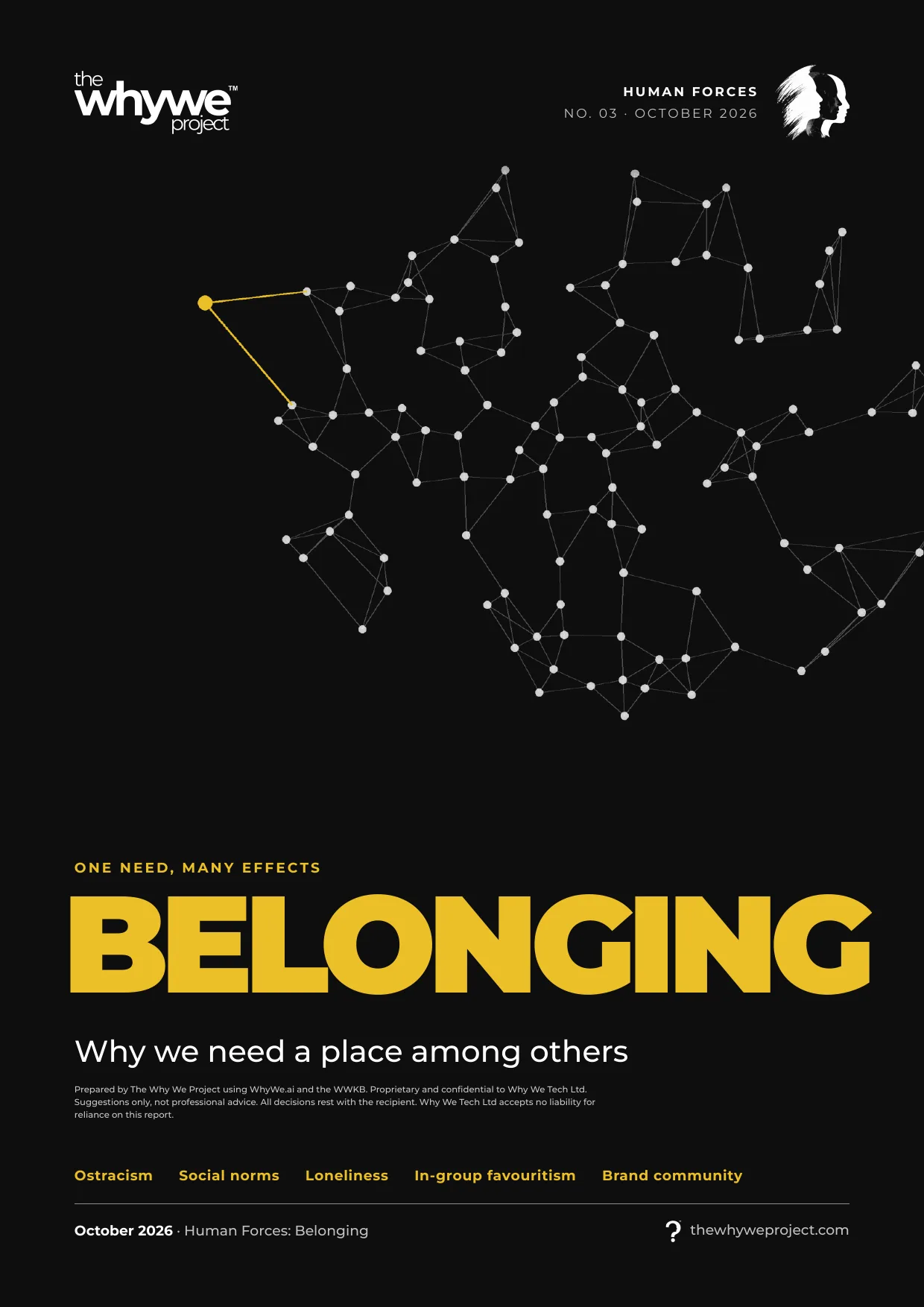
Why do humans need to belong?
Belonging is a fundamental motive: people need regular positive contact within lasting relationships. A few minutes of exclusion by strangers lowers mood and self-esteem, and people with stronger social ties are about 50 per cent more likely to survive over the years studied.
What the report found
- The need to belong is fundamental. A landmark review argued that people need frequent, positive contact within lasting relationships, and that its lack causes harm much as hunger does. People favour their own group even when it is based on nothing more than a taste for one painter over another.
- Being left out hurts, fast. In an online ball game with strangers, being excluded for a few minutes lowered people's sense of belonging and self-esteem, even though the other players were strangers and nothing was at stake.
- Connection is a matter of life and death. Across 148 studies, people with stronger social relationships were about 50 per cent more likely to survive the follow-up period. The World Health Organization estimates that loneliness affects about one in six people and is linked to more than 871,000 deaths a year.
- People buy and behave to belong. After being excluded, people spent strategically to fit in. Telling hotel guests that most guests reused their towels raised reuse from 35 to 44 per cent.
- Belonging can be built, and abused. A brief exercise that told new students that worries about belonging are common and pass helped them stay in college, where the setting gave them a real chance to fit in. The same need can be used to pressure people into spending or conforming.
What is inside
- Why we need to belong
- The pain of being left out
- Belonging and health
- Buying and behaving to belong
- Belonging across life
- When belonging misleads us
Plus a map of where belonging shapes everyday life, the health evidence, a graded list of claims and a five-question checklist.
Who it is for
For anyone who has felt left out, and anyone who builds teams, schools, communities or brands.
How we work
Human Forces reports explain one deep human need and the many effects that grow from it. Every claim is graded Established, Emerging or Untested. Where researchers disagree, as they do on whether social pain is like physical pain, both sides are set out before we say where we stand.
Cite this report
The Why We Project (2026) Belonging: Why we need a place among others. Human Forces No. 03. Dubai: Why We Tech Ltd. Available at: thewhyweproject.com