Payday
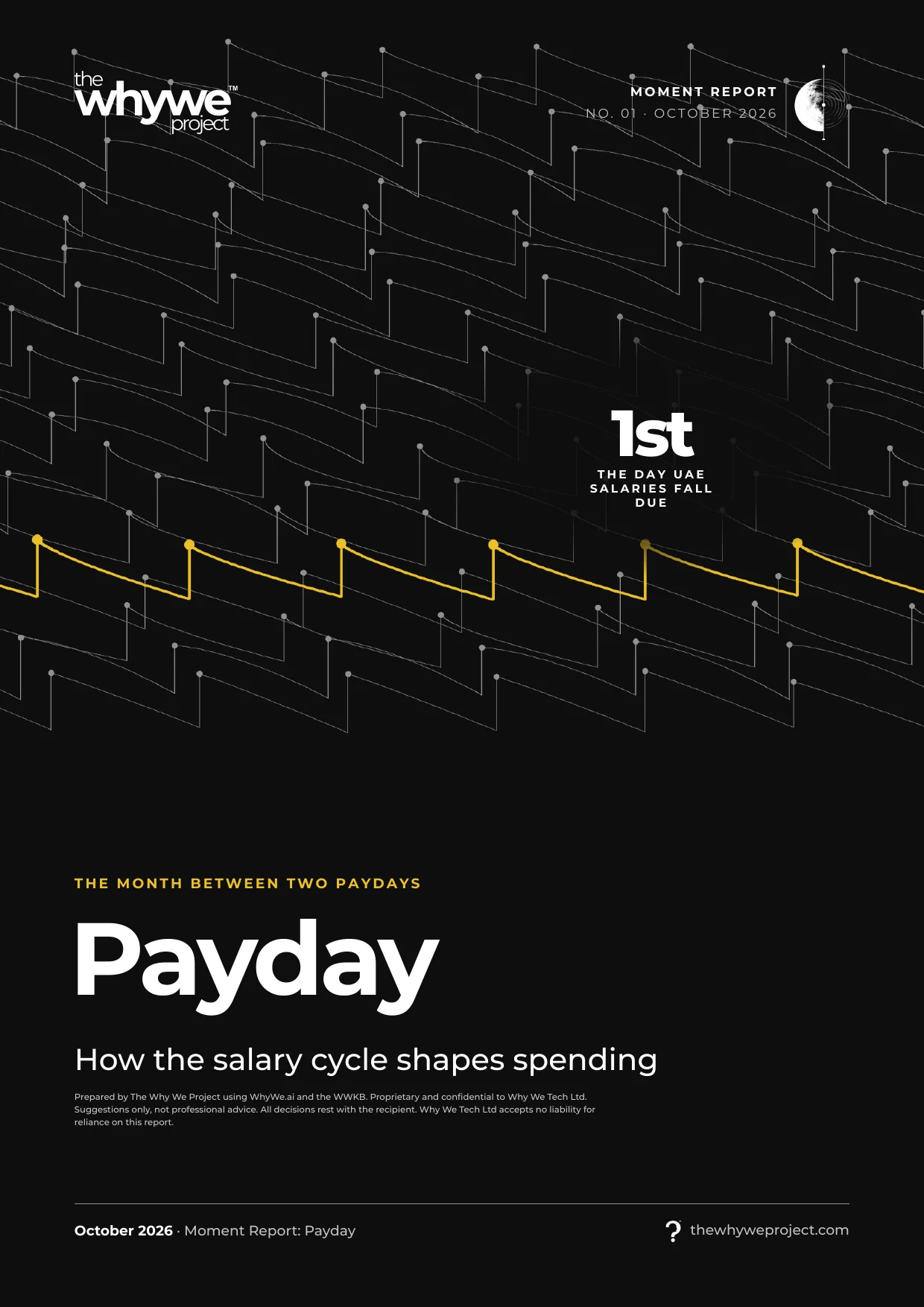
How does payday change spending in the UAE and the Gulf?
In the UAE most private salaries now fall due by the 1st of each month, and loan repayments are capped at half the salary. Spending rises when money arrives, much of it bills and money sent home, and eases as the month goes on; research elsewhere shows that clear borrowing costs and regular pay help households spread spending evenly.
What the report found
- The UAE now has one payday. From June 2026, private sector salaries in the UAE are due by the first day of the following month, paid through the Wages Protection System, and any later payment counts as late. Credit is tied to the same salary: repayments on all loans may not exceed half of it.
- The month is not flat. Spending rises when money arrives and falls as the balance runs down. For people with no savings, the drop reaches the food on the table: retirees without savings ate a quarter fewer calories in the week before their cheque than in the week after.
- Running short changes choices, though the evidence on how much is mixed. A famous study found that farmers thought less clearly before harvest than after. A study of American workers around payday found no such difference, only a little more impatience about money.
- Payday money travels. UAE residents sent 115.7 billion dirhams in personal remittances abroad in 2025. For millions of Gulf workers, payday is also the day they support family at home.
- The rhythm can be redesigned. Payment frequency changes behaviour, and showing borrowing costs in money rather than rates reduced borrowing. The UAE has already redesigned its payday once; when and how people are paid is a design decision, not a fact of nature.
What is inside
- Payday in the UAE and the Gulf
- Before payday: the squeeze
- Payday: the release
- After payday: bridging the gap
- The Gulf's clock and others
Plus a phase map of the salary month, a day-by-day diary page, a data panel, Gulf and international pay rhythms, a graded list of claims and a five-question checklist.
Who it is for
For anyone in the UAE and the Gulf who pays, lends to or sells to people on a monthly salary, and anyone who lives by one.
How we work
Moment Reports explain what changes in the mind before, during and after one moment, starting with the UAE and then the wider Gulf. Every claim is graded Established, Emerging or Untested. Where researchers disagree, as they do on whether running short changes how people think, both sides are set out before we say where we stand.
Cite this report
The Why We Project (2026) Payday: How the salary cycle shapes spending. Moment Report No. 01. Dubai: Why We Tech Ltd. Available at: thewhyweproject.com