Why an Experience Makes a Better Gift
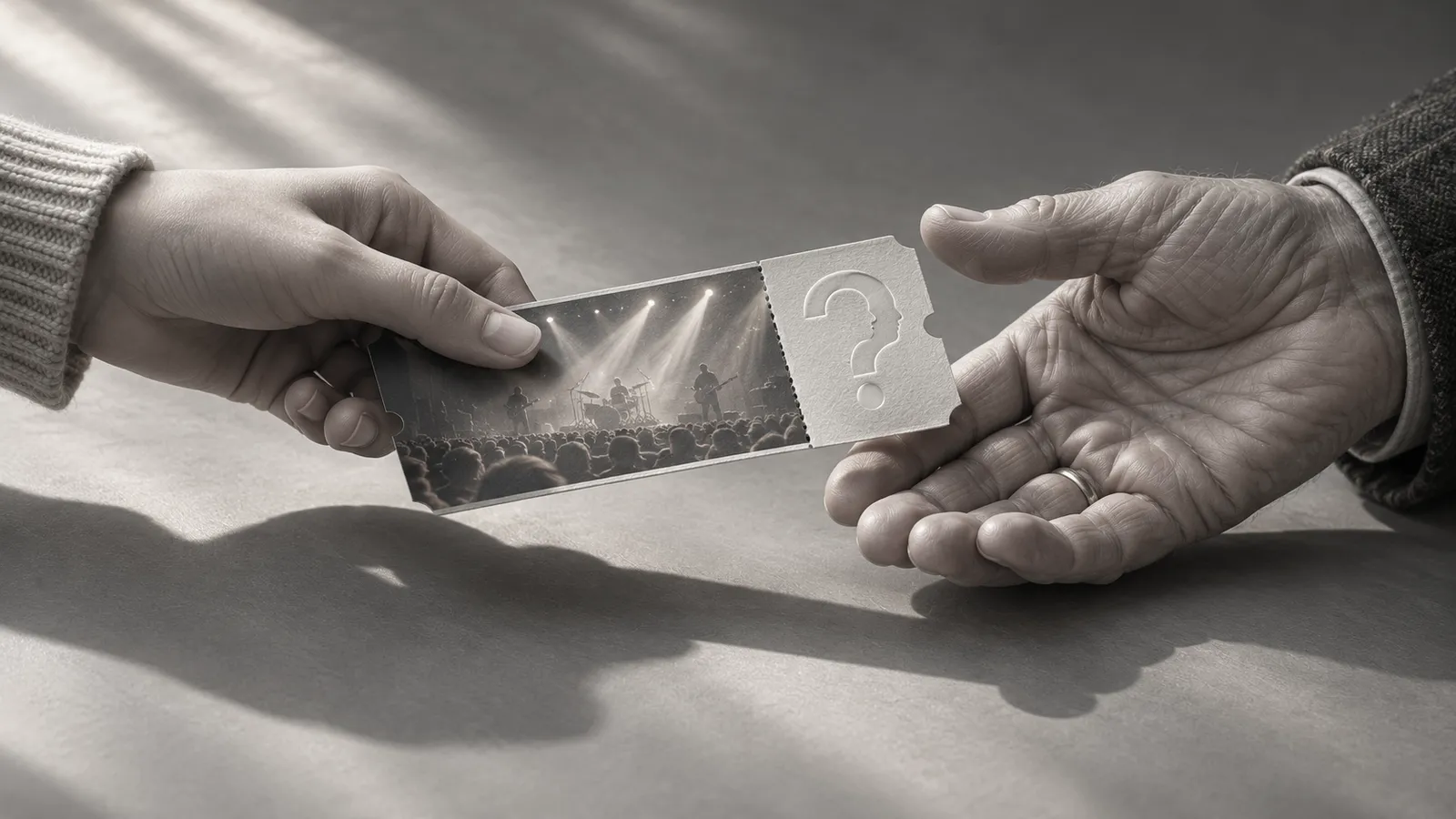
A gift works on a relationship in four steps: it is chosen, received, lived with and remembered. Studies find that experience gifts do most of their work in the last two, and that givers often choose objects before they get there.
Are experience gifts better than material gifts?
On the measures studied, experience gifts tended to do more for the relationship than material gifts: recipients reported larger gains in relationship strength, more gratitude and a stronger sense of connection. The effect was linked to the intensity of emotion felt while using the gift. Givers still choose objects more often than recipients would, especially when they know the recipient less well.
Key takeaways
- In experiments on real gift exchanges, recipients of experiential gifts reported a larger gain in the strength of the relationship than recipients of material gifts, whether or not giver and recipient took part together (Chan and Mogilner, 2017).
- The authors traced that gain to the intensity of emotion felt while the gift was consumed, not at the moment of receiving it (Chan and Mogilner, 2017).
- Across eight studies, givers were more likely to choose an experience for a socially close recipient than a distant one, and the effect was driven by how much they knew about the recipient (Goodman and Lim, 2018).
- In six experiments with 2,350 participants, givers preferred material gifts over experiential ones more than recipients preferred to receive them, a gap the authors linked to using objects as memory aids (Yang, Koo and Hwang, 2022).
- Across five experiments, experiential gifts produced more gratitude and a stronger sense of meaningful memory than material gifts, and the memory route did not depend on whether the gift was special or ordinary (Puente-Diaz and Cavazos-Arroyo, 2022).
Every gift passes through four steps before it changes anything between two people. The giver chooses it, the recipient receives it, the recipient lives with it, and the recipient remembers it. Experience gifts, such as tickets, a lesson or a day out, differ from objects mainly in the last two steps, and the research on whether experience gifts are better than material gifts follows that chain from the choice to the memory. At each step it asks what the recipient takes away about the relationship, which is a different matter from which gift is nicer to own. Most of what is known comes from people reporting how a gift made them feel and what it did for the tie.
Experience gifts in four steps
Researchers separate the two kinds of gift by what the recipient is handed. A material gift is an object that is kept. An experience gift is an event that is lived through, and in a sense it ends when the event does. The four steps carry that difference from the shop to the shelf of memory.
Two cautions apply throughout. The studies measure what people report about gifts and relationships, not how long a relationship lasts. And experience gifts cover a wide range, from a concert to a cooking class, so the findings describe tendencies across that range and not a rule for any single gift.
- Choosing: the giver picks a gift, and picking an experience calls for knowing what this particular person would enjoy.
- Receiving: the recipient opens the gift or hears about it, which is usually a short moment.
- Living: the recipient uses the object or attends the event, which is where most of the feeling happens.
- Remembering: the recipient looks back on the gift, and the giver is part of what is recalled.
The same split sits behind the case B. Joseph Pine and James Gilmore make in The Experience Economy, where an experience is a distinct kind of offering because it consists of events staged for the person who takes part, and what remains afterwards is the memory of them. A gift of an experience hands the recipient such an occasion, ready staged, which is why the later steps weigh more for it than for an object. Whether an event is a treat for oneself is a separate question from the one answered in Are experiences worth more than things, which looks at what people buy for themselves. Here the focus is the person on the receiving end.
A poor match feels risky
The first step is where experience gifts lose ground, since an object is the safer choice when the giver knows little about the recipient. Joseph Goodman and Sarah Lim ran eight studies on how givers choose between the two kinds. Their proposal was that experiences are seen as more unique than objects, so choosing a good one calls for more knowledge of what the recipient likes. Givers were more likely to give an experience to a socially close recipient than to a distant one, and the effect was driven by how much they knew about the person.
The effect weakened when the experience carried little social risk, which fits the idea that givers are guarding against a poor match and are not turning away from experiences as such.
Knowledge is the lever, which means the gap is one that givers can narrow. Asking the person, noting what they have mentioned in passing, or choosing an event they have already enjoyed all supply the missing information, though the studies tested the role of knowledge and not these particular remedies.
Objects as reminders of the giver
Givers have a second reason, reported by Adelle X. Yang, Minjung Koo and Jaewon Hwang. In six experiments with 2,350 participants, givers preferred material gifts over experiential ones more than recipients preferred to receive them. The authors proposed that givers use objects as memory aids, a motive they called interpersonal memory management: a thing on the shelf reminds the recipient of the giver. The gap between givers and recipients appeared at several stages of a relationship and shrank in very close ones. It disappeared when the gift was tied to an unpleasant occasion and when giver and recipient expected more interactions soon.
Both findings describe the giver and not the recipient, and they point the same way. Fear of a mismatch and a wish to be remembered push choices toward objects even where recipients would welcome an event, and for experience gifts that means the choosing step is the one that holds them back. That pressure to choose well under uncertainty is one strand of the strain described in Why is gift-giving so stressful, and Why do we spend more at Christmas covers research in which givers expected a higher price to raise appreciation while recipients reported no such link.
Closeness grows during use
The third step was tested in experiments on real gift exchanges inside real relationships, not imagined ones, by Cindy Chan and Cassie Mogilner. Recipients of experience gifts reported a larger gain in the strength of the relationship than recipients of material gifts. The gain appeared whether or not the giver and recipient took part in the gift together, so shared attendance alone could not account for the benefit. That matters for the common case of a voucher that the recipient uses without the giver, since in the account the authors give the emotion, not the company, carries the effect.
The authors traced the difference to emotion. Experiential gifts evoked more intense emotion while they were being consumed, and it was the intensity at that point, not at the moment of receiving, that carried the effect on the relationship. The moment of unwrapping is brief. The feeling that seems to strengthen a tie is produced later, while the ticket is in use or the lesson is under way. Part of that feeling begins before the day arrives, since waiting for an event tends to read as excitement, a result covered in What Anticipation Actually Adds.
Chan and Mogilner described giving of this kind as a form of prosocial spending, which is spending that benefits someone other than the spender. Set beside the choosing step, the result leaves a gap worth noticing. The gift that evoked more emotion at the point of use is the gift that givers who knew the recipient less well chose less often. That is our reading of two separate sets of studies, and it suggests that knowing the recipient is the cheapest route to a better gift.
| Step | What the studies reported | Study |
|---|---|---|
| Choosing | Experiences went more often to close recipients, objects to distant ones | Goodman and Lim |
| Choosing | Givers favoured objects more than recipients did, as reminders of themselves | Yang, Koo and Hwang |
| Living | Experiential gifts gave a larger gain in relationship strength | Chan and Mogilner |
| Remembering | Experiential gifts brought more gratitude and meaningful memories | Puente-Díaz and Cavazos-Arroyo |
Memory keeps the gift going
The chain reaches its last step in five experiments by Rogelio Puente-Díaz and Judith Cavazos-Arroyo. Participants who consumed experience gifts reported more gratitude than those who consumed material gifts, and gratitude was linked to a stronger sense of social connection. Gratitude sits at the centre of the findings. In the first experiment, more gratitude went with a stronger sense of social connection, so the memory route and the connection route meet in the same feeling. Consuming an experiential gift also led people to construe the episode more strongly as a meaningful memory, and that construal was linked to gratitude in turn.
This bears on the motive Yang and colleagues identified. Givers chose objects to help recipients remember them, yet an experience that is construed as a meaningful memory does that job without a keepsake. The two kinds of gift are less rivals than routes to the same place, which is a memory with the giver in it. A trip and the object bought to stand for it, the pairing discussed in Why We Buy Souvenirs, show how easily the two combine, and Pine and Gilmore's point that the memory is what a staged event leaves behind fits the same picture.
Two further experiments set special gifts against ordinary ones, and the fourth added social connection to the measures. Special gifts were more often construed as meaningful memories, which was linked to gratitude. In the fifth experiment, the route from gift type by way of meaningful memory to gratitude did not depend on the gift being special or ordinary. An everyday outing therefore carried the same indirect effect, by way of memory, as a special occasion did.
Common questions
Are experience gifts better than material gifts?
On the measures studied, experience gifts tended to do more for the relationship. Recipients of experiential gifts reported greater gains in relationship strength, more gratitude and a stronger sense of social connection. Givers still choose objects more often than recipients would, especially when they know the recipient less well.
Why do givers choose objects over experiences?
Givers often fear a poor match, because choosing an experience takes more knowledge of the recipient. They also use objects as reminders of themselves. Both motives were reported in the studies, and both weakened where the giver knew the recipient well or the relationship was very close.
Does an experience gift have to be shared?
In the studies of real gift exchanges, experiential gifts strengthened relationships whether or not giver and recipient took part together. The authors traced the effect to the intensity of emotion felt while the gift was being consumed, and not to the moment of receiving it, so the benefit did not depend on company.
Sources
Pine, B. J., & Gilmore, J. H. The Experience Economy. Seed book.
Chan, C., & Mogilner, C. (2017). Experiential gifts foster stronger social relationships than material gifts. Journal of Consumer Research, 43(6), 913-931. doi:10.1093/jcr/ucw067 https://doi.org/10.1093/jcr/ucw067
Goodman, J. K., & Lim, S. (2018). When consumers prefer to give material gifts instead of experiences: The role of social distance. Journal of Consumer Research, 45(2), 365-382. doi:10.1093/jcr/ucy010 https://doi.org/10.1093/jcr/ucy010
Yang, A. X., Koo, M., & Hwang, J. (2022). Remember me, will you? Overusing material gifts for interpersonal memory management. Journal of Consumer Psychology, 32(4), 615-633. doi:10.1002/jcpy.1281 https://doi.org/10.1002/jcpy.1281
Puente-Diaz, R., & Cavazos-Arroyo, J. (2022). Experiential gifts and the construal of meaningful consumption episodes. Humanities and Social Sciences Communications, 9(1), 461. doi:10.1057/s41599-022-01486-w https://doi.org/10.1057/s41599-022-01486-w
Related concepts
People
More articles
- Why Players Pay for Skins
A skin changes how a character looks and nothing else. Two accounts of why players pay for that, a badge for other players and a self for the player, each rest on studies of their own.
- Why a Badge Makes an Account Feel Trustworthy
A badge is meant to save a reader the work of checking. The experiments show the saving only happens when the mark is noticed, understood and carried over from the account to what it says.
- Why We Watch Other People Shop
Viewers of haul videos describe a pleasure with no purchase in it. The research asks what they get from the format, what it does to their own buying, and why the habit holds.
- Why Flash Sales Feel Hard to Resist
A flash sale gives a lower price a short window. The research finds that the window changes the rule people use to decide, and that excitement can do part of the persuading.
In these themes
- Gifting and Generosity
Why we give, and why choosing a gift is harder than it should be.