Is praising effort better than praising talent?
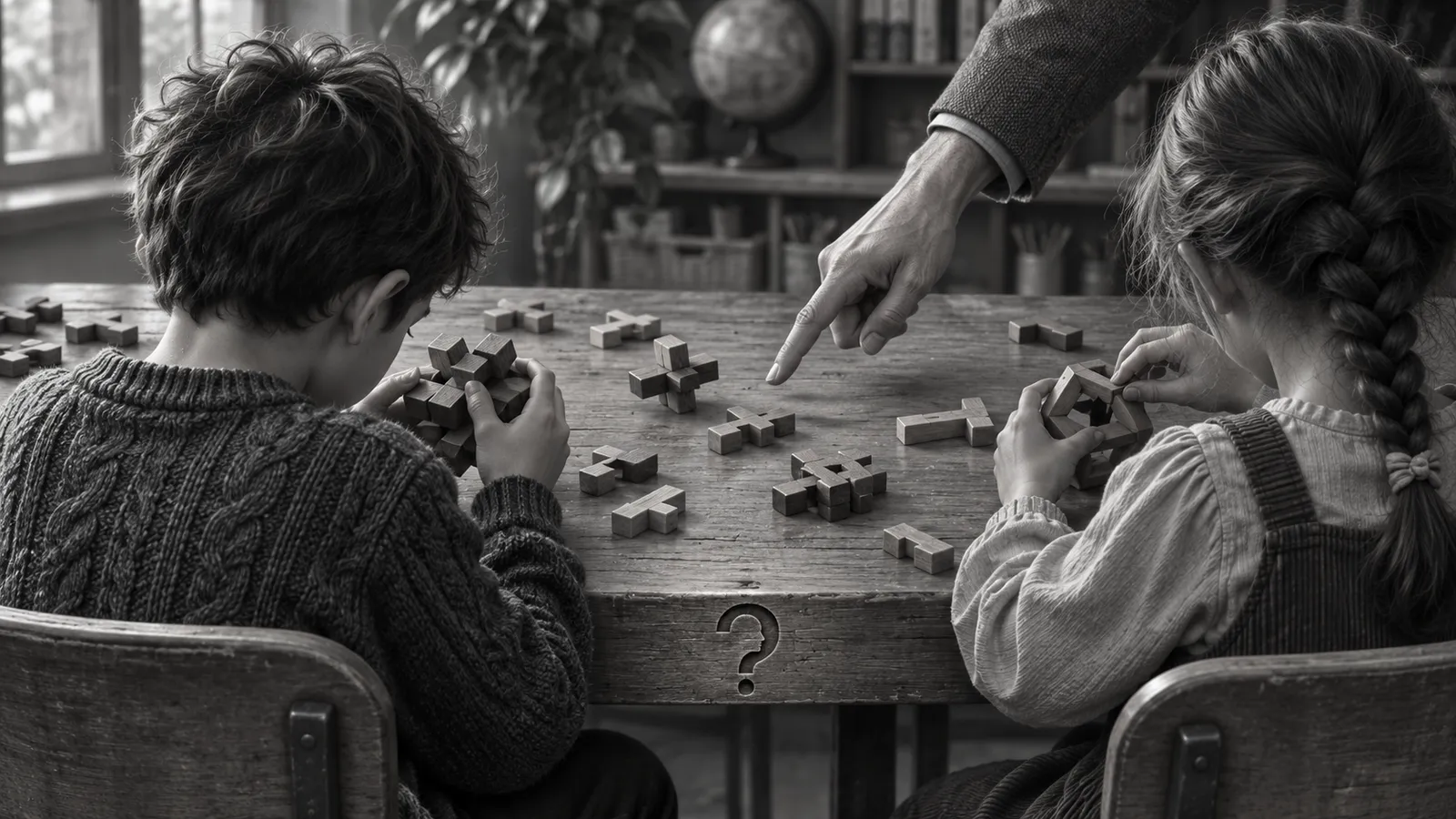
What experiments on feedback to children found, what a home study adds, and why the answer changes with age and wording.
Answer to the question
Is praising effort better than praising talent?
Praising effort is better than praising talent in the experiments that compared them: children given feedback about the person responded to setbacks less well than children given feedback about the process. Home studies agree only in part, and by adolescence effort praise can be read as a sign of low ability.
Key takeaways
- In two role-play studies of 67 and 64 children, person-focused feedback, praise or criticism, was followed by weaker responses to setbacks and more self-blame than process-focused feedback (Kamins and Dweck, 1999).
- In a home study of 53 children, parents' praise of effort at 14 to 38 months predicted a belief that ability grows at 7 to 8 years, while early praise of inherent traits did not predict the opposite belief (Gunderson and colleagues, 2013).
- Amemiya and Wang argue that effort praise can imply low ability, and that adolescents are especially likely to read it that way.
- Henderlong Corpus and Lepper found that the effect of praise on motivation depends on sincerity, controllable causes, autonomy, competence and attainable standards, and on age, gender and culture.
- Carol Dweck's Mindset ties process praise to the child's learning and progress, and treats effort that yields no further benefit as not enough.
This article is general information about research on praise and children's motivation, not parenting, educational or psychological advice. If you are worried about a child, speak to a qualified professional. Medical review: Reja Batool.
Praising effort is better than praising talent in the experiments that set the two side by side, and the size of the gap depends on the moment. Take two moments. In the first, a child finishes a hard puzzle and an adult calls her clever. In the second, a child gets the same puzzle wrong and an adult says he is clever all the same. Both remarks are meant kindly, and researchers have asked what each child concludes from them about the next puzzle.
What children take from praise after a win
A win is the easy moment, and it is where the contrast was first tested closely. Two studies by Melissa Kamins and Carol Dweck put children through role-play tasks and gave them feedback of one of three kinds: aimed at the person, aimed at the process, or aimed at the outcome. A person-focused remark sounds like being told one is a natural. A process-focused remark names the strategy that worked or the stretch of work that went in. An outcome-focused remark reports the result.
In the first study, 67 children aged 5 to 6 were criticised after tasks. In the second, 64 children were praised after succeeding. Afterwards the researchers measured how the children judged themselves, how they felt and how long they kept going after a setback.
Children who heard person-focused feedback, whether praise or criticism, responded to setbacks less well on every measure, including with more self-blame, than children who heard process-focused feedback. The authors read this as a sign that feedback about the person, even when it is warm, can make a child's sense of worth depend on the next result. The research term for that dependence is contingent self-worth, and it is the thread that connects the success moment to the setback moment. The first study looked at criticism and the second at praise, so the two halves of the finding come from different children and different kinds of feedback, which is why the table lists the moments separately.
The labels effort and talent can hide what the comparison turns on. Praising effort points at something the child did and can do again, while praising talent points at something the child is. That makes the direction of the pointing the variable the studies test, more than the particular word, which is why a remark about strategy belongs in the same group as a remark about effort.
| Moment | What the research reports | Study |
|---|---|---|
| After a win | Person praise was followed by weaker responses to a later setback than process praise | Kamins and Dweck (1999) |
| After a setback | Criticism aimed at the person produced the same pattern, including more self-blame | Kamins and Dweck (1999) |
| Across the toddler years at home | Praise of effort predicted a belief that ability can grow years later; praise of inherent traits did not predict the opposite belief | Gunderson and colleagues (2013) |
| In adolescence | Effort praise may be read as a sign of low ability | Amemiya and Wang (2018) |
Is praising effort better than praising talent at home?
A laboratory is one setting and a kitchen is another. Elizabeth Gunderson and colleagues followed 53 children whose parents' spontaneous praise was measured when the children were between 14 and 38 months old, and they then looked at the children's beliefs about ability at ages 7 to 8. The question was whether the pattern from experiments appears in ordinary family life, where praise arrives in thousands of small remarks and not in a single scripted sentence.
The two halves of the result are not symmetrical. Parents' praise of effort at the youngest ages predicted what the researchers call an incremental framework, a set of beliefs in which ability grows with work and challenge is something to enjoy. Early praise of inherent characteristics did not predict the matching fixed-ability framework. The authors suggest that the processes seen in experiments may also run in homes. The design follows children over time and does not assign them to kinds of praise, so it shows what predicted what and stops short of showing what caused what.
That belief set carries an appetite for hard tasks, the kind of drive described in What are examples of intrinsic motivation, which is part of why the finding on praising effort matters. The finding on talent matters in a different way. In this sample, praise aimed at traits did not leave the mark that the laboratory contrast might lead a reader to expect, so the home evidence supports praising effort more clearly than it counts against praising talent.
Age, sincerity and the limits of effort praise
By adolescence the benefit of praising effort and strategies, visible early in childhood, often fades and can reverse, Jamie Amemiya and Ming-Te Wang argue. Their reasoning is that effort praise can imply a student's ability is low, since a person who needs to try hard may be taken to lack talent, and that adolescents are alert to this reading, most of all in secondary schools that prize innate ability. The same sentence of praise can therefore mean something different at six and at fifteen: for the younger child it names a route, and for the older one it can raise the question of why a route was needed.
The wider praise literature points in several directions, as Jennifer Henderlong Corpus and Mark Lepper set out in their review. Praise can raise, lower or leave unchanged a child's intrinsic motivation, depending on the conditions. It helps when the child sees it as sincere, when it points to causes the child can control, when it supports autonomy and competence without leaning on comparison with others, and when it conveys standards the child can reach. Age, gender and culture also change how it lands. A lowering effect on motivation fits the older finding on rewards that crowd out interest, described in What is the overjustification effect.
Where Dweck ties praise to progress
Carol Dweck's own account of praising effort in Mindset, in the sections added to the 2017 edition, is narrower than the slogan that grew around her work. She says process praise is tied to the outcome, to the child's learning, progress or achievement, and she calls the shorter version, praise the process and not the outcome, a common misconception, because it leaves out the tie to progress that she says matters.
How far such feedback moves school results at scale is a separate question, and the trials behind it are laid out in Growth Mindset After the Tests. Where a child has tried hard and made little progress, she writes that the effort deserves appreciation and that no one should be content with effort that is not yielding further benefit.
Common questions
Is praising effort better than praising talent?
In laboratory studies that compared them, children given feedback about the person responded to setbacks less well than children given feedback about the process. Home studies match only in part, and by adolescence effort praise can be read as a sign of low ability.
What is the difference between person praise and process praise?
Person praise speaks to a trait, such as being clever. Process praise speaks to what the child did, such as the strategy used, the effort made or the choices taken.
Can effort praise stop working as children get older?
Amemiya and Wang argue that it often does by adolescence, because effort praise can imply a student's ability is low. Praise that is sincere and tied to real progress fits the conditions that Henderlong Corpus and Lepper found helpful.
What does Carol Dweck say about praising effort?
In the sections added to the 2017 edition of Mindset, she describes process praise as tied to the child's learning, progress or achievement, and says effort that yields no further benefit should not be treated as enough.
Sources
Dweck, C. S. Mindset: Changing the Way You Think to Fulfil Your Potential. Seed book; vault hub Books/Mindset.
Kamins, M. L., & Dweck, C. S. (1999). Person versus process praise and criticism: Implications for contingent self-worth and coping. Developmental Psychology, 35(3), 835-847. doi:10.1037/0012-1649.35.3.835 https://doi.org/10.1037/0012-1649.35.3.835
Gunderson, E. A., Gripshover, S. J., Romero, C., Dweck, C. S., Goldin-Meadow, S., & Levine, S. C. (2013). Parent praise to 1- to 3-year-olds predicts children's motivational frameworks 5 years later. Child Development, 84(5), 1526-1541. doi:10.1111/cdev.12064 https://doi.org/10.1111/cdev.12064
Henderlong, J., & Lepper, M. R. (2002). The effects of praise on children's intrinsic motivation: A review and synthesis. Psychological Bulletin, 128(5), 774-795. doi:10.1037/0033-2909.128.5.774 https://doi.org/10.1037/0033-2909.128.5.774
Amemiya, J., & Wang, M.-T. (2018). Why effort praise can backfire in adolescence. Child Development Perspectives, 12(3), 199-203. doi:10.1111/cdep.12284 https://doi.org/10.1111/cdep.12284