Never Show a Fool Your Work Until It Is Complete
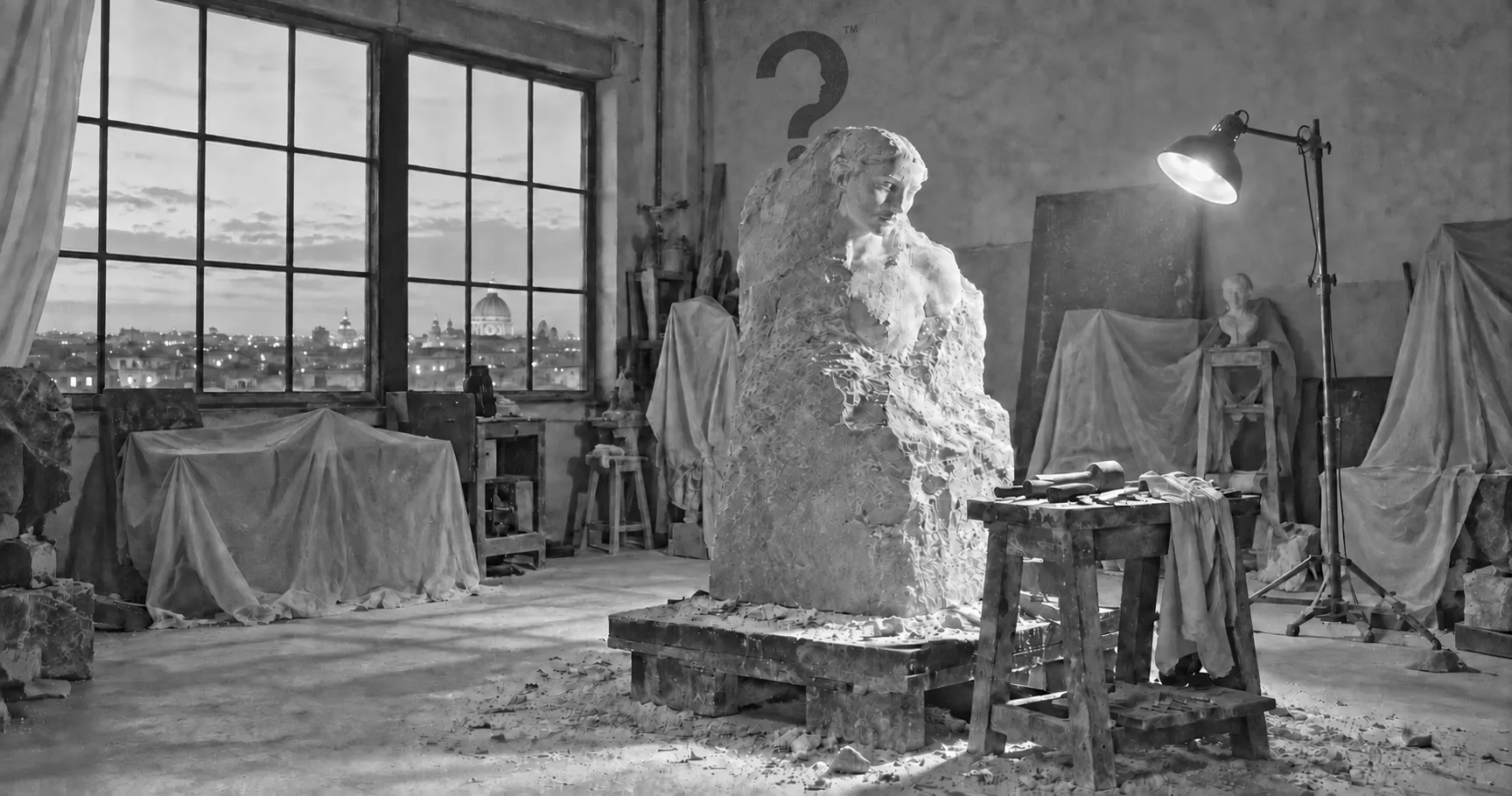
The proverb says the danger is the audience. Two literatures say the danger is being seen at all, and being illegible
Key takeaways
- Daniel Oppenheimer put the same text in a harder-to-read font and readers judged its author less intelligent. That is Experiment 4 of a 2006 paper in Applied Cognitive Psychology; Experiments 1 to 3 found the same effect from needless complexity, mediated by how easily the text was processed.
- Rolf Reber, Norbert Schwarz and Piotr Winkielman had already argued that ease of processing feeds judgments of beauty, and of truth, without the person noticing the substitution.
- Peter Gollwitzer, Paschal Sheeran, Verena Michalski and Andrea Seifert ran four experiments in 2009. People whose identity-related intentions were noticed by someone else pursued them less intensively than people whose intentions went unnoticed.
- That effect held among people strongly committed to the goal and not among the weakly committed, which is what makes the proposed mechanism plausible.
- Neither literature sorts the audience by intelligence. Whether a discerning viewer is protected from the fluency penalty has not been tested.
Change the typeface and the author gets stupider.
Daniel Oppenheimer demonstrated it in 2006 in Applied Cognitive Psychology. Across the first three experiments he manipulated the complexity of a text and found that needless complexity lowered readers' estimates of the author's intelligence, with the effect running through how easily the text was processed rather than through anything about its content. Then in Experiment 4 he removed the content variable entirely and manipulated only the fluency. Same words, harder font, and the author was judged less intelligent.
That result sits underneath a proverb, and it does not support the part of it people quote. The line circulates in several forms and is usually put in Michelangelo's mouth. I have not been able to trace it to him, so it is better treated as a proverb than a quotation, and it draws its authority from sounding true rather than from its source. Its theory is precise: the danger is a type of person. Fools judge early, judge badly, and judge on surface, and finished work can defend itself against them because its merits have become visible. Two claims are bundled in there, that showing work early carries a cost and that the cost is created by the viewer, and only one of them has anything behind it. There are three accounts of what showing early actually costs. None of them is about foolishness.