Temptation Bundling Needs a Lock
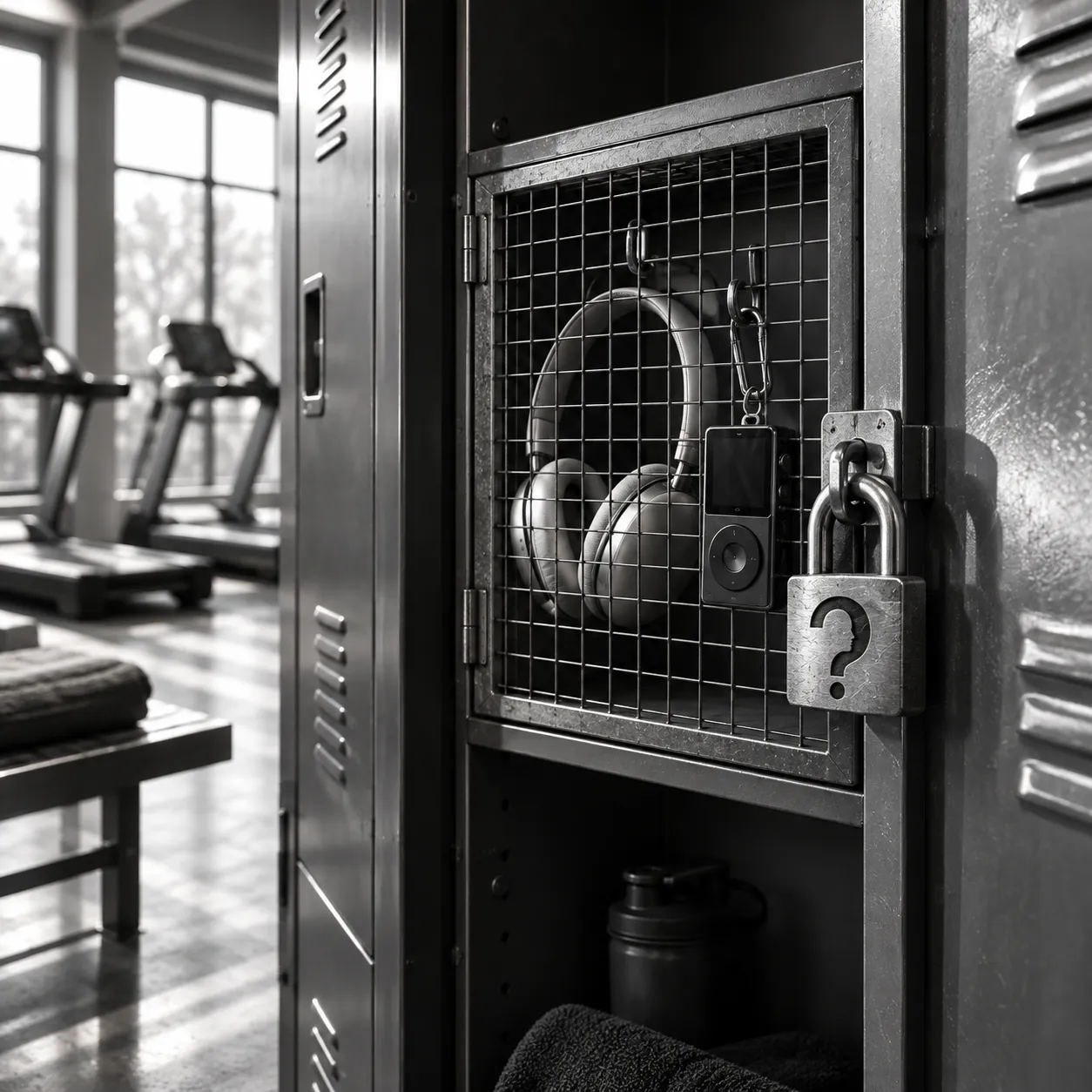
Locking a gripping audiobook in a gym locker got students and staff exercising more often, and 61 per cent later paid to have the lock back. Which part does the work, the treat, the lock or the hint, is still open.
Answer to the question
Can you trick yourself into exercising with treats?
Yes, modestly, if the treat is kept for the task. In Katherine Milkman's 2014 study, audiobooks locked at the gym lifted first-week visits by 51 per cent before the gain shrank. In a 2020 trial with 6,792 gym members, an audiobook plus advice to bundle raised the chance of a weekly workout by 10 to 14 per cent.
Key takeaways
- In Katherine Milkman's 2014 study of 226 gym users, audiobooks locked at the gym raised visits by 51 per cent in the first week, but the gap shrank after a Thanksgiving closure.
- In a 2020 trial with 6,792 members of a gym chain, a free audiobook plus advice to temptation bundle raised the chance of a weekly workout by 10 to 14 per cent, for up to seventeen weeks.
- Only about 14 per cent of members downloaded the free audiobook, so the trials cannot say whether listening, the gift or the hint did the work.
Keep a treat you crave for the moment you do a task you keep putting off, and allow it nowhere else. An audiobook you only hear on the treadmill, a podcast saved for the ironing, a favourite series watched only while folding laundry: that is temptation bundling, and the lock on the treat is the part that is easiest to skip. Nir Eyal's Indistractable recommends the idea in chapter 20, page 144, citing a gym study in which locked audiobooks produced 51 per cent more visits. The figure is accurate, but it describes the opening week of a small trial, and larger tests since have found a gain closer to a tenth.
Start with the study behind the famous number
Katherine Milkman of the Wharton School devised the technique, and Eyal names her in the text.
In the autumn of 2011 her team recruited 226 students, faculty and staff at the University of Pennsylvania who used the campus gym and owned an iPod. The two treatment groups each picked four gripping audio novels from a list of 82. The most popular choices were from The Hunger Games trilogy, with The Da Vinci Code and Twilight close behind.
The difference lay in access. One group's novels were loaded onto an iPod that stayed in a monitored locker at the gym, so the story could only continue during a workout. A second group had the novels on their own iPods and was simply encouraged to listen only while exercising. A control group received a bookshop gift card and no audiobooks at all.
The paper frames temptation bundling as a fix for two problems at once. It pairs an instantly gratifying but guilt-inducing want, the novel, with a should whose rewards arrive later, the workout. The pleasure pulls you towards the chore, and the chore rations a pleasure you might otherwise binge on and regret. That suits the setting Indistractable gives temptation bundling, among tactics for handling feeds and online reading, where the pleasure is not banned, only given a time and a place.
In the week after joining, the locked group visited the gym 51 per cent more often than the control group, and the encouraged group 29 per cent more. Over the first seven weeks the locked group averaged 7.8 visits, against 6.5 for the encouraged group and 6.1 for the control group, and the encouraged group's gain was not statistically reliable.
Then the university gym shut for the Thanksgiving break. After it reopened, the gap between the groups shrank, which the authors linked to earlier work showing that exercise routines tend to lapse over holidays. One result points in a more hopeful direction for the idea: at the end of the study, most participants, 61 per cent of them, chose to pay for a month of gym-only access to an iPod they could otherwise have used freely.
Read the big trial before the small one
With only 226 people and a single term behind it, the idea needed a bigger test, and Milkman's team ran one. Between 2018 and early 2019, Erika Kirgios led a field experiment, published in 2020, inside a four-week programme called StepUp, run with the 24 Hour Fitness chain in the United States. Its main analysis covered 6,792 members. Some received a free code to download an audiobook from Audible, some received the code plus encouragement to temptation bundle, and a comparison group from the same programme received neither.
The bundling group was more likely to work out in any given week, by 10 to 14 per cent, and averaged 10 to 12 per cent more weekly workouts than members with no audiobook. The gain lasted after the programme ended, for up to seventeen weeks. The figure is smaller than the famous one, but it comes from thousands of people and it lasted.
| Study | Who took part | Given | Result |
|---|---|---|---|
| 2014, one university gym | 226 students and staff | Audiobooks locked at the gym | 51 per cent more visits in week one, less after a holiday |
| 2020, a gym chain | 6,792 members | A free audiobook and advice to bundle | 10 to 14 per cent higher chance of a weekly workout |
| 2021, the same chain | 61,293 members | One of 53 programmes | A free audiobook ranked fourth of 53 |
Check what the megastudy adds and what it repeats
The 2020 trial was one of twenty studies run inside a single larger project, reported in Nature in 2021 by Milkman and a team from several universities. They called it a megastudy, meaning many interventions tested at once on the same population against the same measure. Members of the gym chain, 61,293 of them, were each assigned to one of 54 four-week programmes, one of which served as a placebo control.
About 45 per cent of the programmes raised weekly gym visits, by between 9 and 27 per cent. Among the 53 compared with the placebo, a free audiobook on its own ranked fourth. An audiobook paired with an explanation of temptation bundling ranked ninth. Both outperformed the placebo group.
The megastudy does not independently confirm the 2020 result, because its two audiobook arms come from that same trial.
What it adds is context. Against dozens of rival ideas built by behavioural scientists, the audiobook approach sat near the top during the programme. Yet only 8 per cent of all the programmes produced a gain that was still clearly detectable once the four weeks were over, and forecasts gathered in advance from professors, practitioners and members of the public failed to pick out the most effective programmes. In the 2020 trial every member was also earning small rewards for each visit, so a technique that works for a month inside such a programme is one piece of a habit and not the whole of it.
Ask whether the treat or the rule is working
On the mechanism, the two trials disagree. In the 2014 study, the lock seemed to be doing the work: only the group whose audiobooks stayed at the gym showed a clear gain, while the group asked to lock themselves out showed no reliable gain. In the 2020 trial, telling people about temptation bundling added only a modest benefit over simply handing them a free audiobook.
The Kirgios paper offers an explanation it calls information leakage. A gym programme that gives you an audiobook is quietly telling you to listen at the gym, so many members may have worked out the idea without being taught it. There is a less flattering reading too. Only about 14 per cent of members in either audiobook group downloaded the book at all, which makes it unlikely that listening while exercising explains the whole gain.
Which ingredient produces the effect is still unknown. A free gift may lift effort through goodwill, through the reminder it carries, or through the bundling itself. The trials could not separate these, and the 2020 authors note that they had no way to check whether members actually listened while exercising.
On balance the lock looks like the active ingredient. Willpower is a poor guard for a treat you own, which is why a rule kept only in your head did too little in 2014 to tell apart from chance. A treat that physically lives somewhere else, like the iPod in the locker, removes the decision, and that is the version with the strongest result behind it.
A treat that physically lives somewhere else, like the iPod in the locker, removes the decision.
Test it on a chore you already avoid
The practical version starts with choosing the right reward. It has to be something you will actually miss: a gripping novel rather than a worthy one, a series you would otherwise binge rather than one you can take or leave. If the treat is available elsewhere, the bundle gives you nothing to come back for.
Pick the chore with the same care. The original trial worked partly because a gym is a place you go to at a time you choose, so the locker could do the policing. Temptation bundling suits tasks with a fixed spot, such as the ironing board, the desk where the tax return lives or the walk to the station, better than tasks that can happen anywhere.
Then make the restriction physical where you can. Keep the headphones in the gym bag, download the podcast only to the old phone that lives by the ironing board, or save the next episode for the evening you clear the inbox.
Expect a small effect. The 2014 gains shrank after a single holiday closure, and even in the largest temptation bundling trial the lift was around a tenth, which is still a gain worth having for a chore you dread.
The 61 per cent who paid to have their own iPods locked away also suggest a simple test for any bundle you set up: if you would happily pay to keep the treat out of reach for the rest of the week, you have probably picked the right treat and the right lock.
Common questions
Can you trick yourself into exercising with treats?
Yes, modestly, if the treat is kept for the task. In Katherine Milkman's 2014 study, audiobooks locked at the gym lifted visits by 51 per cent in the first week, but the gain shrank after a holiday closure. In a 2020 trial with 6,792 gym members, an audiobook plus advice to bundle raised the chance of a weekly workout by 10 to 14 per cent.
Does temptation bundling last?
Partly. In the 2014 study the gain shrank after a Thanksgiving gym closure. In Erika Kirgios's 2020 trial the lift persisted for up to seventeen weeks after a four-week programme. Across the 2021 megastudy of 53 programmes, only 8 per cent produced gains still clear once the programme ended.
Who came up with temptation bundling?
A team led by Katherine Milkman of the Wharton School named and tested it in a paper published in Management Science in 2014. The trial ran at a university gym in 2011 with 226 participants and locked page-turner audiobooks in a gym locker.
Sources
Milkman, K. L., Minson, J. A., & Volpp, K. G. M. (2014). 'Holding the Hunger Games hostage at the gym: an evaluation of temptation bundling.' Management Science, 60(2), 283-299. doi:10.1287/mnsc.2013.1784. Full text read (author manuscript, University of Pennsylvania repository): 226 students, faculty and staff, randomised 75/75/76; audio novels chosen from 82, most popular The Hunger Games trilogy; full treatment iPods kept in a monitored gym locker; week-zero regression estimates of 51 and 29 per cent over 0.94 control visits; seven-week totals 7.8, 6.5 and 6.1; intermediate effect not significant; decline after the Thanksgiving gym closure; 61 per cent opted to pay for gym-only access, mean willingness to pay $6.91.
Kirgios, E. L., Mandel, G. H., Park, Y., Milkman, K. L., Gromet, D. M., Kay, J. S., & Duckworth, A. L. (2020). 'Teaching temptation bundling to boost exercise: a field experiment.' Organizational Behavior and Human Decision Processes, 161(Supplement), 20-35. doi:10.1016/j.obhdp.2020.09.003. Full text read (author-hosted PDF): StepUp Program with 24 Hour Fitness, recruitment March 2018 to January 2019; Study 1B N = 6,792 with a quasi-experimental control; 10 to 14 per cent higher likelihood of a weekly visit and 10 to 12 per cent more weekly visits, during and up to seventeen weeks after the programme; encouragement over a free audiobook alone a modest benefit; audiobook download rates 14 and 13 per cent; information leakage explanation; one of 20 studies embedded in StepUp.
Milkman, K. L., Gromet, D., Ho, H., Kay, J. S., Lee, T. W., Pandiloski, P., ... Duckworth, A. L. (2021). 'Megastudies improve the impact of applied behavioural science.' Nature, 600(7889), 478-483. doi:10.1038/s41586-021-04128-4. Full text read: 61,293 members of an American fitness chain; 54 four-week programmes designed by 30 scientists from 15 universities; 45 per cent raised weekly visits by 9 to 27 per cent; free audiobook ranked fourth and free audiobook with temptation bundling explained ranked ninth of 53 conditions against the placebo control; 8 per cent with significant effects after the programme; forecasts failed to predict the most effective interventions.
Eyal, N., with Li, J. (2019). Indistractable: How to Control Your Attention and Choose Your Life. Bloomsbury. Read in full by this publication, with a reliability audit. Ch. 20, p. 144, Milkman's gym-only audiobooks and the 51 per cent figure.