Why Do Celebrity Objects Sell for More
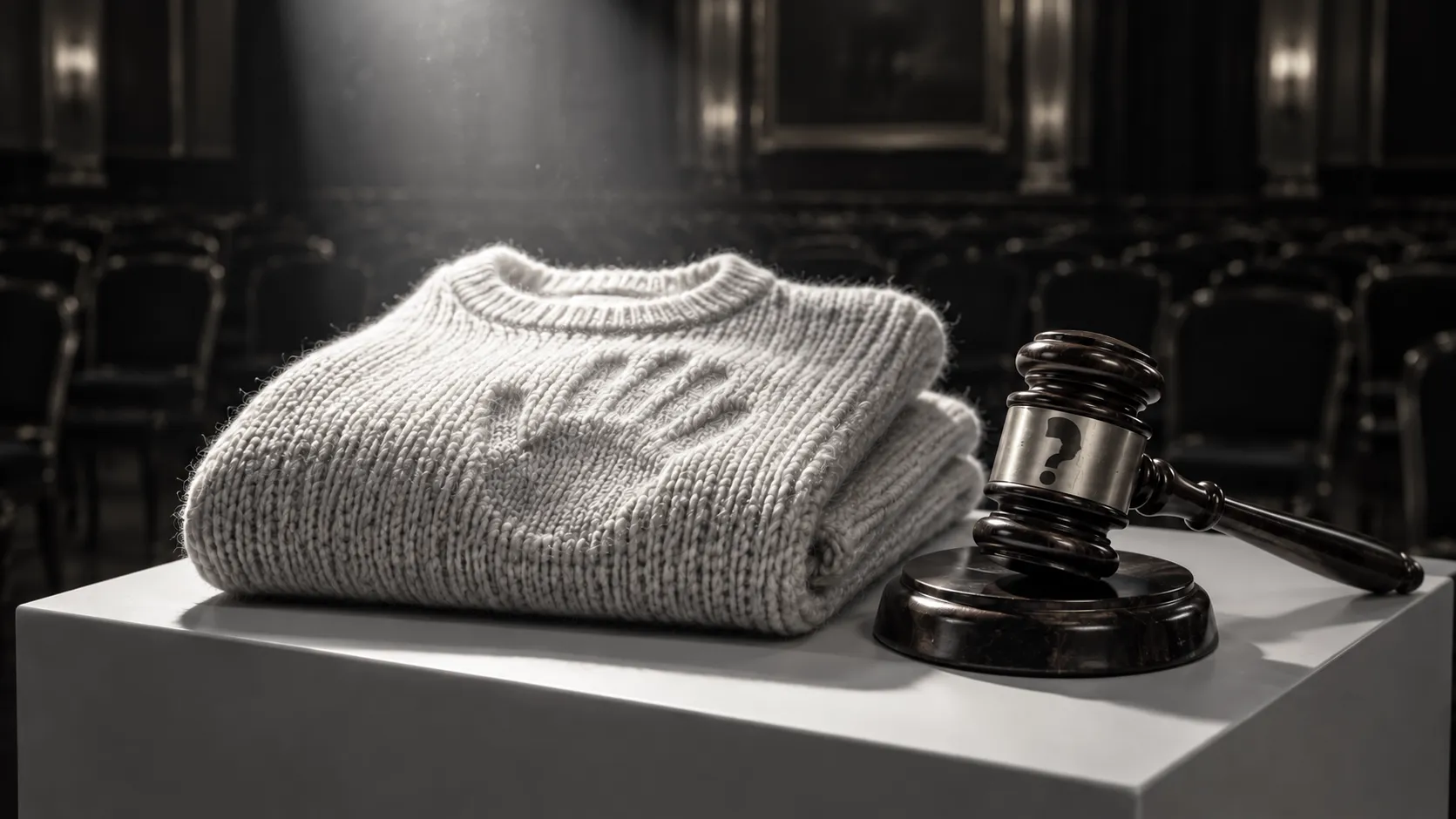
Buyers pay more for objects a well-liked owner touched, and less for those a despised owner touched. Laboratory buyers, estate-auction bidders and young children show the same pull toward the original, a belief in an invisible essence.
Answer to the question
Why do celebrity objects sell for more?
Celebrity objects sell for more partly because buyers believe the owner's touch left something behind. In Newman, Diesendruck and Bloom (2011), more physical contact raised willingness to buy a well-liked owner's item, and sterilising a sweater lowered it. For despised owners, sterilising raised the value.
Key takeaways
- Newman, Diesendruck and Bloom (2011) tested association, market demand and contagion as reasons for wanting celebrity possessions. Contagion was the critical factor: sterilising a sweater lowered willingness to buy for well-liked owners and raised it for despised ones.
- Newman and Bloom (2014) analysed three high-profile estate auctions. Expected physical contact predicted higher final bids for items owned by people such as John F. Kennedy and lower bids for items owned by Bernard Madoff, and pre-auction estimates did not appear to account for it.
- Hood and Bloom (2008) found that young children were less willing to accept an identical replacement for an attachment object than for a favourite toy.
- Newman and Bloom (2012) report that copies of art are valued much lower than originals even when virtually identical. Furnham (2024, chapter 31) gives four criteria for psychological essentialism and offers no study for the claim that people are natural-born essentialists.
Celebrity objects sell for more partly because of a belief about touch. In a laboratory study, people were more willing to pay for a possession of a well-liked person when they thought the owner had handled it a great deal, and less when the owner was despised. Nothing about the object changed, only a belief about what clung to it, and the belief runs in reverse when the owner is disliked. Psychologists group such beliefs under psychological essentialism, and the evidence for them runs from young children to bidders in real auction rooms. A sweater experiment, records from three estate auctions and a study of children shown identical copies each test the belief from a different side.
Look at the Laboratory and Auction Room
Celebrity objects can be wanted for two separate reasons. Other people will pay for them, which is a market reason. Or something of the owner is believed to remain in the wool, the metal or the paper, which is a contagion reason. George Newman, Gil Diesendruck and Paul Bloom built an experiment to pull the two apart. Participants considered buying a sweater owned by a well-liked or a despised famous person. In some conditions the sweater had been sterilised, which removes the owner's contact. In others it could not be resold, which removes the market.
For well-liked owners, sterilising lowered willingness to buy, and blocking resale made little difference. For despised owners the pattern reversed: sterilising raised the sweater's value, and blocking resale lowered it. The paper tested three accounts of why people want celebrity objects, mere association, market demand and contagion. Market demand played some role, and in the authors' words "contagion appears to be the critical factor affecting the valuation of celebrity possessions" (Journal of Consumer Research, 2011).
The same paper reports that raising the physical contact a celebrity had with an object raised willingness to buy it. People who were more sensitive to contagion showed a stronger effect, and subtly priming the idea of contagion shifted willingness to purchase.
Contagion appears to be the critical factor affecting the valuation of celebrity possessions.
Laboratory buyers spend nothing, so the auction data on celebrity objects matter more. Newman and Bloom analysed three high-profile estate auctions. People's expectations about how much physical contact an object had with its owner positively predicted final bids for items that belonged to well-liked people such as John F. Kennedy, and negatively predicted final bids for items that belonged to disliked people such as Bernard Madoff. The significance statement adds that the effect does not appear to be accounted for in pre-auction estimates, so the professionals setting the estimates were not pricing it (Proceedings of the National Academy of Sciences, 2014).
Two nearby explanations do not fit that sign flip. A halo from fame, the kind traced in [How Far the Halo Effect Spreads](https://thewhyweproject.com/articles/how-far-the-halo-effect-spreads), would lift every famous owner's belongings alike. Contagion in the social sense, the spread of mood between people, is a different mechanism and is covered in [Emotional Contagion at the Counter](https://thewhyweproject.com/articles/emotional-contagion-between-staff-and-customers). What a story adds to a price, as against what a history adds, is the subject of [What a Story Adds to a Price](https://thewhyweproject.com/articles/what-a-story-adds-to-a-price). Here the belief concerns contact, and the owner's reputation decides whether it adds or subtracts.
Ask Why Children Refuse the Perfect Copy
A child with a favourite blanket has not read an auction catalogue. Bruce Hood and Paul Bloom used a magic trick that appeared to produce identical copies of real objects, and asked young children whether they would accept the copy. Children were less willing to accept an identical replacement for an attachment object than for a favourite toy. In a second study, children often valued a personal possession of Queen Elizabeth II more than an identical copy, a bias they did not show for another type of valuable object (Cognition, 2008).
The authors concluded that young children form attachments to individuals that do not depend on any perceptible property of those individuals. A perfect duplicate matches the original on every perceptible property by construction. A preference for the original therefore has to rest on something imperceptible, and an imperceptible cause of visible features is what the essentialist literature means by an essence. Celebrity objects are the adult market version of the same preference, with a famous name attached to the individual.
Read the Essentialism Label for Its Limits
Psychological essentialism is the belief that a category has an underlying essence that causes its visible features and supports inferences about features nobody has observed. Adrian Furnham's chapter on it in The New Psychology (2024, chapter 31) gives four criteria: causal mechanisms, innate potential, immutability and inductive potential. His own summary is that "we are, in that sense, natural-born essentialists." The chapter offers no study for that universality, and the experiments above supply the kind of evidence it lacks.
They also differ from the chapter's subject. They concern single things rather than categories, and none of the papers tests essentialism by name. They test contagion, attachment and originality. Reading the three as one belief in an invisible essence carried by an individual object is this site's grouping of them. The strongest support for the grouping is the reversal: a famous owner's touch adds value or removes it depending on who the owner was, which is how a transferable essence would behave and how a market preference would not.
The practical reading is an inference from these results, not a finding of any of them. A seller of celebrity objects has more to gain from documenting contact, meaning who handled the item and for how long, than from polishing it, since a record of contact is the thing buyers in these studies were responding to. A buyer who values an object for its owner should expect restoration or cleaning to cost some of what they came for, because the sweater result shows that removing contact lowers the value of a well-liked owner's item.
Compare Originals and Copies Without Celebrities
The discount for copies, unlike the premium on celebrity objects, does not need a famous owner. Newman and Bloom ran five experiments on why people value original art (Journal of Experimental Psychology: General, 2012). Their abstract names two factors, the object as a unique creative performance and the artist's physical contact with it, and concludes that the gap in value between originals and perfect duplicates comes from lay theories about art, not from associations with particular kinds of art or cases of forgery.
In one experiment, participants valued two paintings of the same covered-bridge scene by the artist Jim Rilko. Told that the pair arose by coincidence, they valued the paintings similarly. Told that one artist had copied the other, they valued the copy especially low and the original especially high. The authors attribute the discount to a sense that an original carries one creator's unique performance. It also carries the mark of that creator's hands.
Common questions
Why do celebrity objects sell for more?
Buyers appear to believe that the owner's touch left something behind. Newman, Diesendruck and Bloom (2011) found that more physical contact raised willingness to buy a well-liked owner's item, and that sterilising a sweater lowered it. For despised owners, sterilising raised the value.
Does physical contact with the celebrity matter?
In three estate auctions, expected physical contact positively predicted final bids for items of well-liked owners such as John F. Kennedy and negatively for disliked ones such as Bernard Madoff (Newman and Bloom, 2014). Pre-auction estimates did not appear to account for the effect.
Do children prefer the original to a perfect copy?
Often, for objects tied to a particular individual, which is the preference that celebrity objects trade on. Hood and Bloom (2008) found that young children were less willing to accept an identical replacement for an attachment object than for a favourite toy, and often valued a personal possession of Queen Elizabeth II above an identical copy.
Sources
Newman, G. E., Diesendruck, G., & Bloom, P. (2011). 'Celebrity contagion and the value of objects.' Journal of Consumer Research, 38(2), 215-228. doi:10.1086/658999
Newman, G. E., & Bloom, P. (2014). 'Physical contact influences how much people pay at celebrity auctions.' Proceedings of the National Academy of Sciences, 111(10), 3705-3708. doi:10.1073/pnas.1313637111.
Hood, B. M., & Bloom, P. (2008). 'Children prefer certain individuals over perfect duplicates.' Cognition, 106(1), 455-462. doi:10.1016/j.cognition.2007.01.012
Newman, G. E., & Bloom, P. (2012). 'Art and authenticity: The importance of originals in judgments of value.' Journal of Experimental Psychology: General, 141(3), 558-569.
Furnham, A. (2024). The New Psychology: The 50 Newest Concepts That Are Shaping How We Live and Work. Bloomsbury Business, chapter 31.