Why a Cliffhanger Keeps Us Watching
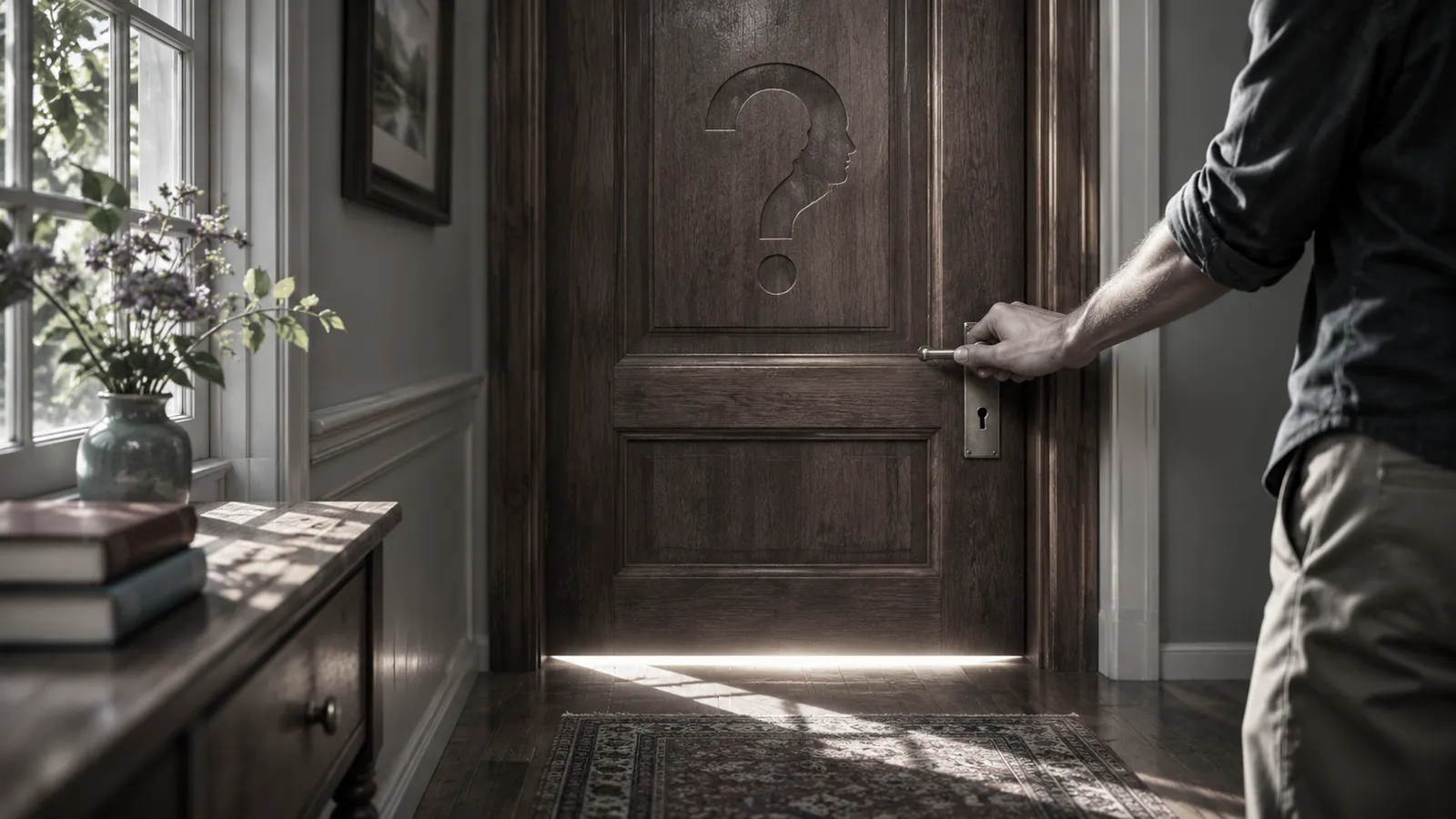
A cliffhanger ends a story at its most unresolved point. Research on suspense and curiosity shows why viewers want the next instalment, and what the ending does not change.
Why do cliffhangers keep us watching?
Cliffhangers keep people watching by leaving open a question the viewer already cares about. In experiments, readers of a cliffhanger ending wanted a sequel more than readers of a resolved ending, and a laboratory study found cliffhangers raised arousal. Neither study found a clear gain in enjoyment, so wanting more and liking more are separate.
Key takeaways
- Across four versions of a story, narrative tension showed up as anticipation, diagnosis, retrospection and emotion, and curiosity helped trigger and organise suspense and surprise (Bermejo-Berros and colleagues, 2022).
- In two experiments, readers of a cliffhanger ending wanted a future installment more than readers of a protagonist-victory ending, with no significant difference in enjoyment or suspense (Schibler and colleagues, 2023).
- In a laboratory study with 133 participants, cliffhangers raised arousal but not enjoyment or the intention to continue watching (Wirz and colleagues, 2023).
An episode ends on a hand at a door handle, and the picture cuts to black. The cliffhanger has worked: the viewer holds a question the story will not answer.
What does a viewer carry into the credits?
When the credits begin, the viewer is not simply waiting for the story to resume. Bermejo-Berros and colleagues showed 94 participants one of four versions of an audiovisual story, three fictional versions built around suspense, surprise or curiosity and one non-fiction version that produced different cognitive and affective effects. In the fictional versions, narrative tension arrived in four forms, anticipation, diagnosis, retrospection and emotion, as the story went on, and curiosity played a key part in triggering and organising both suspense and surprise. Tension of this kind is what a cliffhanger leaves with the viewer when the screen goes dark.
Why would a gap in a story pull so hard? Ian Leslie's Curious argues that curiosity is strongest just beyond what a person already knows, since knowing nothing leaves no question to ask and knowing everything leaves none unanswered. A viewer who has followed a series for several hours sits in that band for the story. The characters, the stakes and the rules are familiar, and the cliffhanger withholds the one fact that completes the picture, which is the arrangement the information gap theory of curiosity describes. Headlines use the same arrangement on a smaller scale, as The Gap That Makes You Click sets out, but a series has hours of invested knowledge behind its gap.
The wish to see a story resume is also a separate matter from memory for interrupted tasks, the subject of The Zeigarnik Effect at the Credits. The studies in this article concern what viewers want and feel after an ending, and none of them depends on remembering the unfinished scene better than a finished one.
Why does an unresolved ending build tension?
Halfway through a tense chapter, a reader turns pages faster than the sentences require. Lehne, Engel and Rohrmeier scanned participants while they read a nineteenth-century novella in short passages, with a suspense rating after each one. Higher ratings went with activity in the medial frontal cortex, frontal regions near the inferior frontal sulcus, the lateral premotor cortex and posterior temporal and temporo-parietal areas. The authors link these regions to social cognition and predictive inference and conclude that suspense builds on basic processes of expectation and prediction.
A wider account comes from Lehne and Koelsch, who propose that tension and suspense in music, film and literature share core processes. In their model, tension arises from states of conflict, instability, dissonance or uncertainty, and these states set off predictions about significant events that have not yet happened.
Ely, Frankel and Kamenica put the same idea in terms of beliefs. In their model, a period is more suspenseful when the audience's beliefs about the next period are more widely spread, as when the outcome could still be rescue or disaster. They use it to work out how information should be released over time in mystery novels, game shows and sports, among other settings. By that definition an ending that points firmly to one outcome carries less suspense than one that keeps several outcomes in play.
Seen together, the accounts suggest that a single closing shot can leave open more than one kind of question:
- What happens next, the forward question that suspense models describe, with outcomes still spread wide.
- What happened, a gap in the past that curiosity wants filled.
- What it meant, an unexpected turn that sends the viewer back over what has been seen.
Do cliffhangers make people want more of a series?
The next episode begins to load by itself, and the viewer has a few seconds to decide whether to stay. Two recent papers speak to that choice, and they measure different things. Schibler and colleagues ran two studies with written narratives, with 202 readers in the first and 273 in the second, comparing a cliffhanger ending with endings in which the protagonist or the antagonist wins. Readers of the cliffhanger wanted a future installment more than readers of the protagonist-victory ending in both studies, and more than readers of the antagonist-victory ending in the second. Enjoyment and suspense did not differ significantly between the endings.
Wirz and colleagues took the question into the laboratory. They had 133 participants watch three to four episodes of a drama series that ended either with or without cliffhangers, and measured arousal through self-report, electrodermal activity and cortisol, along with enjoyment and the intention to continue watching. Cliffhangers raised arousal but did not increase enjoyment or the intention to continue.
The results differ on continuing, but so do the questions. One asks readers how much they want a sequel after a single ending; the other asks viewers who have just watched several episodes whether they intend to carry on. We read the two as consistent: cliffhangers raised arousal in one study and the wish for a sequel in the other, while the step from wanting to more viewing remains open in series settings. Known endings are not always a loss either, as Why is rewatching a favourite film so satisfying shows for viewers who enjoy a story whose ending they already know.
For anyone planning a series, the practical matter is what an ending asks. Because curiosity organised suspense and surprise in the story versions, an ending that raises something the viewer already cares about, built from the characters and stakes the series has taught them, uses the mechanism fully, while an ending that raises something the viewer has no stake in gives interest nothing to hold. An ending can be judged on how much it makes viewers want more, because the studies here found no matching rise in enjoyment to count alongside it, whether among readers of a written story or among viewers who watched several episodes of a drama.
Common questions
Why do cliffhangers keep us watching?
A cliffhanger leaves a question open that the viewer already cares about, and research links that state to tension, prediction and curiosity. In experiments, readers of a cliffhanger ending wanted a sequel more than readers of a resolved ending.
Do cliffhangers make a story more enjoyable?
Not in the studies reviewed here. Readers of cliffhanger endings did not report significantly more enjoyment than readers of resolved endings, and in a laboratory study of a drama series cliffhangers raised arousal without raising enjoyment.
What is narrative tension?
Narrative tension is the state a story creates when the audience is anticipating what comes next, working out what has happened and feeling the emotion of the moment. Researchers describe it as arising from conflict, instability or uncertainty that sets off predictions about significant future events.
Sources
Leslie, I. Curious: The Desire to Know and Why Your Future Depends on It. Seed book; vault hub Books/Curious.
Bermejo-Berros, J., Lopez-Diez, J., & Gil Martinez, M. A. (2022). Inducing narrative tension in the viewer through suspense, surprise, and curiosity. Poetics, 93, 101664. doi:10.1016/j.poetic.2022.101664 https://doi.org/10.1016/j.poetic.2022.101664
Lehne, M., Engel, P., & Rohrmeier, M. (2015). Reading a suspenseful literary text activates brain areas related to social cognition and predictive inference. PLoS ONE, 10(5), e0124550. doi:10.1371/journal.pone.0124550 https://doi.org/10.1371/journal.pone.0124550
Lehne, M., & Koelsch, S. (2015). Toward a general psychological model of tension and suspense. Frontiers in Psychology, 6, 79. doi:10.3389/fpsyg.2015.00079 https://doi.org/10.3389/fpsyg.2015.00079
Ely, J., Frankel, A., & Kamenica, E. (2015). Suspense and surprise. Journal of Political Economy, 123(1), 215-260. doi:10.1086/677350 https://doi.org/10.1086/677350
Schibler, K., Hahn, L., & Green, M. C. (2023). Investigating responses to narrative cliffhangers using affective disposition theory. Media Psychology, 27(1), 1-25. doi:10.1080/15213269.2023.2219456 https://doi.org/10.1080/15213269.2023.2219456
Wirz, D. S., Ort, A., Rasch, B., & Fahr, A. (2023). The role of cliffhangers in serial entertainment: An experiment on cliffhangers' effects on enjoyment, arousal, and intention to continue watching. Psychology of Popular Media, 12(2), 186-196. doi:10.1037/ppm0000392 https://doi.org/10.1037/ppm0000392
Related concepts
People
More articles
- Why an Unexpected Extra Delights More Than a Promised One
A promised extra is counted into the stay before it arrives. An unannounced one is measured against nothing, and experiments on reward, mood and gifts suggest that gap is where the extra delight…
- Why a Small Win Softens a Big Loss
A credit of 5 beside a charge of 100 can be booked as one net loss or as two separate entries. The research on the silver lining effect sets out when the second booking feels better.
- Why We Trust a Site That Shows Its Work
A search page that lists what it is checking can feel worth more than one that does not. The research shows when visible effort, explanation and a pause build trust, and for whom.
- Why We Remember the Ad but Not the Brand
A joke, a famous face or a surprise can win every look while the brand goes unnamed. The research on the vampire effect shows what draws the eye, what the brand keeps, and where a layout can help.