Will a New Car Make You Happier
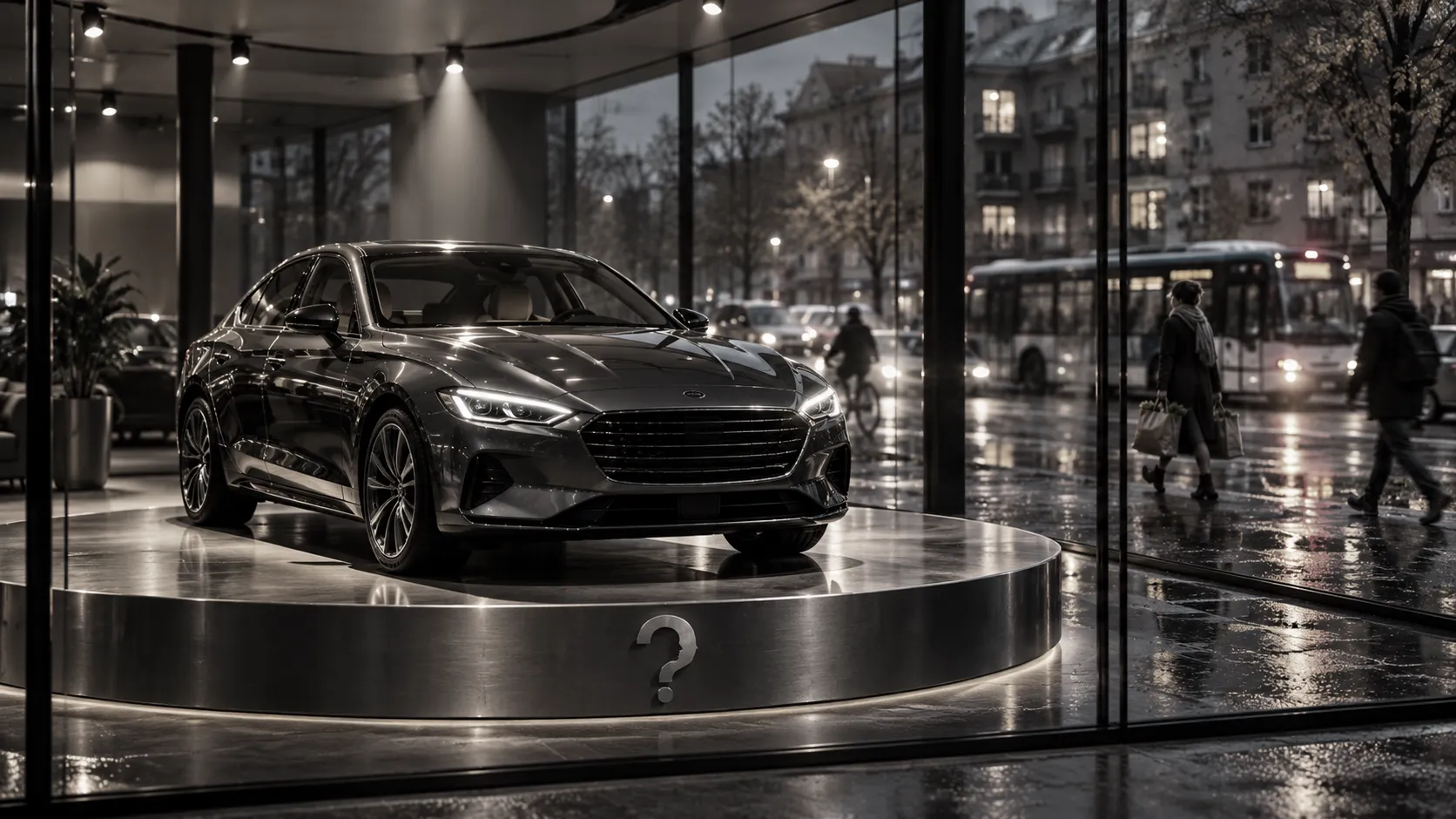
A new car looms large while it is being chosen and recedes once it is owned. The California study, a football-fan experiment and a survey of working women show where that idea comes from and what each result does and does not cover.
Answer to the question
Will a new car make you happier?
Probably less than you expect while choosing it. Research on the focusing illusion shows that judgments overweight whatever attention is on, and Kahneman argues a new car is such an object. The studies themselves concerned climate, income and football results, so the car claim is an application of the mechanism, not a measured result.
Key takeaways
- Schkade and Kahneman (1998) surveyed 1,993 students in Michigan, Ohio and California. Overall life satisfaction did not differ by region, yet students in both regions predicted a similar student in California would be more satisfied, with climate and cultural opportunities accounting for the gap.
- Kahneman (2011), chapter 38: asking how much pleasure you get from your car makes you "ignore the fact that you rarely think about your car." He ties the focusing illusion to purchases that are exciting at first and lose their appeal.
- Wilson and colleagues (2000) asked 88 football fans to forecast their happiness after a win or a loss. Fans who first filled in a diary of a future day predicted a smaller effect over the three days after the game.
- Kahneman and colleagues (2006) found respondents predicted people earning under $20,000 would spend 32 per cent more time in a bad mood than people earning over $100,000. The measured gap was 12 per cent.
Students in both regions expected Californians to be happier.
Daniel Kahneman used the study behind that expectation to explain why a new car looks like a route to happiness before the purchase. Later studies by his own group and others give the explanation measured support, and they also mark where it stops.
Two Regions and 1,993 Undergraduates Rating Their Lives
Two Midwestern and two Southern Californian universities supplied the students. David Schkade and Kahneman had each of them rate life satisfaction, either their own or that of a student with similar interests living in the other region. Professional survey firms recruited the students, who were paid $7 to $10 for a one-hour group session. The paper appeared in Psychological Science in 1998, with 1,993 students in all: 492 at the University of Michigan, 499 at Ohio State, 503 at UCLA and 499 at UC Irvine.
Self-reported satisfaction did not differ by region. Among Caucasian respondents the raw means were 2.95 in the Midwest and 2.98 in California. Midwesterners were less satisfied than Californians with their climate, natural beauty and outdoor recreation, and those differences were real. They did not carry through to satisfaction with life as a whole.
The predictions went the other way. Midwesterners and Californians both expected a similar student in California to be more satisfied, and in the authors' analysis the expected gap was accounted for by climate and cultural opportunities. Ratings of the students' own lives ran well above their predictions for similar others, which the authors linked to optimism, and that gap is separate from the regional one. People rating their own lives were judging a whole. People rating a stranger's life were judging the differences they could see.
What the Raters Saw and What They Left Out
Schkade and Kahneman's account is that a judgment about a whole, made with attention on one part, overweights that part: "the attended subset is overweighted relative to the unattended subset." Someone imagining a life in California thinks about the weather. Someone living there spends little of the day thinking about it. How easily a thing comes to mind also shapes judgments of frequency, which is the subject of [Does the Availability Heuristic Sell](https://thewhyweproject.com/articles/does-the-availability-heuristic-sell). The paper ends on the sentence "Nothing that you focus on will make as much difference as you think."
Kahneman gave the idea its name, the focusing illusion, and condensed it in chapter 38 of Thinking, Fast and Slow: "Nothing in life is as important as you think it is when you are thinking about it." Daniel Gilbert and Timothy Wilson call the same error focalism. The book describes the California samples as large and prints no figures for them. The paper supplies the numbers above. Applied to a new car, the sentence reads as a warning about the showroom, where the forecast is made with nothing else in view.
Nothing that you focus on will make as much difference as you think.
His account of adaptation follows from the same point. "Adaptation to a new situation, whether good or bad, consists in large part of thinking less and less about it." On this reading a circumstance fades because it stops being attended to, and a circumstance that keeps recapturing attention does not fade in the same way.
The Car in the Showroom and the Driveway
Kahneman applies the idea to purchases in the same chapter. He poses what can be called the car question, how much pleasure you get from your own car, and says that answering it makes you "ignore the fact that you rarely think about your car." The answer comes from the moments when the car is in mind, and those are a small share of the hours it is used. Kahneman calls the move substitution: a hard question about the whole is answered by an easier one about whatever is in mind.
A new car in a showroom is the attended object. The buyer's forecast of life with it is the forecast of a person thinking about the new car, with the commute, the schedule and the rest of the week out of frame. In the driveway the frame widens. The new car becomes one fixture among many and receives less thought each week, which on Kahneman's account is what adaptation consists of.
Gilbert and Wilson call the resulting errors of forecast miswanting, a word Kahneman says "deserves to be in everyday language." He writes that the focusing illusion "creates a bias in favor of goods and experiences that are initially exciting, even if they will eventually lose their appeal."
He sets the new car against a weekly poker game or book club, which lacks the initial excitement and keeps its appeal. On the attention mechanism, an activity that keeps drawing attention while it happens should be less prone to fading from view. A new car bought for its excitement is, on this reading, the purchase most exposed to the illusion, and the poker game the least. What happens to enjoyment after a purchase is covered in [Hedonic Adaptation After the Purchase](https://thewhyweproject.com/articles/hedonic-adaptation-after-the-purchase). The studies here concern climate, football results and income. The car is Kahneman's illustration of the mechanism, and the measured results sit beside it.
Nothing in life is as important as you think it is when you are thinking about it.
Football Fans Who Pictured the Rest of the Week
A football game gave the forecasting half of the idea its test, in 2000. Timothy Wilson and four colleagues, Daniel Gilbert among them, defined focalism as people focusing "too much on the event in question and not enough on the consequences of other future events."
In the first study, 88 fans of the University of Virginia and Virginia Tech were asked one to two months before the November 1995 game between the schools to predict their happiness after a win and after a loss. About half first rated the time they expected to spend on ten everyday activities and filled in the 24 hours of a future day. Those fans predicted thinking less about the game, and they predicted a smaller effect of the result on their happiness over the three days after it. The diary made no difference to forecasts for the day of the game itself.
Studies 2 and 3 also used football fans, and across the first three studies the fans who first thought about other future activities were less likely to overpredict how long the result would affect their happiness. Studies 4 and 5 ruled out alternative explanations and found support for a distraction account, in which people who think about other future events moderate their forecasts because they believe those events will reduce thinking about the focal one.
A buyer who pictured the commute, the car park at work and the rest of the week before forecasting would be expected to predict a smaller lasting lift from a new car. The fans' forecasts moved when other activities were brought into view.
How Income Looks to People Who Do Not Have It
The income version of the illusion appeared in Science in 2006 under the title "Would you be happier if you were richer? A focusing illusion." Its authors were Kahneman, Alan Krueger, Schkade and two colleagues. They used the Day Reconstruction Method, met also in [Why You Remember the End of a Holiday](https://thewhyweproject.com/articles/why-you-remember-the-end-of-a-holiday), in which participants write down the previous day's activities and how they felt during each. That yields an enjoyment scale built from actual daily experience, as opposed to a single overall judgment of one's life. The samples were 909 employed women in Texas in 2004 and 810 women in Ohio in 2005, chosen because the method was still being developed and the authors wanted a homogeneous group.
In the 2004 survey, respondents predicted that people earning under $20,000 would spend 32 per cent more time in a bad mood than people earning over $100,000. The measured gap was 12 per cent. In the Ohio survey, income correlated more weakly with moment-to-moment happiness than with overall life satisfaction. The authors wrote that the belief that high income goes with good mood is "widespread but mostly illusory."
Higher earners spent more time on work, shopping and childcare, and less on passive leisure such as socialising and television. In the time-use data the authors drew on, women earning over $100,000 spent 19.6 per cent of their time on passive leisure, against 33.5 per cent for women earning under $20,000.
The authors warned that the illusion may lead people to accept long commutes, among the worst parts of a day, and to give up socialising, among the best.
Common questions
Will a new car make you happier?
Probably less than you expect while choosing it. Research on the focusing illusion shows that judgments overweight whatever attention is on, and Kahneman argues a new car is such an object. The studies themselves concerned climate, income and football results, so the car claim is an application of the mechanism, not a measured result.
What is the focusing illusion?
It is the tendency to overweight whatever you are attending to when judging a whole. Kahneman's version is that nothing in life is as important as you think it is when you are thinking about it. Gilbert and Wilson call the same error focalism, and they call the forecasting mistakes it produces miswanting.
Did the California study find Californians happier?
No. Schkade and Kahneman (1998) surveyed 1,993 students in the Midwest and California and found no difference in overall life satisfaction. Students in both regions predicted that a similar student in California would be more satisfied, and climate and cultural opportunities accounted for the predicted gap.
Sources
Schkade, D. A., & Kahneman, D. (1998). 'Does living in California make people happy? A focusing illusion in judgments of life satisfaction.' Psychological Science, 9(5), 340-346. doi:10.1111/1467-9280.00066
Kahneman, D., Krueger, A. B., Schkade, D., Schwarz, N., & Stone, A. A. (2006). 'Would you be happier if you were richer? A focusing illusion.' Science, 312(5782), 1908-1910. doi:10.1126/science.1129688
Wilson, T. D., Wheatley, T., Meyers, J. M., Gilbert, D. T., & Axsom, D. (2000). 'Focalism: A source of durability bias in affective forecasting.' Journal of Personality and Social Psychology, 78(5), 821-836. PubMed 10821192
Kahneman, D. (2011). Thinking, Fast and Slow. Farrar, Straus and Giroux. Chapter 38, 'Thinking About Life', pp. 402 to 406, as recorded in the vault's digest of the book.
Princeton University (2006). 'Link between income and happiness is mainly an illusion.' News release, 29 June 2006