Don Norman
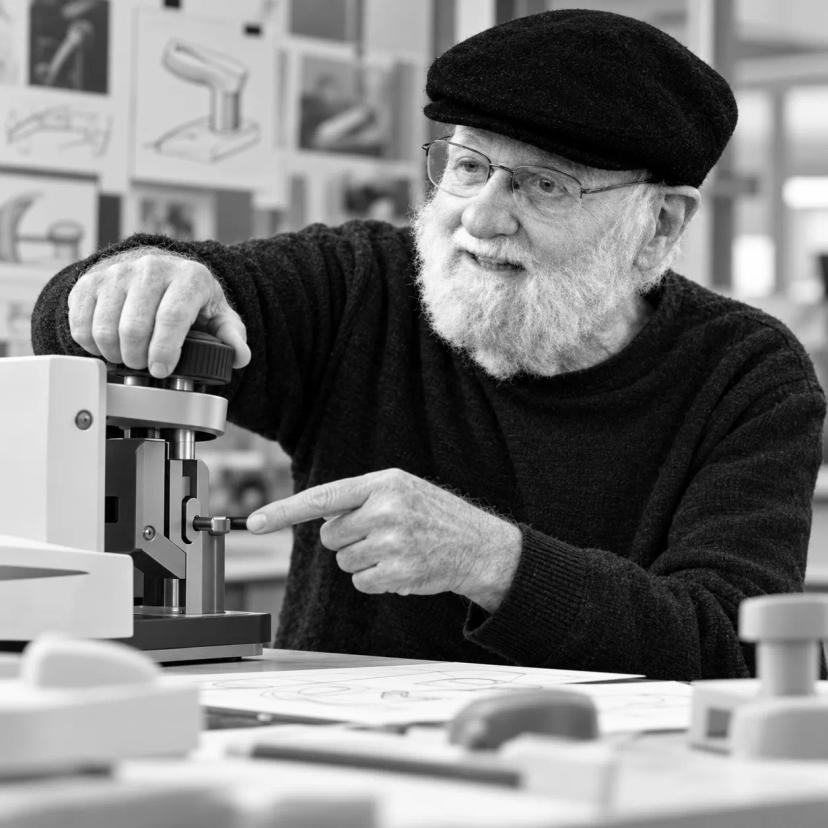
Donald A. Norman is a cognitive scientist and design theorist, the coiner of the term user experience and the author of The Psychology of Everyday Things (1988), later retitled The Design of Everyday Things. In Can a Forcing Function Stop Mistakes, he supplies the vocabulary: he sorted forcing functions into interlocks, lock-ins and lockouts, and he warned designers that people may deliberately disable them.
Who they are
Norman is widely described as the grandfather of human-centred design, and the seed book for this site's article on forcing functions, User Friendly by Cliff Kuang and Robert Fabricant (2019), credits him precisely and generously throughout. He is interviewed in it at length. The book presents him as the cognitive psychologist called in after the Three Mile Island accident of 1979, as the coiner of user experience, and as the author of the two books above.
His involvement at Three Mile Island is on the record in his own published accounts. He describes being called in with colleagues and concluding that the operators had done nothing wrong, and that the machinery had been designed as though its purpose were to cause people to err. That conclusion is the same inversion that Paul Fitts and Alphonse Chapanis made for aircraft cockpits in the 1940s, and the vault files it under Designer Error.
This site does not call Norman a member of the Kemeny Commission, the President's Commission on the accident. User Friendly says he served on the commission that followed, but his membership was not confirmed against the Commission's roster, and it is recorded here as not settled. His 1979 involvement, on his own account, is the part that is.
Key papers
Norman, D. A. (1988). The Psychology of Everyday Things. New York: Basic Books. Revised and retitled The Design of Everyday Things (2013).
Norman also wrote Emotional Design, which User Friendly names alongside the first book.
For this article the classification of forcing functions as interlocks, lock-ins and lockouts, the seat belt interlock as an example, and the caution that people may disable them were read from a secondary source, the designer Dan Lockton's summary of the book, 'Everyday things & persuasive technology' (Architectures of Control, 22 November 2005). The site therefore attributes those points to Norman as summarised, and does not quote his wording. A primary check against the book is the step to take before any quotation.
Key ideas
Forcing functions. A constraint built into a situation so that the intended action is the only one available. Norman's three kinds ask different questions. An interlock asks what must be true before the next step. A lock-in asks what must not be allowed to stop, and a lockout asks what must not be allowed to start or be entered. The 1974 American seat belt interlock, which tied the ignition to the belts, is the example in the secondary source, and it is also the case with which the article opens. See Forcing Function.
The cost of the constraint. The same summary records his caution that forcing functions have costs and that people may disable them. The article reads the end of the 1974 interlock, by an act of Congress that the signing statement says does away with the so-called seat belt interlock systems, as that caution playing out in a legislature. That reading is the article's, not a finding of the sources.
Affordance, corrected twice. Norman did not coin affordance. James J. Gibson did, in 1966, with the canonical definition in 1979. Norman adapted the term for design in 1988, narrowing it to the action possibilities a user can readily perceive, which is a different thing from Gibson's relational, directly perceived affordance. He then wrote at length on the distinction between real and perceived affordance and introduced the signifier for the thing that actually communicates an affordance, because designers had begun using affordance to mean the visible cue. A theorist noticing that his own borrowed term had drifted, and minting a better one, is good practice.
Sources
- Kuang, C., & Fabricant, R. (2019). User Friendly. New York: MCD / Farrar, Straus and Giroux.
- Norman, D. A. (1988). The Psychology of Everyday Things. New York: Basic Books; revised as The Design of Everyday Things (2013).
- Lockton, D. (2005). 'Everyday things & persuasive technology.' Architectures of Control, 22 November 2005. Secondary summary, used for the classification of forcing functions.
- The vault's external verification record for User Friendly, 2 October 2026, which settles the Gibson-to-Norman lineage and records the Kemeny Commission membership as not confirmed.
- Living, and nothing adverse is asserted.
Studies on this site by Norman
Articles that cite Don Norman
- Designing for One Helps Everyone
A ramp cut into a kerb for wheelchair users became the route for pushchairs and suitcases too. The same spillover runs through captions, websites and classrooms, by three routes, and it thins out as…
- Why We Trust Rounded Logos
What experiments say about circular and angular logos, why curves are liked before a brand arrives, and when the effect changes.
- Green Color Psychology: Why Brands Use Green to Build Trust
Brands reach for green to look natural, calm and responsible. One website experiment, one theory of colour liking and two green-only experiments show how much of that the research supports.
- How to Build a Brand Identity System
Which assets a brand identity system needs, what the research on repetition and logo shape adds, and a seven-step order to build it in.
- Branding Agency in Dubai: Full Service Breakdown
Eight brand services, what each is for psychologically, and what a business should expect to receive from it.
- Can a Forcing Function Stop Mistakes
A forcing function removes the option instead of warning against it. Seat belts, drink-driving interlocks and a false missile alert show what that buys, what it costs, and why a confirmation prompt…
Concepts on this site
- Affordance
What an environment offers for action.
- Choice Architecture
Choice architecture is Richard Thaler and Cass Sunstein's term, from Nudge in 2008, for the arrangement of a set of options: the order of a menu, the default on a form, the box already ticked at…
- Design Research Versus Market Research
Design research asks what people need and do, through small qualitative observation. Market research asks what people will buy, through large quantitative surveys and analytics. Both are needed…
- Friction
Friction is the accumulated small cost of effort, time, decision and inconvenience standing between a person and an action. The working claim in behaviour design is that lowering those costs changes…
- Signifier
A signifier is a perceivable mark, sound or cue that tells a person what can be done and where. The term is Don Norman's, from his design framework in The Design of Everyday Things, and it works…
- Three Levels of Processing (Visceral, Behavioral, Reflective)
Norman's division of emotion into a fast visceral level that reacts to appearance, a behavioural level and a reflective level.