Fernand Gobet
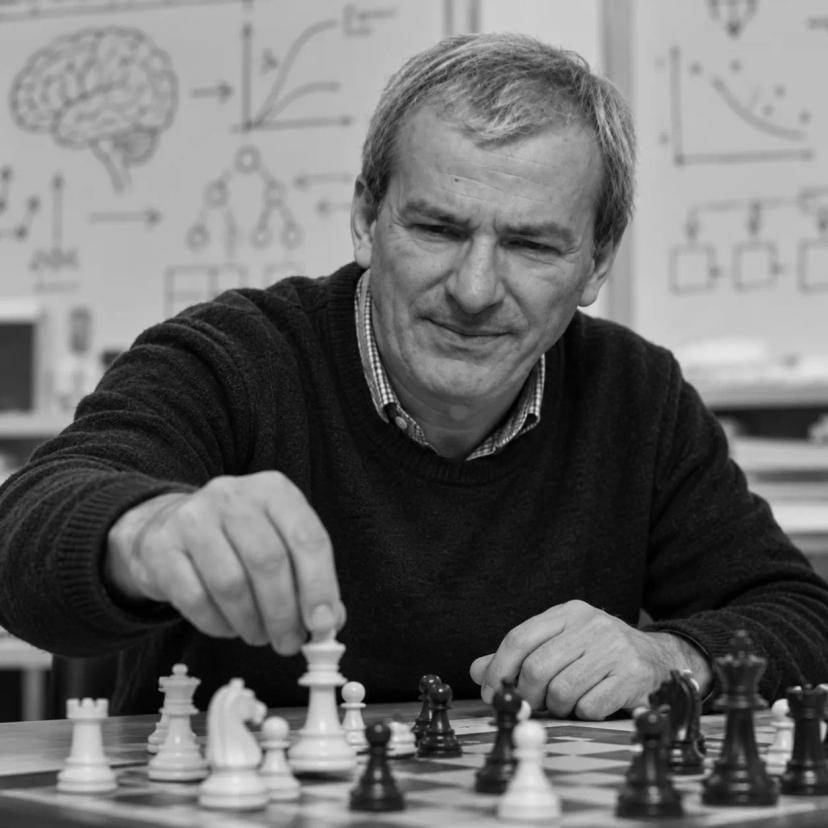
Fernand Gobet is a professor of psychology at the University of Liverpool and a professorial research fellow at the London School of Economics. He is a cognitive scientist whose interests are learning, language acquisition and expertise, with chess as a main case. For this site he is the co-author, with Giovanni Sala, of the 2019 second-order meta-analysis of near and far transfer in cognitive training, which found the far-transfer effect and its true variance both at zero once placebo effects and publication bias were controlled.
Who they are
The University of Liverpool lists Gobet as a professor of psychology in the Institute of Population Health, within the Faculty of Health and Life Sciences, and describes him as a cognitive scientist interested in learning, language acquisition and expertise. He also holds the post of professorial research fellow at the London School of Economics. His books include Understanding Expertise: A Multidisciplinary Approach (Palgrave, 2016), The Psychology of Chess (Routledge, 2018), and, co-edited with M. Addis, P. Lane and P. Sozou, Scientific Discovery in the Social Sciences (Springer, 2019).
The 2017 paper with Sala begins from an observation in expertise research. Chess masters and skilled musicians tend to score higher on intelligence measures than the general population, which led some researchers to argue that chess or music lessons raise children's thinking skills. The paper tests whether that inference holds.
Key papers
Sala, G., & Gobet, F. (2019). Near and far transfer in cognitive training: A second-order meta-analysis. Collabra: Psychology, 5(1), 18.
The paper pooled existing meta-analyses in three models covering working memory training and its near and far transfer, and six further meta-analyses of video games, music, chess and exergames. Near-transfer effects appeared for working memory training and varied by population. Far-transfer effects were small or null, and after controlling for placebo effects and publication bias the overall far-transfer effect and its true variance were zero. The authors described the lack of generalisation of skills as an invariant of human cognition.
Sala, G., & Gobet, F. (2017). Does far transfer exist? Negative evidence from chess, music, and working memory training. Current Directions in Psychological Science, 26(6), 515 to 520. Two meta-analyses of the effects of chess and music instruction and one of working memory training found small to moderate effects, larger in studies with weaker designs. The authors read that pattern as casting doubt on the benefits of all three and concluded that far transfer rarely occurs.
Key ideas
The weaker the design, the bigger the effect. In the 2017 paper, studies without active control groups reported larger benefits. When effects shrink as a design improves, the most natural explanation is that part of the effect was never due to the training, whether expectation, retesting or selective publication.
Transfer as the test of expertise claims. A skilled chess player is good at chess. Whether learning chess makes a child better at mathematics is a separate empirical question about far transfer, and the answer in these analyses is that it rarely does.
What the work does not say. It does not say that learning is pointless or that experts gain nothing from training. It says that gains tend to stay close to what was practised. It also depends on the quality of the underlying literature, and the correction methods it uses are debated.
Place in this site's argument. Gobet's paper with Sala is the pooled-evidence end of the case set out in the article on brain training: the large trial by Adrian Owen, the placebo argument by Walter Boot and colleagues, the review led by Daniel Simons and the analysis by Sala and Gobet all place the benefit of training on the trained ability and not on everyday thinking.
Sources
- University of Liverpool staff profile for Fernand Gobet (positions, research interests and books), checked 2026-10-23.
- Sala, G., & Gobet, F. (2019). Collabra: Psychology, 5(1), 18, as held in the University of Liverpool repository.
- Sala, G., & Gobet, F. (2017). Current Directions in Psychological Science, 26(6), 515 to 520, as described in the London School of Economics research repository.
Articles that cite Fernand Gobet
- Do Brain Training Games Work
Brain training reliably improves the game you practise. The largest trial found no carry-over to untrained tests, a flyer promising improvement was enough to produce a gain on two intelligence…
Concepts on this site
- Cognitive Training
Cognitive training is doing structured mental exercises, usually on a screen and usually adaptive so they get harder as you improve, in the hope of raising a general ability such as attention…
- Placebo Effect
The placebo effect is an improvement that follows a treatment because of what the patient expects from it rather than because of what the treatment does. The single most useful thing to know about…
- Publication Bias
Studies that find something get published. Studies that find nothing sit in a drawer. The published literature on any question is therefore a biased sample of the research actually carried out, and…
- Transfer
Transfer is the question of whether learning one thing improves your ability at another thing you did not train. Near transfer, improvement on tasks close to what was practised, is ordinary and…