Gavan J. Fitzsimons
Gavan J. Fitzsimons is the co-author, with Vicki G. Morwitz, of the 2004 paper The mere-measurement effect: Why does measuring intentions change actual behavior? The paper tested four explanations of why a general purchase-intention question changes brand-level choice.
Who they are
Fitzsimons is a consumer researcher. The Journal of Consumer Psychology paper with Morwitz is the work on this site, and biographical detail beyond it is not set out on this page.
Key papers
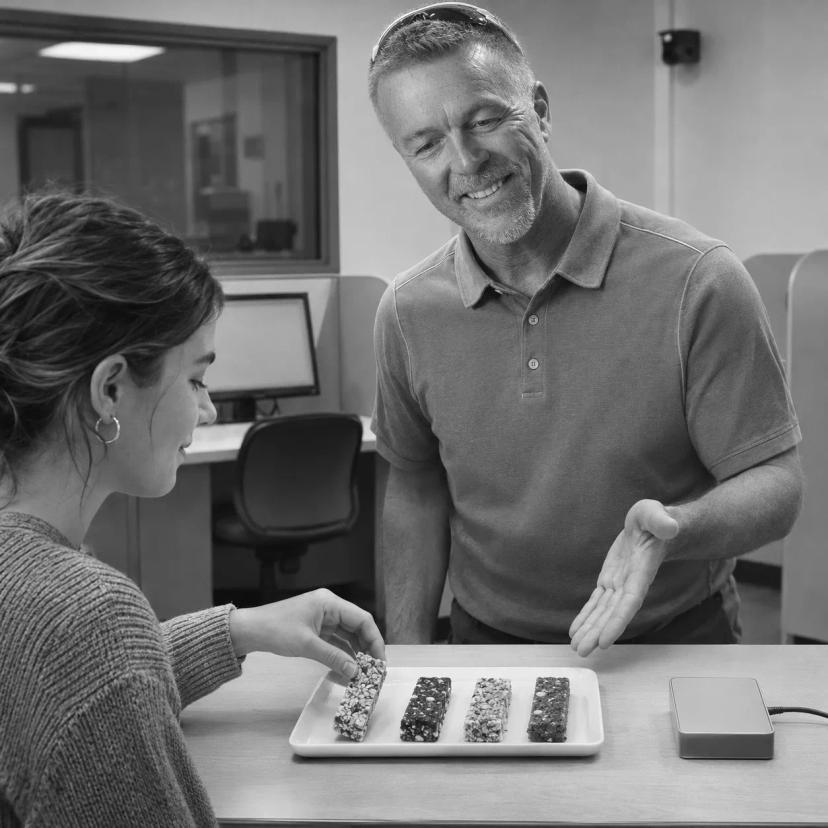
The mere-measurement effect: Why does measuring intentions change actual behavior? (Journal of Consumer Psychology, 2004, volume 14, issues 1 and 2), with Vicki G. Morwitz. In experiments with undergraduates choosing among candy bars, a general question about purchase intentions raised choice of a bar the students liked and lowered choice of one they disliked. In a computerised experiment, responses to the target option were faster after the intention question.
Key ideas
The paper separates four candidate mechanisms: label accessibility, attitude accessibility, attitude polarisation and preformed intention accessibility. The authors concluded that attitude accessibility was best supported, meaning that measuring a general intention makes attitudes towards the specific options easier to retrieve. The effect was stronger for liked options than for disliked ones. Attitudes did not become more extreme, and brand salience and ready-formed intentions did not account for the results.
Sources
- Morwitz, V. G., & Fitzsimons, G. J. (2004). The mere-measurement effect: Why does measuring intentions change actual behavior? Journal of Consumer Psychology, 14(1-2), 64-74. doi:10.1207/s15327663jcp1401&2_8
Studies on this site by Fitzsimons
- Reactance to recommendations: When unsolicited advice yields contrary responses
Fitzsimons (2004) · Marketing Science
Articles that cite Gavan J. Fitzsimons
- Why Saying You Can Refuse Gets a Yes
A request carries a second message about how much room there is to say no. One short clause answers it, and the studies on that clause show what it does to felt pressure and to the answer.
- Why Second-Hand Feels Different
A used coat can feel tainted to one shopper and full of promise to the next. Both reactions come from the same intuition, that objects keep something of the people who handled them.
- What is the mere-measurement effect?
Asking people what they intend to do can change what they go on to do. Experiments with charity requests, an election and candy bars show how the mere-measurement effect works, and a 2016…
Concepts on this site
- Mere-Measurement Effect
Asking people what they intend, like or expect to do can change what they go on to do. The mere-measurement effect is the name consumer researchers give to that result, and the same pattern has been…
- Product Contagion
Product contagion is the belief that a product people find disgusting passes its offensive qualities to another product it touches, so the second product is judged less favourably. Seen or believed…