Why Second-Hand Feels Different
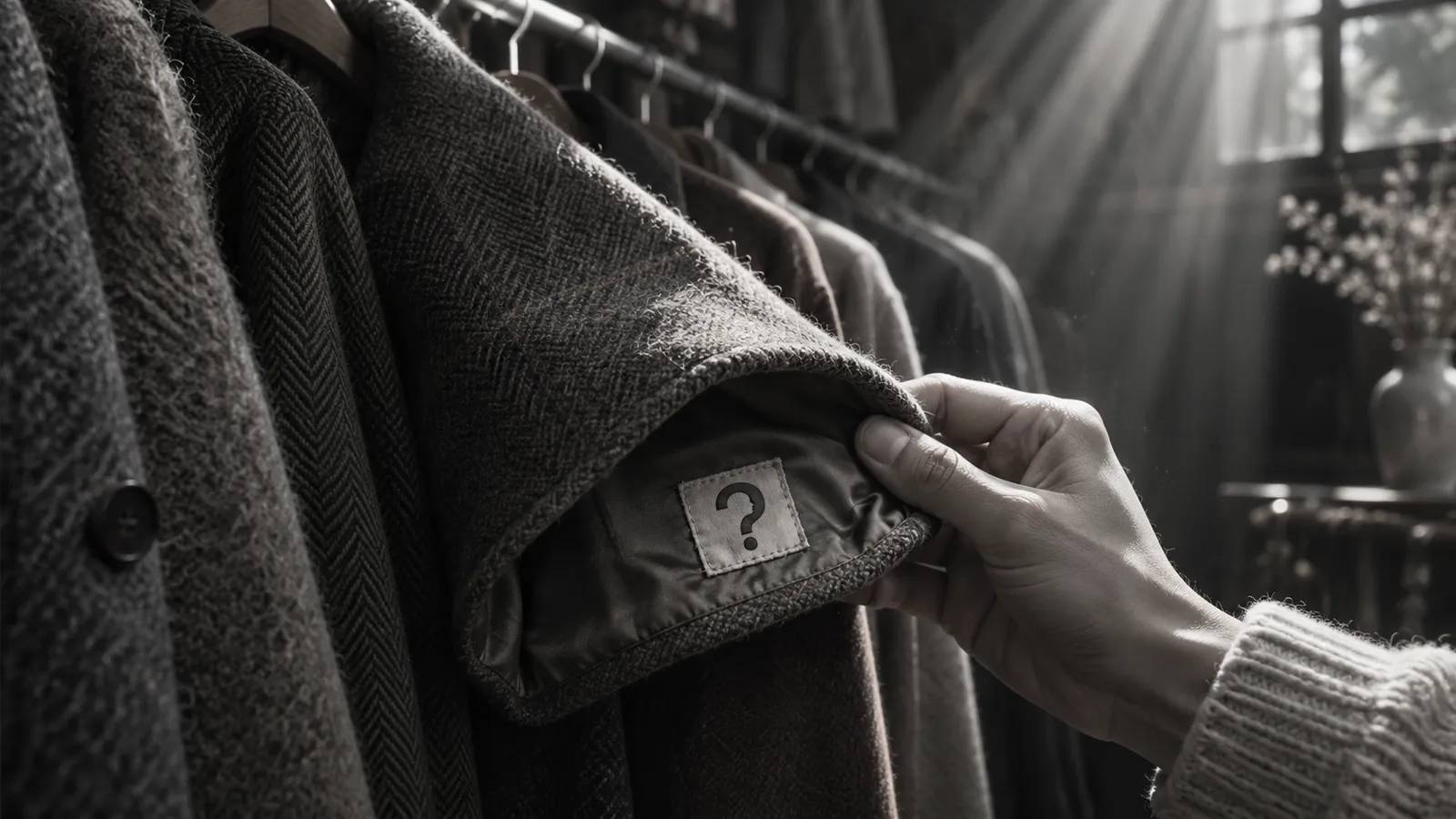
A used coat can feel tainted to one shopper and full of promise to the next. Both reactions come from the same intuition, that objects keep something of the people who handled them.
Why do some people avoid buying second-hand?
Many people hold contagion beliefs, an intuitive sense that objects keep a trace of whoever used them. Studies since 1986 show adults value items less after a disliked person or another shopper has touched them. The same belief can raise value when the previous owner is admired, so the pictured owner shapes the feeling.
Key takeaways
- In a 1986 study with 50 adults, a drink that had briefly touched a sterilised dead cockroach became less appealing, and a shirt worn by a disliked person was valued less (Rozin and colleagues).
- Shoppers rate products less favourably once other shoppers have touched them, and disgust drives the drop (Argo and colleagues, 2006).
- In three field experiments inside a shop, a product was rated more favourably when shoppers believed a highly attractive person of the opposite sex had touched it (Argo and colleagues, 2008).
- Second-hand clothing sold by a business, owned for a shorter time or offered by an attractive seller raised willingness to buy and lowered perceived contamination (Kim and colleagues, 2023).
- Seen contact matters: when packaged cookies touched a moderately disgusting product they were rated lower, and opaque packaging removed the effect (Morales and Fitzsimons, 2007).
Contagion beliefs, the intuition that an object keeps a trace of whoever handled it, have a great deal to work on in second-hand goods. Beside price, quality and taste, the same imagined trace can taint a used coat for one shopper and lend it a story for the next.
The last owner seems to stay
A drink that has briefly touched a sterilised dead cockroach cannot carry anything harmful, yet participants in an early test of the idea with fifty adults found it less desirable all the same. The same participants valued a shirt less once they knew a disliked person had worn it. Paul Rozin and his colleagues used these tasks to show that the law of contagion, described by anthropologists around the turn of the twentieth century, still guides adults. Under that law, things once in contact stay linked after the contact ends, and the link is felt as lasting. The authors tied it to disgust and to the habit of associating things that have been together.
Shops show a milder version of the effect. Jennifer Argo, Darren Dahl and Andrea Morales proposed in 2006 that people rate products less favourably once other shoppers have touched them, although shoppers like to handle goods themselves. They called this consumer contamination, tested it by making earlier contact more noticeable, and traced the drop in liking to disgust. A garment on a second-hand rail is the far end of that scale: it may have been worn for months by a stranger, not lifted from a shelf for a few seconds, and contagion beliefs have far more to work on, while refurbished electronics meet a lighter form of the worry, as Why We Buy Refurbished sets out.
The shoppers who seek out used goods may feel the same pull and weigh it against other motives. Denis Guiot and Dominique Roux built a scale of second-hand shopping motives from two rounds of research with 708 participants in France. Eight motives emerged, covering both the goods and the places that sell them, and they grouped into three families:
- critical, a stance towards conventional retail
- economic, the wish to save money
- recreational, the pleasure of the hunt
For buyers driven by those three, contagion beliefs may be one cost among several.
Can a previous owner add value?
The rule that makes a stranger's shirt feel tainted also makes some previous owners an asset. In three field experiments run inside a working shop, Argo, Dahl and Morales found in 2008 that people rated a product more favourably when they believed a highly attractive person had just touched it. The lift appeared only when toucher and shopper were of opposite sexes, and the authors traced it to a physical sense of something passing across, contagion beliefs read in a positive direction. The auction houses that sell objects owned by famous figures depend on the same reading, and Why Do Celebrity Objects Sell for More follows how closeness of contact with the owner moves the price.
Second-hand buying sits between these poles because the previous owner is usually unknown, and we read that gap as room for imagination. A study of 422 women shoppers in South Korea and the United States, led by Naeun Lauren Kim in 2023, tested cues about the owner and the sale with second-hand clothing. A garment sold by a business rather than by an individual, owned for a shorter time, or offered by a physically attractive seller raised willingness to buy and lowered perceived contamination. The two cues tied to the owner and the sale weighed differently across the two cultural groups, while the seller's appearance worked the same way in both.
Read together, these studies point to the owner as a key variable. The cloth, the wood and the metal are the same as in a new item, and what changes is the person the buyer pictures behind them. Contagion beliefs attach to that pictured person, so anything that shapes the picture, from the type of seller to the item's history, shapes the feeling. The rule seems to run on imagination more than on evidence, which may explain why two shoppers can hold the same coat and feel opposite things.
Contagion beliefs follow the eye
The clearest evidence on visibility comes from new goods. Andrea Morales and Gavan Fitzsimons placed a pack of cookies either touching a product most people find moderately disgusting or six inches away from it, with both items sealed. Touching made students less willing to try the cookies and lowered rated quality, and the effect held after more than an hour of class. A separate test found that touching shifted brand choice towards a less preferred brand, from about 7 per cent of choices to about 23 per cent. When the target product sat in opaque packaging the effect vanished, and the authors concluded that seen or believed contact is enough to trigger product contagion, whatever the packaging actually protects.
That result helps explain why the second-hand trade puts so much effort into presentation. Kim's study found that shorter previous ownership and a business seller both reduced perceived contamination, and both are signals a shopper reads from what is shown. A garment folded among new stock may read differently from one in a bin of mixed items, because the eye can supply the contact the hand never made.
On this evidence, seen or believed contact appears to matter as much as contact itself. Touch carries its own pull in a shop, as Why Touching It Makes Us Want It describes, and with used goods the same hand can also raise the question of who owned it first, so the moment a shopper picks an item up is where the two pulls meet.
Where did the taste for newness come from?
The preference for the untouched is partly learned, and one strand of that learning is economic. In Consumed, Saabira Chaudhuri describes how wartime thrift came to look old-fashioned after 1945, as post-war prosperity built a market for things used once and thrown away. Before that shift, a great deal of packaging went back to be washed and refilled. Her account concerns packaging rather than clothing, but it shows how quickly newness came to stand for cleanliness and status, and it gives contagion beliefs a cultural frame they did not have when bottles routinely came home a second time.
Design researchers have started treating the feeling as a problem to solve. Weston Baxter and his colleagues in design engineering separated three kinds of contamination that block materials from circulating: technical, where an item is no longer fit for use; systemic, where processing becomes inefficient; and contaminated interaction, where the way people feel about using an item, contagion beliefs included, stops it moving between owners. They argued that it leads to downcycling, disposal or stalled circulation, and proposed products designed to pass between users without negative consequences.
The evidence across these studies points to a short list of features that change how a used item feels:
- the kind of previous owner a shopper can picture, and whether that picture is pleasant
- how long the item was owned
- whether the item is sold by a business or by an individual
- whether contact with other goods or other people can be seen
Each of these works on the pictured owner rather than on the item itself. Giving things away raises a different set of feelings, which Why does decluttering feel good takes up. In our view, used goods will keep dividing buyers for as long as objects are felt to hold their histories, and the evidence suggests that careful presentation, clear signals about the seller and honest detail about how long an item was owned and by whom can ease that feeling at the point of sale.
Common questions
Why do some people avoid buying second-hand?
Many people hold contagion beliefs, an intuitive sense that objects keep a trace of whoever used them. Research since the 1980s shows that adults value items less after a disliked person or another shopper has touched them, and the feeling is tied to disgust. A used item has had long contact with an unknown owner, so the feeling may be stronger there.
Can a previous owner make an item more appealing?
Yes. In field experiments inside a shop, people rated products more favourably when they believed a highly attractive person had touched them, and a 2023 study found an attractive seller raised willingness to buy second-hand clothing. The same belief about contact that lowers value for an unknown owner can raise it for an admired one.
What makes second-hand goods feel less contaminated?
Studies point to signals about the previous owner and the sale. Second-hand clothing sold by a business, owned for a shorter time or offered by an attractive seller felt less contaminated to shoppers. Separately, hiding contact from view removed the drop in liking for packaged goods, which suggests that what shoppers see matters as much as what happened.
Sources
Chaudhuri, S. Consumed. Seed book.
Rozin, P., Millman, L., & Nemeroff, C. (1986). Operation of the laws of sympathetic magic in disgust and other domains. Journal of Personality and Social Psychology, 50(4), 703-712. doi:10.1037/0022-3514.50.4.703 https://doi.org/10.1037/0022-3514.50.4.703
Argo, J. J., Dahl, D. W., & Morales, A. C. (2006). Consumer contamination: How consumers react to products touched by others. Journal of Marketing, 70(2), 81-94. doi:10.1509/jmkg.70.2.081 https://doi.org/10.1509/jmkg.70.2.081
Morales, A. C., & Fitzsimons, G. J. (2007). Product contagion: Changing consumer evaluations through physical contact with disgusting products. Journal of Marketing Research, 44(2), 272-283. doi:10.1509/jmkr.44.2.272 https://doi.org/10.1509/jmkr.44.2.272
Argo, J. J., Dahl, D. W., & Morales, A. C. (2008). Positive consumer contagion: Responses to attractive others in a retail context. Journal of Marketing Research, 45(6), 690-701. doi:10.1509/jmkr.45.6.690 https://doi.org/10.1509/jmkr.45.6.690
Guiot, D., & Roux, D. (2010). A second-hand shoppers' motivation scale: Antecedents, consequences, and implications for retailers. Journal of Retailing, 86(4), 355-371. doi:10.1016/j.jretai.2010.08.002 https://doi.org/10.1016/j.jretai.2010.08.002
Baxter, W., Aurisicchio, M., & Childs, P. (2017). Contaminated interaction: Another barrier to circular material flows. Journal of Industrial Ecology, 21(3), 507-516. doi:10.1111/jiec.12612 https://doi.org/10.1111/jiec.12612
Kim, N. L., Jin, B. E., & Kim, T. H. (2023). Negative and positive contamination in secondhand fashion consumption: Does culture matter? International Marketing Review, 40(6), 1509-1530. doi:10.1108/IMR-01-2022-0014 https://doi.org/10.1108/IMR-01-2022-0014
Related concepts
People
More articles
- Why We Pay to Skip the Queue
A fast-track lane sells time, but also certainty, standing and a break from the queue's oldest rule. The people left behind judge it by one test: whether it pushes them back.
- Designing for One Helps Everyone
A ramp cut into a kerb for wheelchair users became the route for pushchairs and suitcases too. The same spillover runs through captions, websites and classrooms, by three routes, and it thins out as…
- Is Shopping an Old Instinct
Shops are new and searching for good things to carry home is old. Evolutionary accounts and their critics read that gap differently, and the evidence gives each side something.
- Why We Stay With a Provider We Do Not Love
Unhappiness raises the question of leaving without settling it. Effort, money and personal ties each hold customers in place, and they do not hold them in the same way.