Julian Hanich
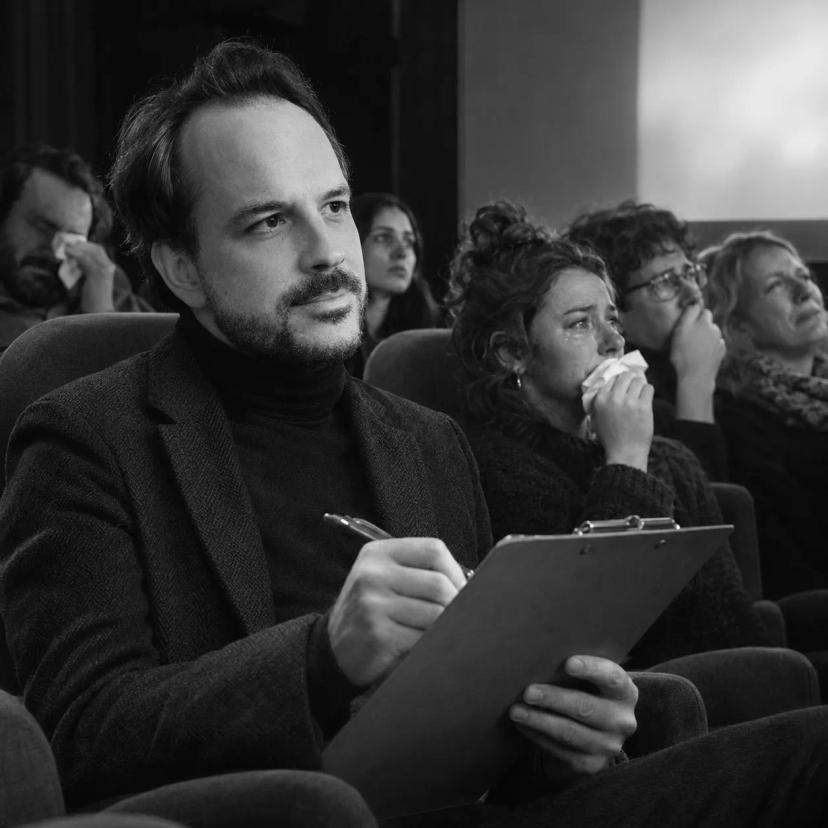
Julian Hanich is a film scholar at the University of Groningen and first author of a 2014 cinema study of being moved and sad films, published in Psychology of Aesthetics, Creativity, and the Arts. He is also the author of books on the emotions of watching horror films and on the experience of watching a film with others.
Who they are
Hanich works in film and media studies, with a focus on how audiences feel in the cinema. His bibliography combines phenomenological writing on film with experimental studies carried out with a psychology and empirical aesthetics group that includes Winfried Menninghaus, Valentin Wagner and Thomas Jacobsen. That mix of film theory and measurement is what places a film scholar as first author of a psychology paper.
He led the 2014 study, written with Wagner, Mira Shah, Jacobsen and Menninghaus, in which 76 participants watched 38 clips in a cinema. In each clip a character or group learned of a death. Sadness and enjoyment were strongly positively correlated, and being moved almost fully carried the link. The authors concluded that people enjoy sad films because they like being moved. The article on sad films builds on the study.
Main work
His two books on film emotion are Cinematic Emotion in Horror Films and Thrillers: The Aesthetic Paradox of Pleasurable Fear (Routledge) and The Audience Effect (Edinburgh University Press, 2017), which concerns watching films in company. His 2014 article in Screen, Watching a film with others: towards a theory of collective spectatorship, belongs to the same line of work.
With the Menninghaus group he is a co-author of several wider papers on aesthetic emotion. Towards a Psychological Construct of Being Moved (PLoS ONE, 2015) proposes a construct for the feeling. The Distancing-Embracing model of the enjoyment of negative emotions in art reception (Behavioral and Brain Sciences, 2017) offers a general account of why negative feelings can be enjoyed in art. What are aesthetic emotions? (Psychological Review, 2019) takes up the wider question. Two other studies from the group appeared in the same journal as the 2014 paper: Art schema effects on affective experience: The case of disgusting images (2014) and Anger framed: A field study on emotion, pleasure, and art (2015).
He has also helped to edit and introduce collections, including Media and emotion: An introduction (2019, with Jens Eder and Jane Stadler) and the 2016 editor's introduction to a journal issue on film phenomenology (Studia Phaenomenologica, with Christian Ferencz-Flatz).
Key papers
Hanich, J., Wagner, V., Shah, M., Jacobsen, T., & Menninghaus, W. (2014). Why we like to watch sad films. The pleasure of being moved in aesthetic experiences. Psychology of Aesthetics, Creativity, and the Arts, 8(2), 130-143.
Menninghaus, W., Wagner, V., Hanich, J., Wassiliwizky, E., Jacobsen, T., and colleagues (2017). The Distancing-Embracing model of the enjoyment of negative emotions in art reception. Behavioral and Brain Sciences.
Hanich, J. (2017). The Audience Effect. Edinburgh University Press.
Key ideas
Sadness and enjoyment rose together across sad clips.
Being moved carried almost all of the link.
Distancing and embracing: the group's later model proposes that negative emotions in art can be enjoyed when the audience keeps some distance from them and also embraces them.
Sources
- Hanich, J., Wagner, V., Shah, M., Jacobsen, T., & Menninghaus, W. (2014), Psychology of Aesthetics, Creativity, and the Arts 8(2), 130-143.
Studies on this site by Hanich
Articles that cite Julian Hanich
- Why We Like Sad Films
What studies of film clips, sad music and viewer motives suggest about why sadness and liking go together at the cinema.
Concepts on this site
- Being Moved
Being moved is a complex emotional state that sadness can feed and that tracked liking in two studies. In the 2014 cinema study it almost fully mediated the link between sadness and enjoyment, and a…
- The Sad-Film Paradox
The sad-film paradox is the puzzle of how a negative emotion such as sadness can go together with liking and pleasure. Julian Hanich and colleagues proposed in 2014 that being moved accounts for…