Kristin Neff
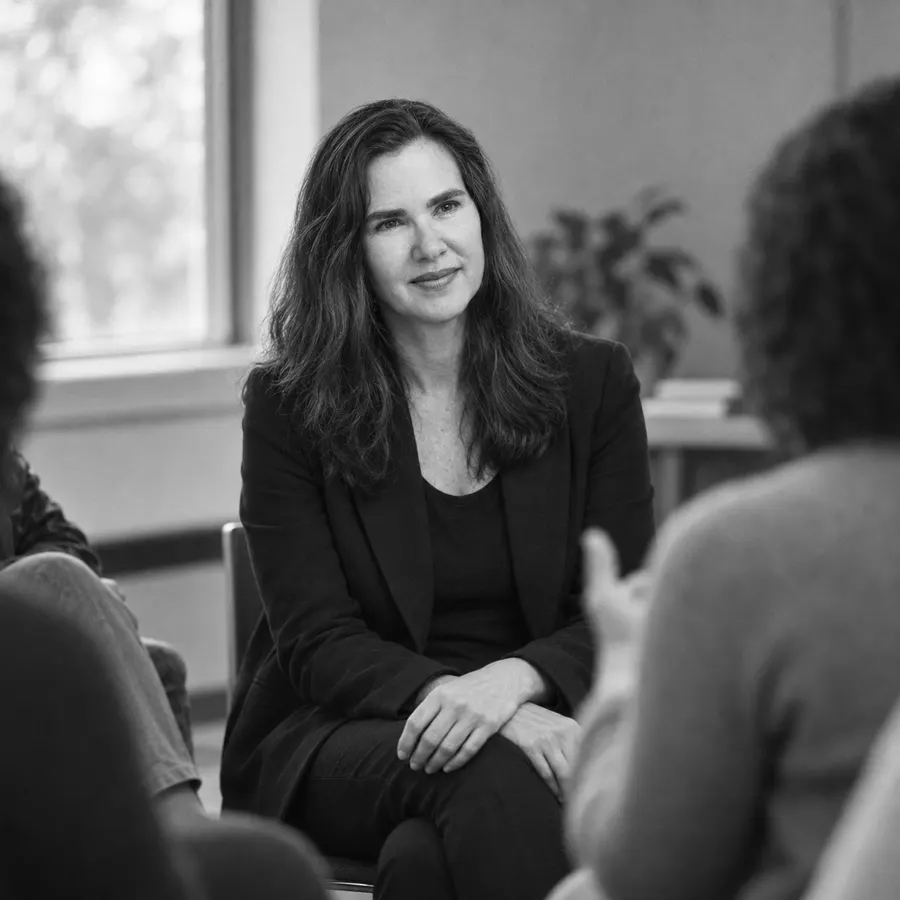
Kristin Neff introduced self-compassion to research psychology in 2003, in two papers published in the same volume of Self and Identity: one setting out the idea, one building the questionnaire that almost every study since has used. She defines it as three components, each with a kind pole and a harsh one: self-kindness against self-judgment, common humanity against isolation, and mindfulness against over-identification. With Christopher Germer she developed the Mindful Self-Compassion programme.
Who they are
She is at the University of Texas at Austin, in educational psychology. She is the originator of the construct and she is also an interested party in the argument about how to measure it, and this page holds both of those at once.
The dispute, both sides. Peter Muris argues that the questionnaire's negative items, the ones about self-judgment, isolation and over-identification, are measuring self-criticism rather than the absence of kindness. If that is right, then adding them into a single score partly builds distress into the measure, and the strong relationship people then find between low self-compassion and poor mental health is partly an artefact of having measured distress twice. Neff's reply is statistical. Her 2019 analysis, across 20 samples and 11,685 people, argues for a bifactor structure, meaning the data are best described by one general self-compassion factor sitting underneath several separable sub-factors, which would make a single total score defensible.
Where this publication lands. The measurement objection stands. The thing itself survives. Her strongest card is not the questionnaire at all, it is the training evidence: when people are taught the practice, the kind subscales rise and the harsh ones fall together, which is what a single underlying dimension does and what no scoring artefact explains. Muris wins the measurement. Neff wins the thing. And the case for being kinder to yourself does not rest on the questionnaire, because the sharpest evidence for it, Juliana Breines and Serena Chen's experiments, does not use the scale as its outcome at all.
Key papers
Neff, K. D. (2003). "Self-Compassion: An Alternative Conceptualization of a Healthy Attitude Toward Oneself", Self and Identity, 2(2), 85 to 101. The theory.
Neff, K. D. (2003). "The Development and Validation of a Scale to Measure Self-Compassion", Self and Identity, 2(3), 223 to 250. The instrument, and the thing under dispute.
Neff, K. D. (2019). "Setting the Record Straight About the Self-Compassion Scale", Mindfulness, 10, 200 to 202; and the bifactor analysis across 20 samples, 11,685 participants.
Neff, K. D. (2022). Annual Review of Psychology, 73; and the 2022 reply in Mindfulness to Muris and Otgaar.
Neff, K. D., & Germer, C. K. (2013). Journal of Clinical Psychology, 69(1), 28 to 44. The founding trial of the Mindful Self-Compassion programme.
Key ideas
The founding trial is small. It ran 52 people against a waiting list, overwhelmingly female, middle-aged and self-selected, and it is routinely described as though it were definitive. A waiting-list comparison shows that doing something beats doing nothing.
Because she is the originator, her own reported findings about her own construct sit in a weaker evidential position than the independent work. Juliana Breines and Mark Leary are both independent of her, and both matter more for that reason.
Her three-component definition is genuinely useful even if the scoring is wrong, because it separates three different things people do to themselves under pressure.
She goes unnamed in the trade books that reach for her construct, which is the usual shape: the idea travels and the person who built it does not.
Concepts on this site
Compassionate and Uncompassionate Self-Responding
Find them elsewhere
Nothing confirmed. A search was run and no website or account could be tied to this person with enough certainty to publish. A name match on its own is not evidence, and a wrong link here would be worse than none.
Checked 2026-09-11. Handles and affiliations go out of date, so treat this block as a snapshot rather than a standing fact.
Sources
- Neff, K. D. (2003). Self and Identity, 2(2), 85 to 101, and 2(3), 223 to 250.
- Neff, K. D. (2019). Mindfulness, 10, 200 to 202, and the bifactor analysis, 20 samples, 11,685 participants.
- Neff, K. D. (2022). Annual Review of Psychology, 73, and the Mindfulness reply to Muris and Otgaar.
- Neff, K. D., & Germer, C. K. (2013). Journal of Clinical Psychology, 69(1), 28 to 44.
- Affiliation confirmed 2026-09-11 against the University of Texas at Austin Department of Educational Psychology record.