Linda Henkel
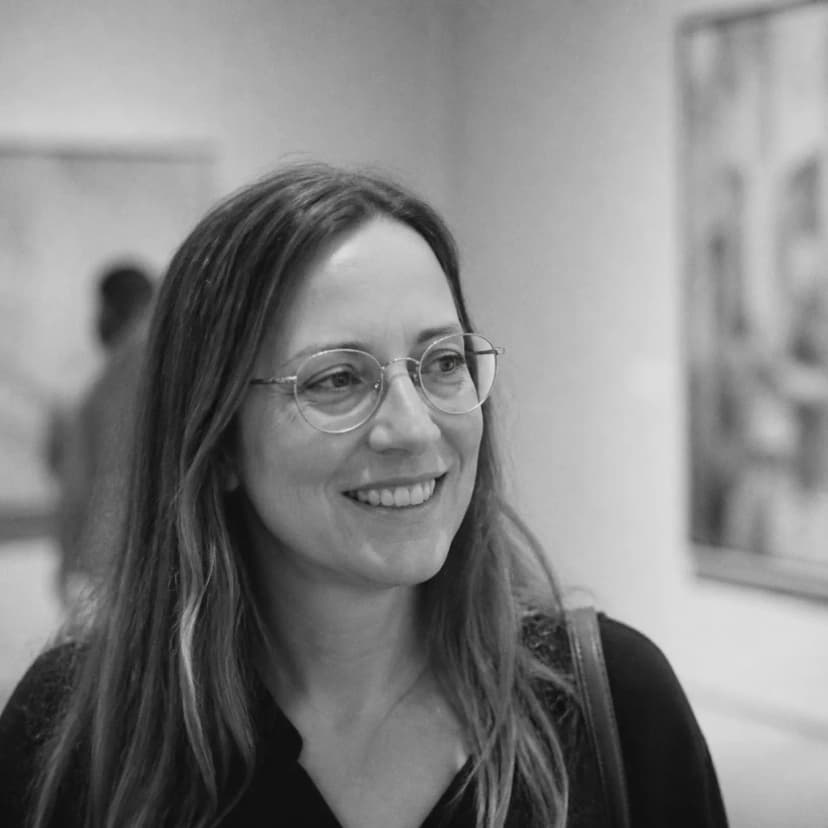
Linda Henkel is an American memory researcher at Fairfield University, best known for a 2014 study in which undergraduates on a museum tour remembered fewer details of the objects they photographed than of the objects they only looked at. The finding is quoted constantly as evidence that cameras damage memory. Her own control condition rules that reading out, because when participants zoomed in on a detail rather than snapping the whole object, the impairment disappeared.
Who they are
Henkel is a professor in the Department of Psychology at Fairfield University in Connecticut, and her research is on memory errors and distortions: how people decide whether something they remember was perceived or imagined, how photographs shape what gets remembered, and how memory behaves in applied settings such as eyewitness accounts and false confessions.
The 2014 museum study, "Point-and-Shoot Memories: The Influence of Taking Photos on Memory for a Museum Tour", published in Psychological Science 25(2), 396-402, is the work that travelled. Undergraduates toured a museum, photographed some objects and only observed others. The next day they remembered fewer of the photographed objects, fewer details about them and less about where they had been.
The control condition is what makes the study good, and it is the part that usually falls out of the retelling. In a further condition participants zoomed in on a specific part of an object rather than photographing the whole thing, and the impairment vanished. The camera was present in both conditions, so the camera cannot be what produced the effect. What differs is how much attention the participant paid to the object while capturing it, and Henkel says so herself rather than leaving the more dramatic reading available. Nicholas Carr keeps that nuance in The Shallows rather than dropping it, which the vault records as a point in his favour, given how easily it could have been reported as photographs destroying memory.
Her study is also the best-behaved member of a badly behaved family. The two most famous findings about devices and memory, the Google effect and the smartphone brain-drain result, have both come apart under replication and meta-analysis. Henkel's has not, in large part because it was reported with the condition that constrains its own interpretation attached.
Key papers
Henkel has not written a book. She is a working scientist whose output is journal articles and chapters in edited collections, so this page carries papers rather than a book table. The list below comes from her own publications page at Fairfield University, retrieved on 2026-09-02; that page appears to have last been updated around 2016, so it is not a current bibliography, and papers published since are not represented here.
Henkel, L. A. (2014). "Point-and-Shoot Memories: The Influence of Taking Photos on Memory for a Museum Tour." Psychological Science, 25(2), 396-402. The museum study, and the one everything else on this site cites her for.
Henkel, L. A. (2011). "Photograph-induced memory errors: When photos make people claim they've done things they haven't." Applied Cognitive Psychology, 25, 78-86.
Henkel, L. A. (2012). "Seeing photos makes us read between the lines: The influence of photos on memory for inferences." Quarterly Journal of Experimental Psychology, 65, 773-795.
Henkel, L. A., & Mattson, M. E. (2011). "Reading is believing: The truth effect and source credibility." Consciousness and Cognition, 20, 1705-1721.
Henkel, L. A., Franklin, N., & Johnson, M. K. (2000). "Cross-modal confusions between perceived and imagined events." Journal of Experimental Psychology: Learning, Memory, and Cognition, 26, 321-335.
Henkel, L. A. (2004). "Erroneous memories arising from repeated attempts to remember." Journal of Memory and Language, 50, 26-46.
Cardwell, B. A., Henkel, L. A., Garry, M., Newman, E. J., & Foster, J. L. (2016). "Nonprobative photos rapidly lead people to believe claims about their own (and other people's) pasts." Memory & Cognition. Note the author order: this one is Cardwell's, and belongs in her list rather than in Henkel's when it is credited.
Her applied work on ageing and testimony runs alongside the photography research and rarely gets mentioned with it, including studies on whether older adults change their eyewitness reports when re-questioned and on collaborative remembering in older adults.
Key ideas
The photo-taking impairment effect: photographing an object as a whole reduces later memory for the object and its details, relative to observing it.
The effect is about divided attention during the act of capture, not about the device. Zooming in on a detail removes the impairment while leaving the camera in place.
A single well-chosen control condition can convert a headline into a defensible claim, which is why this study is still standing while its more famous neighbours are not.
Photographs shape memory in the other direction as well, prompting inferences and, in her 2011 work, false claims about actions never performed.
Concepts on this site
Cognitive Offloading, where her museum study is the best-supported evidence in a literature whose flagship findings failed
Memory Consolidation, the process attention at the moment of capture feeds
Sources
- Henkel, L. A. (2014). "Point-and-Shoot Memories: The Influence of Taking Photos on Memory for a Museum Tour." Psychological Science, 25(2), 396-402.
- Linda Henkel, publications page, Fairfield University faculty site, retrieved 2026-09-02. The source for the paper list above, and for the absence of any authored book. Last apparent update around 2016.
- Carr, N. (2010, updated 2020). The Shallows: What the Internet Is Doing to Our Brains. Where the museum study reaches a general readership, with the zoom condition intact.