Lyle Brenner
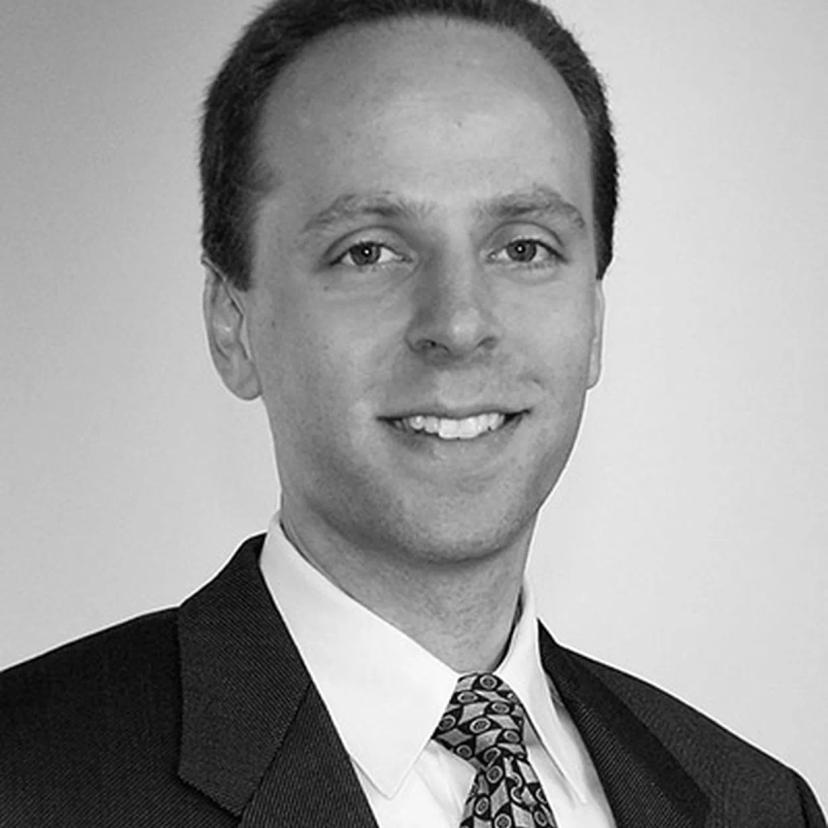
Lyle Brenner is a marketing scholar at the University of Florida whose research is about how people make predictions and judgments under uncertainty. He is first author of On the evaluation of one-sided evidence, published in 1996 in the Journal of Behavioral Decision Making with Derek Koehler and Amos Tversky. In that paper students who read only one side of a mock legal dispute predicted jury votes one-sidedly and gave narrower ranges than students who saw both sides. The paper matches the legal demonstration that Daniel Kahneman describes in Thinking, Fast and Slow as an illustration of WYSIATI.
Who they are
Brenner's research page at the University of Florida, last updated in 2004, lists him as a professor in the Marketing Department of the Warrington College of Business. It gives his research interests as consumer and managerial decision making, judgment under uncertainty, consumer reasoning, mathematical psychology, and statistics and research methods. It describes the work as examining how consumers and managers make predictions, inferences and decisions, including overconfidence, evaluation of biased evidence, subjective probability and context effects on consumer choice. He teaches consumer behaviour, quantitative methods and managerial decision making.
The same page shows a long collaboration with Derek Koehler and with Amos Tversky in the mid-1990s, and later work with Griffin, Rottenstreich, Sood and Bilgin. This page draws only on that listing and on the 1996 paper. It does not describe his current position or any work after the listing's last update.
Key papers
The research page lists, among others, these papers, given here by authors, year and topic.
In 1996 Brenner, Koehler and Tversky published the one-sided evidence study in the Journal of Behavioral Decision Making, volume 9. The same year Brenner, Koehler, Liberman and Tversky published Overconfidence in probability and frequency judgments: A critical examination in Organizational Behavior and Human Decision Processes, volume 65, and Koehler, Brenner, Liberman and Tversky published a paper on confidence and accuracy in trait inference in Acta Psychologica.
In 1997 Koehler, Brenner and Tversky published a paper on the enhancement effect in probability judgment. In 1999 Brenner and Koehler published on the subjective probability of disjunctive hypotheses in Cognitive Psychology, and Brenner, Rottenstreich and Sood published on comparison, grouping and preference in Psychological Science. In 2000 Brenner published a critique of the statistical-artifact explanation of overconfidence in Psychological Review. In 2002 he contributed chapters on the calibration of expert judgment and on support theory to the collection Heuristics and Biases, edited by Gilovich, Griffin and Kahneman. In 2007 Brenner, Rottenstreich, Sood and Bilgin published on possession, valence and reversals of the endowment effect in the Journal of Consumer Research.
Key ideas
The 1996 one-sided evidence study tested whether people allow for evidence they have not seen. In its first experiment, 137 students at San Jose State University read six adapted legal disputes covering civil, criminal and child custody cases. Some saw only the plaintiff's side, some only the defendant's, and a jury group saw both. Each predicted how many of 20 jurors would favour the plaintiff and gave a range they were 90 per cent sure of. The plaintiff-only group guessed 12.3, the defendant-only group guessed 9.5 and the jury group guessed 11.3. The one-sided groups gave narrower ranges, 10.4 against 11.1 for the jury group, and the jury group was the more accurate. The authors concluded that people do not compensate sufficiently for missing information.
A later experiment in the paper tested a remedy. When participants first rated the strength of the unseen side's case and then made their prediction, the average gap between plaintiff-side and defendant-side readers fell from 7.1 jurors to 2.7. The unseen side was rated only slightly weaker than the side the participants had read, 2.8 on a five-point scale where 3 meant equal. The authors read this as showing that the bias came mainly from failing to consider the other side.
For readers of consumer research the paper is a laboratory model of a common situation, a decision made from a selection of the evidence, and it can be read alongside the consumer experiments of David Sanbonmatsu and colleagues. It was run on students and on mock legal cases, so the courtroom numbers are not estimates of how shoppers behave.
Sources
- Brenner, L., Koehler, D. J., & Tversky, A. (1996). On the evaluation of one-sided evidence. Journal of Behavioral Decision Making, 9, 59-70. Full text on the author's page at bear.warrington.ufl.edu/brenner/papers/brenner-jbdm96.pdf, read 2026-10-27.
- Lyle Brenner, research page, Marketing Department, Warrington College of Business, University of Florida (bear.warrington.ufl.edu/brenner/research.html), last updated 2004 according to the page, read 2026-10-27.
- Brenner, L. A., Koehler, D. J., Liberman, V., & Tversky, A. (1996). Overconfidence in probability and frequency judgments: A critical examination. Organizational Behavior and Human Decision Processes, 65(3), 212-219. Listing only, via IDEAS/RePEc; no abstract was available.
- Kahneman, D. (2011). Thinking, Fast and Slow, for the description of the legal demonstration.
Studies on this site by Brenner
- On the evaluation of one-sided evidence
Brenner (1996) · Journal of Behavioral Decision Making
Articles that cite Lyle Brenner
- Do We Judge Products on Too Little
Daniel Kahneman's acronym WYSIATI says judgment treats what is in view as the whole case. A mock-jury study, two consumer experiments and a dinnerware pricing study test pieces of that, and they…
Concepts on this site
- WYSIATI
WYSIATI is short for what you see is all there is. The fast part of the mind builds the best possible story out of whatever information happens to be active at that moment, and has no machinery for…