Marshall McLuhan
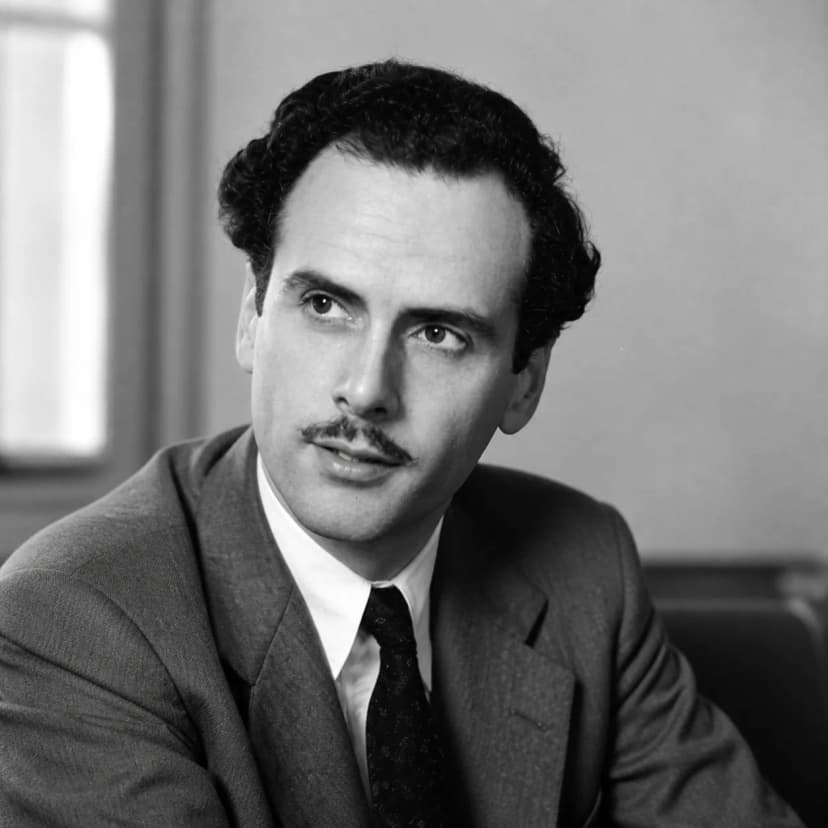
Marshall McLuhan is the media theorist who argued that a medium's form, not its content, does the work on the people using it. His compressed version, that the medium is the message, is the founding statement of media determinism, and his image for why almost nobody notices is that content is the piece of meat a burglar throws to distract the watchdog. He also supplied the cost side of the argument, amplification and numbing. He was a professor of English at the University of Toronto, and he lived from 1911 to 1980.
Who they are
McLuhan taught English. That is worth stating first, because the shape of his thinking is literary rather than empirical: he read technologies the way a critic reads a poem, for form, and he never ran a study in his life. He founded the Centre for Culture and Technology at Toronto in 1963 and directed it, and by the middle of the decade he was famous in a way academics generally are not.
The argument he is remembered for is a redirection of attention. Everyone was arguing about television programmes. McLuhan said the programmes were beside the point, that the important consequences of television were not in any programme and the important consequences of print were not in any book, and that both sat in what the form itself asks of the people using it. How attention gets allocated. What counts as an argument. How fast a thought is expected to arrive. The watchdog image is his account of why the audience never gets there: they are busy with the meat while the form reorganises the house.
The opposing position, instrumentalism, holds that technologies are neutral means and that what matters is who uses them. David Sarnoff gave it its cleanest statement in a 1955 speech, arguing that the products of modern science are neither good nor bad in themselves. McLuhan went at that speech directly and called it "the voice of the current somnambulism", which is a good measure of how much he thought was at stake. Instrumentalism, on his reading, does worse than get the answer wrong. It supplies the particular form of not noticing that allows a medium to work unexamined.
Understanding Media carries the subtitle The Extensions of Man, and the extension idea is the second thing he is quoted for. The wheel extends the foot, the book extends the eye, electric media extend the nervous system. Tim Wu updates the idea for smartphones and wearables in The Attention Merchants, arguing that these are prostheses rather than tools, which raises the stakes considerably on who you trust to build them. Attached to the extension claim is its price: every technology that extends a faculty dulls the natural version of it, and the two are one event. That principle is not falsifiable and this site labels it as a frame rather than a finding.
He has a second life in the vault, and it is less flattering. Wu records that McLuhan advised Timothy Leary and effectively scripted "Turn On, Tune In, Drop Out", so the counterculture's anti-advertising slogan was built with an adman's craft by the man who had spent a career explaining how media capture people. The slogan was then sold back to the culture it was supposed to be an escape from. Neither Leary nor Herbert Marcuse, who is where that irony goes next in our notes, has a page on this site.
Nicholas Carr is the reason McLuhan matters to the current argument about screens. The Shallows is built on McLuhan's spine and opens on the watchdog image, and what Carr adds is a mechanism McLuhan never had, neuroplasticity. That addition is what turns a media-theory position into something with a testable edge, and it is also where the argument runs into trouble: two of the studies Carr recruited to carry it have since failed. McLuhan is not damaged by that, because he never staked anything on a study. The same fact is why nothing he wrote can be cited as evidence.
Books
McLuhan published a great deal, and a great deal more has been published under his name since he died. The two are separated below because a collection of somebody's notes, letters or recorded talks is not a book they wrote, and the second table is longer than most readers expect. Titles and imprints were checked against the McLuhan estate's own bibliography on 2 September 2026. This is a selection rather than the complete list.
Published in his lifetime:
Published after his death, or assembled by other people:
Key papers
McLuhan was a literary critic rather than an experimentalist, and he ran no studies, so what follows is a book rather than a research record. The vault records one title, and the list is a selection rather than a bibliography.
McLuhan, M. (1964), Understanding Media: The Extensions of Man, McGraw-Hill, New York. The source of the medium is the message, of the extensions idea and of the watchdog image. Not read here; his arguments reach these pages through Carr and Wu.
Titles and imprints were checked against the Estate of Marshall McLuhan's own bibliography on 2 September 2026. He published considerably more than this in his lifetime, and a good deal has been published under his name since he died. The vault does not hold the full list and this page does not supply one.
Key ideas
The medium is the message. A medium's form, independent of what it carries, shapes how a society perceives and thinks.
Content is the piece of meat a burglar throws to distract the watchdog. Arguing about programmes is how a form escapes examination.
Media are extensions of man, and every extension of a faculty dulls the natural version of it.
Instrumentalism, the view that a technology is a neutral means, is "the voice of the current somnambulism". His answer to Sarnoff's 1955 speech.
The dinosaur effect. An institution can be at its largest size in the moment before it goes extinct. Our notes flag this as the McLuhan line most usable in an article, and it applies well beyond television networks.
Extensions become prostheses. Tim Wu's update of the idea for smartphones and wearables, which changes the question from what a device does to who is trusted to build a part of you.
Concepts on this site
Media Determinism, the position he is the main exponent of, though Thorstein Veblen coined the term
Amplification and Numbing, his cost principle, and the least falsifiable part of the argument
Intellectual Technologies, Carr's taxonomy rather than McLuhan's, and it sits inside McLuhan's position
Attentional Revolt, Narrowcasting and Automatic vs Controlled Attention are associated with him in our notes and have no page on this site yet
Sources
- McLuhan, M. (1964). Understanding Media: The Extensions of Man. McGraw-Hill, New York. Not read here; his arguments reach these pages through Carr and Wu.
- Carr, N. (2010, updated 2020). The Shallows: How the Internet Is Changing the Way We Think, Read and Remember. Atlantic Books. Full text read, 1 September 2026. The prologue and chapter 3 for the watchdog image, the Sarnoff exchange of 1955 and the somnambulism line; chapters 10 and 11 in our note for amplification and numbing.
- Wu, T. (2016). The Attention Merchants: The Epic Scramble to Get Inside Our Heads. For McLuhan advising Timothy Leary and the drafting of "Turn On, Tune In, Drop Out", for the prosthesis reading of extensions, and for the dinosaur effect.
- Bibliography checked against the Estate of Marshall McLuhan's own list at marshallmcluhan.com, 2 September 2026. Where the estate's dates differ from other records, the discrepancy is noted in the table rather than resolved.