Matthias Gruber
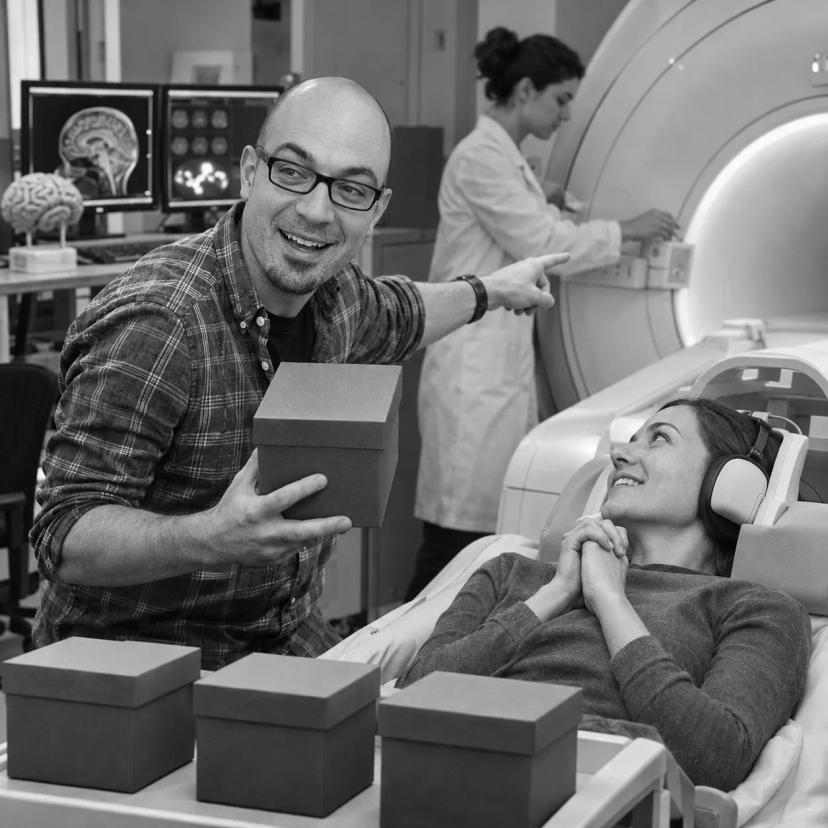
Matthias Gruber is the first author, with Bernard Gelman and Charan Ranganath, of a 2014 paper in Neuron on curiosity and learning. It reports that answers to questions people were curious about, and unrelated faces seen while waiting for them, were remembered better.
Who they are
Matthias Gruber is a researcher who studies learning and memory. His best-known paper on this site is the 2014 curiosity study that he led with Bernard Gelman and Charan Ranganath.
Key papers
- Gruber, Gelman and Ranganath (2014), States of curiosity modulate hippocampus-dependent learning via the dopaminergic circuit, Neuron, 84(2), 486-496.
Key ideas
The 2014 paper had adult volunteers rate their curiosity about trivia questions and then wait for the answers inside a brain scanner while unrelated faces appeared. Memory for answers and faces was better in high-curiosity states, and midbrain and nucleus accumbens activity was higher. Individual differences in the memory benefit were linked to midbrain and hippocampus activity and connectivity before the answer appeared. The authors conclude that curiosity engages mechanisms that overlap with those of extrinsic reward motivation.
Sources
- Gruber, M. J., Gelman, B. D., & Ranganath, C. (2014), States of curiosity modulate hippocampus-dependent learning via the dopaminergic circuit, Neuron, 84(2), 486-496. https://doi.org/10.1016/j.neuron.2014.08.060
Studies on this site by Gruber
Articles that cite Matthias Gruber
- What are examples of intrinsic motivation?
Curiosity, a job that gives its own satisfaction and a task that absorbs the person doing it are the clearest examples. Each has a study behind it, and a 183-study analysis shows what intrinsic…
Concepts on this site
- Curiosity and Memory
Curiosity and memory describes the finding that being curious about a question helps people remember its answer, and also remember unrelated material seen while waiting for it. Matthias Gruber…
- Intrinsic Motivation
Intrinsic motivation is acting for the sake of the act itself, rather than for a reward attached to it or under compulsion to perform it. The distinction is Edward Deci's, developed with Richard…