Michael Kuhn
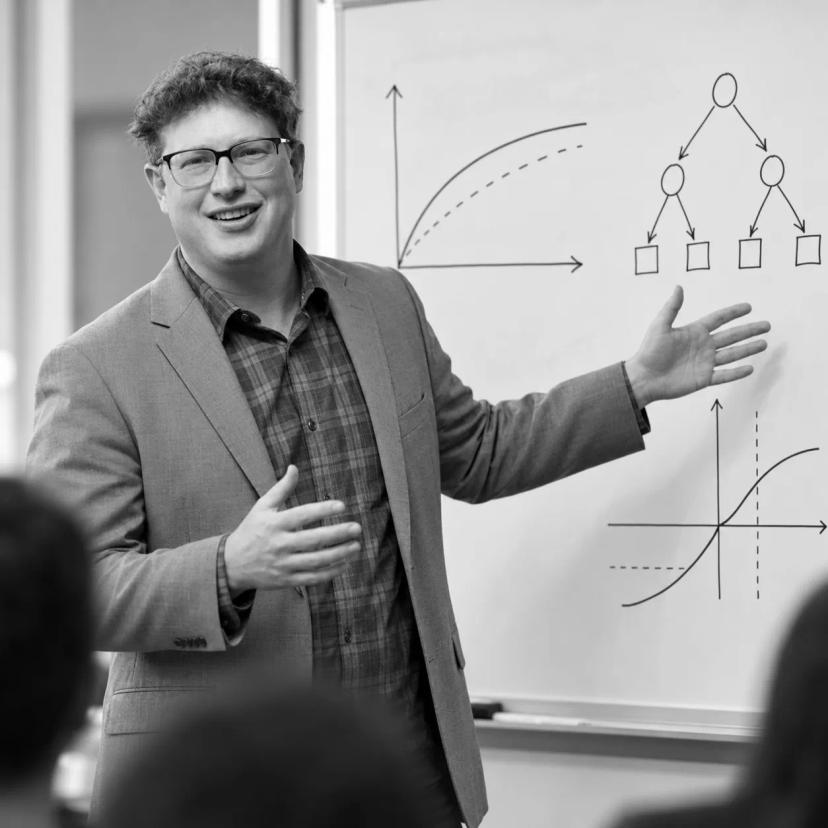
Michael Kuhn is the co-author, with Andy Brownback, of the 2019 Games and Economic Behavior paper 'Understanding outcome bias'. The experiment found that principals judged agents partly on luck even when effort was perfectly observable, and that independent third-party judges showed the same bias.
Who they are
This page records the public professional record only. Nothing adverse is recorded and no motive is attributed.
The January 2019 working-paper version lists him at the University of Oregon and as the corresponding author. His wider career was not surveyed for this page, which concerns one paper, used in the article What Outcome Bias Does to a Good Call as the evidence from a work-like setting.
Key papers
- Brownback, A., & Kuhn, M. A. (2019). 'Understanding outcome bias.' Games and Economic Behavior, 117, 342-360. doi:10.1016/j.geb.2019.07.003
Key ideas
The third-party experiments are the part of the paper that bears most on institutions. Many organisations assume that an independent reviewer, who has no stake in the result, will judge more fairly than the person directly affected. In the paper, third parties recruited online, with a small endowment and a cost for each unit of punishment, decided how much to punish agents in scenarios drawn from the main experiment. Their choices were then applied to later laboratory agents, so the punishment had real consequences.
In the working-paper version, good luck reduced the third parties' punishment by about a quarter, a reduction similar to the effect of a large rise in the agent's effort. When third parties were given the chance to commit to viewing luck, a little over half viewed it. When agents could reveal luck, about half paid to show good luck to third parties. A separate treatment asked third parties to guess an agent's average effort across all thirteen periods, and good luck raised their guesses by about 16 per cent.
The authors conclude that outcome bias is strong even when effort is perfectly observed, that it crowds out accurate effort-based punishment, and that independent third parties are about as biased as principals, so outsourcing judgement does not solve the problem. They also warn that information about luck can be controlled by whoever holds it, which makes the choice of what to reveal a tool for steering audiences.
For a reader judging a colleague, a supplier or a manager, the practical reading is cautious. The study does not test any remedy that works. It shows two that did not, and it shows that the bias is not confined to those with a personal stake.
How the paper is used on this site
The article What Outcome Bias Does to a Good Call reports the published abstract's findings: observable effort did not protect agents from luck, the two remedies failed, and lucky agents were seen as harder workers than identical unlucky ones. The page for his co-author, Andy Brownback, covers the first treatments, and the concept page Outcome Bias carries the definition.
How the paper was read
The figures above are the working paper's, and the published version may differ.
What the work is for
The paper's result about third parties bears on any process that hands judgement to someone at a distance: an appeals panel, an audit, an outside review of a failed project. The usual case for outside judges is that distance removes self-interest. Self-interest is not what the experiment found to be driving the bias, since the third parties had no stake in the outcome and still punished less when the agent was lucky. The authors therefore argue that disappointment and distributional preferences alone cannot account for the pattern, and that luck changes what judges believe about the agent.
What the paper does not show
It does not show that third-party review is worse than review by the affected party, only that it is not free of the bias. It does not show what a judge who is trained to separate luck from effort would do, and it does not test whether showing a judge the distribution of possible outcomes would change the ratings.
Sources
- Brownback, A., & Kuhn, M. A. (2019). 'Understanding outcome bias.' Games and Economic Behavior, 117, 342-360. doi:10.1016/j.geb.2019.07.003
Articles that cite Michael Kuhn
- What Outcome Bias Does to a Good Call
People rate a decision by how it turned out, even when told the decision maker knew only what they know. Five studies, from medical vignettes to betting prices, follow the habit into courtrooms…
Concepts on this site
- Outcome Bias
Outcome bias is judging the quality of a decision by how it turned out rather than by whether the process behind it was sound. A good decision that ends badly gets punished; a reckless one that ends…