Moshe Naveh-Benjamin
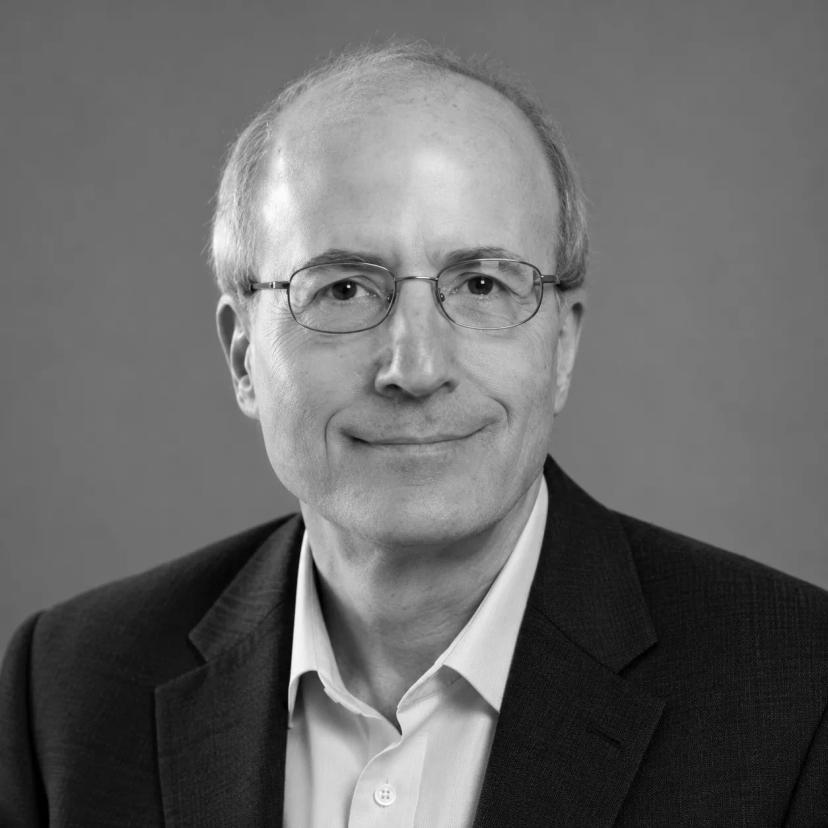
Psychologist and first author of the 2014 study in which older adults almost always failed to notice their own name in an unattended channel, 3 per cent against 58 per cent of young adults in the first experiment.
Who they are
Moshe Naveh-Benjamin is Professor Emeritus in the Department of Psychological Sciences at the University of Missouri, where he leads the Memory and Cognitive Aging Laboratory. His research areas are adult-age changes in episodic memory, the interaction of attention, working memory and long-term memory, and the role of memory in real-life settings, especially education.
He is associated with the associative deficit framework, which attributes age-related changes in episodic memory to older adults' difficulty in linking pieces of information. His work on divided attention found that withdrawing attention hurts encoding far more than retrieval.
Key papers
Naveh-Benjamin, M., Kilb, A., Maddox, G., Thomas, J., Fine, H., Chen, T., & Cowan, N. (2014). Older adults don't notice their names: a new twist to a classic attention task. Journal of Experimental Psychology: Learning, Memory, and Cognition, 40(6), 1540-1550. doi:10.1037/xlm0000020.
Key ideas
The 2014 paper reports five experiments. In the first, 58 per cent of 50 young adults noticed their name in the unattended channel against 3 per cent of 29 older adults. Among the young, 69 per cent of low working memory span listeners noticed it against 33 per cent of high-span listeners, yet older adults, whose spans resembled those of low-span young adults, almost never did. The result held with slower presentation (48 per cent against 7 per cent) and with the name controlled to the right ear (15 per cent of older adults), and it remained significant after controlling for working memory span and for noticing the name in an attended channel.
The authors proposed that older adults' performance involves an inhibition factor, which lets high-span young adults suppress the channel to be ignored, and an attentional capacity factor, with more unallocated capacity allowing low-span young adults to notice their names much more often than older adults with comparably low spans.
See The Cocktail Party Effect and The Suppression Deficit.
Sources
- Naveh-Benjamin et al. (2014), abstract and results read in the author manuscript.
- Biographical details are from his University of Missouri department profile.
Studies on this site by Naveh-benjamin
- Older adults don
Naveh-Benjamin (2014)
- Older adults don't notice their names: A new twist to a classic attention task
Naveh-Benjamin (2014) · Journal of Experimental Psychology: Learning, Memory, and Cognition
Articles that cite Moshe Naveh-Benjamin
- Why You Hear Your Name in a Crowd
Your name breaks through a conversation you are ignoring for about a third of listeners in the laboratory. The people who notice are not simply the ones with the leakiest filter, and the group that…
Concepts on this site
- The Cocktail Party Effect
The cocktail party effect is the ability to follow one voice among many while still catching personally important sounds, such as your own name, from a conversation you were ignoring. Two findings…
- The Suppression Deficit
What older brains lose is not the ability to focus but the ability to shut things out. Adam Gazzaley's laboratory found that older adults raise brain activity for information they have been told to…