Tim Wildschut
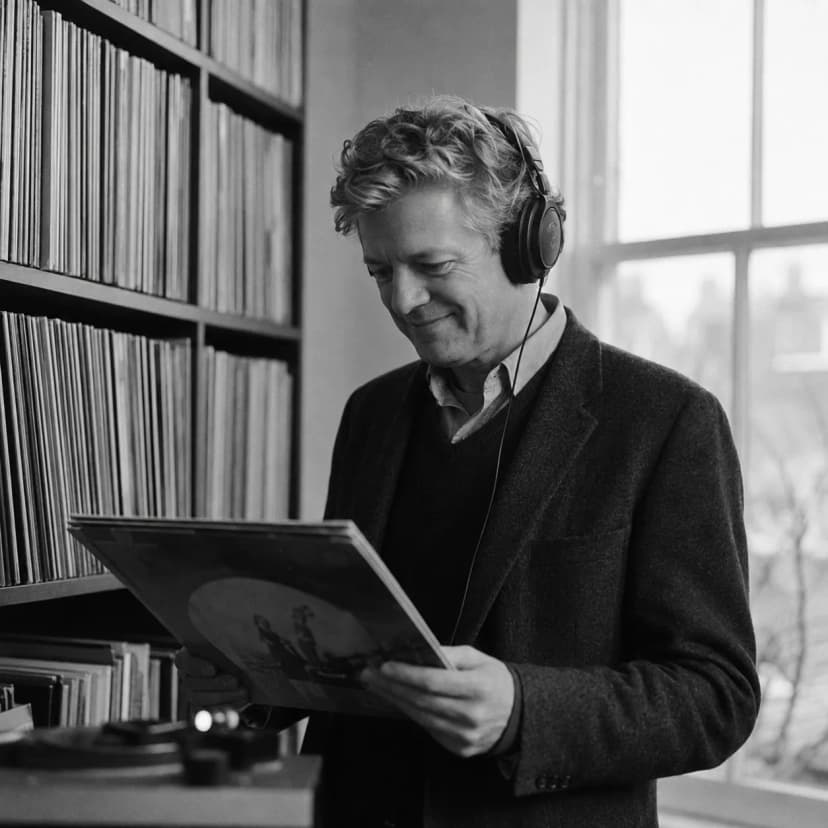
Tim Wildschut is Professor of Social and Personality Psychology at the University of Southampton and, with Constantine Sedikides, the co-architect of the modern experimental study of nostalgia. He is first author of the 2006 paper that started the programme and a co-author on most of what followed, including both of the large 2021 syntheses. The work reversed a three-hundred-year-old verdict: nostalgia is not a disorder, and inducing it reliably raises self-esteem, meaning, optimism, self-continuity and social connectedness.
Who they are
Wildschut took his PhD at the University of North Carolina at Chapel Hill and works at Southampton's Centre for Research on Self and Identity. Nostalgia is his primary research interest, but it is not his only one. His earlier work is in intergroup relations, particularly the interindividual-intergroup discontinuity effect, the finding that groups behave more competitively than individuals do in the same situation, and that work was recognised with the Gordon Allport Intergroup Relations Prize.
The nostalgia programme is the work he is best known for outside the field. Its method is the reason it holds: rather than surveying people about whether nostalgia feels nice, the experiments induce it, usually by asking participants to bring a nostalgic event to mind and write about it, and then measure what changes against a control condition. That design turns a vague literary sentiment into something with an effect size.
Wildschut's contribution runs through the accumulation rather than any single result. The 2006 paper established content, triggers and functions. Later work established that the effects are not confined to the emotionally robust, and that the affective profile is more complicated than the popular reading allows: nostalgia raises positive affect and ambivalent affect together, which is what the bittersweetness in the ordinary description of the emotion actually looks like when you measure it.
The programme's limit is worth stating plainly, because it is a limit of design rather than of quality. Every study measures the memory as recalled. None of them checks the recollection against the event. The literature that does check, on rosy retrospection and reconstructive memory, has developed separately and the two have not been run against each other.
Key papers
Wildschut, T., Sedikides, C., Arndt, J., & Routledge, C. (2006), "Nostalgia: Content, triggers, functions," Journal of Personality and Social Psychology, 91, 975-993. The paper that established the experimental study of nostalgia: what the experience contains, what triggers it, and what it does.
Frankenbach, J., Wildschut, T., Juhl, J., & Sedikides, C. (2021), "Does neuroticism disrupt the psychological benefits of nostalgia? A meta-analytic test," European Journal of Personality. 116 functions studies and 39 affect studies, N = 3,556. The benefits held for high and low neurotics alike.
Leunissen, J., Wildschut, T., Sedikides, C., & Routledge, C. (2021), "The hedonic character of nostalgia: An integrative data analysis," Emotion Review. 41 experiments, N = 4,659. Inductions raised positive and ambivalent affect and did not significantly alter negative affect.
Key ideas
Nostalgia can be induced experimentally and measured against a control. That methodological move is what made the modern literature possible.
Its functions are consistent across a large body of pooled evidence: self-esteem, optimism, meaning in life, self-continuity and social connectedness.
The emotion is genuinely mixed. The pooled affect data show positive and ambivalent affect rising together.
The benefits are not restricted to people who are temperamentally suited to them. Neuroticism does not disrupt them.
The evidence concerns the memory as recalled. Accuracy is outside the design.
Concepts on this site
Find them elsewhere
His Southampton page links only his ORCID and the university's own social accounts, so no personal handle or Scholar profile could be confirmed
Checked 2026-09-10. Handles and affiliations go out of date, so treat this block as a snapshot rather than a standing fact.
Sources
- Wildschut, T., Sedikides, C., Arndt, J., & Routledge, C. (2006), "Nostalgia: Content, triggers, functions," Journal of Personality and Social Psychology, 91, 975-993.
- Frankenbach, J., Wildschut, T., Juhl, J., & Sedikides, C. (2021), "Does neuroticism disrupt the psychological benefits of nostalgia? A meta-analytic test," European Journal of Personality.
- Leunissen, J., Wildschut, T., Sedikides, C., & Routledge, C. (2021), "The hedonic character of nostalgia: An integrative data analysis," Emotion Review.
- University of Southampton, Centre for Research on Self and Identity. (Affiliation, doctorate and Allport Prize.)