Do Psychology Findings Hold Everywhere
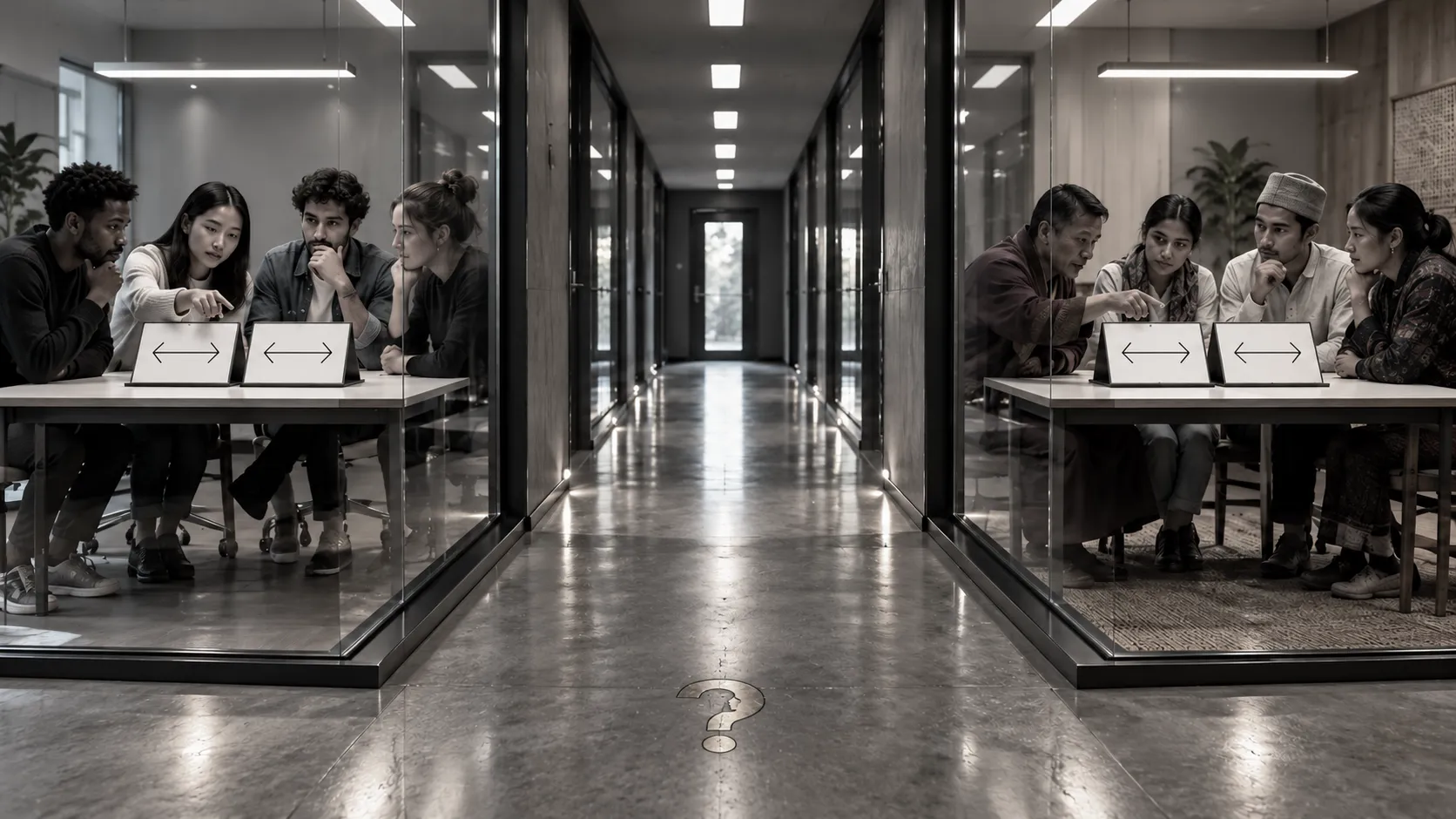
Two bodies of work answer the question in different ways. Perception and bargaining differ by population, while the experimental effects tested in 36 countries varied little between more and less WEIRD cultures, because the two designs measure different things.
Answer to the question
Do psychology findings hold in every country?
Not uniformly. In a 2018 project covering 36 countries and territories, variation in effect sizes depended more on the effect than on the sample, with little difference between WEIRD and less WEIRD cultures. Perception and economic game behaviour, however, differed sharply between American undergraduates and small-scale societies.
Key takeaways
- Henrich and colleagues (2010) reviewed cross-population evidence and reported American undergraduates at the extreme end of the distribution on the Müller-Lyer illusion across 16 societies, 14 of them small-scale, while the San foragers of the Kalahari were unaffected.
- Henrich and 16 co-authors (2005) ran three economic games in 15 small-scale societies. The standard self-interest model failed to predict play, and behaviour varied across groups far more than student samples had shown.
- Klein and colleagues (2018) replicated 28 findings in 125 samples of 15,305 participants from 36 countries and territories. Fifteen replicated, and the median effect size fell from 0.60 to 0.15.
- In the same project, significant heterogeneity across samples appeared in 11 of 28 effects, only one was moderate, and comparisons of WEIRD and less WEIRD cultures showed little heterogeneity.
- The two sets of results compare different things: levels of a perception or behaviour in one case and the effect of a manipulation in the other. That reading is ours, not a conclusion either team states.
Psychology findings are usually reported as findings about people, though most come from Western university labs. Two bodies of work have tested that step, and at first they seem to disagree. Joseph Henrich and two co-authors found American undergraduates at the extreme of the range on tasks from perception to bargaining. Richard Klein's replication project found that place explained little of the variation in effects. Each team described its own result accurately, and the difference lies in what each compared.
Illusions and Bargains Abroad
The Müller-Lyer illusion is the standard classroom example of vision going wrong: two lines of equal length look unequal when their ends carry arrowheads pointing in different directions. In the 2010 review, Henrich and his co-authors set out data gathered by Segall and colleagues from 16 societies, 14 of them small-scale.
American undergraduates sat at the extreme end of the distribution, with the strongest illusion. The San foragers of the Kalahari were unaffected by it. The 2010 review offered the result as a case in which psychology findings about human vision depended on who was tested. The abstract of the review sums up the pattern across domains, visual perception and fairness among them, as substantial variability in experimental results across populations, with WEIRD subjects frequent outliers.
It is not an illusion for them.
The economics lab asked whether psychology findings about fairness travel, using money. In the ultimatum game one player proposes how to split a sum and a second player accepts or rejects the split. The 2010 review reports that industrialised samples, mostly undergraduates, usually offered between 40 and 50 per cent of the total, with an even split the most common offer, and that offers below about 30 per cent were often rejected.
In 2005 Henrich and 16 co-authors ran the ultimatum, public goods and dictator games in 15 small-scale societies (Behavioral and Brain Sciences). The standard model of narrow self-interest failed to predict play in these games, and behaviour varied across groups far more than earlier student-based work had shown. Greater market integration and higher payoffs to cooperation in daily life went with more prosocial play, while individual economic and demographic variables did not explain the play consistently. In many cases the experimental play seemed to mirror the patterns of everyday social interaction in the group.
Twenty-Eight Findings, Thirty-Six Countries
The 2018 project approached the question from the opposite side. Klein and a large team preregistered replications of 28 classic and contemporary published psychology findings, with protocols peer reviewed before data collection, and gave each protocol to about half of 125 samples comprising 15,305 participants from 36 countries and territories. Fifteen of the 28 (54 per cent) produced a significant effect in the original direction, and the median effect size fell from 0.60 to 0.15, with nine of the replications running in the opposite direction. That result is the subject of [The Psychology You Learned Didn't Replicate](https://thewhyweproject.com/articles/the-psychology-you-learned-didnt-replicate).
The cultural result sits inside it. The Q statistic showed significant heterogeneity across samples in 11 of the 28 effects (39 per cent), only one effect had a tau above 0.20, the authors' marker of moderate heterogeneity, and eight others were near 0.10. Exploratory comparisons, which sorted cultures by relatively high and low WEIRDness scores, found little heterogeneity between WEIRD cultures and less WEIRD ones. Task order and lab versus online administration explained very little of what heterogeneity there was. Variability in the size of these psychology findings was attributable more to the effect being studied than to the sample or setting.
The counts of where participants come from are set out in [Who the Studies Were Run On](https://thewhyweproject.com/articles/who-the-studies-were-run-on), and the 2018 project is one direct test of whether such counts change the results.
Comparing Levels With Effects
Set side by side, the two sets of results are less opposed than they look. The illusion data and the bargaining games compare levels: how strong an illusion is, how much of a sum a proposer offers. The 2018 project compares effects: whether a manipulation moves people in the same direction and by a similar amount in each sample. Two groups can differ in the baseline and still respond to a manipulation alike, which is how psychology findings can be portable in one sense and not in another. This is our reading of the two designs, not a conclusion either team states, and it fits what each reports.
There is a caution in the 2018 numbers themselves. When the median replication effect is 0.15, there is less effect left to vary from place to place, so the low heterogeneity partly reflects how small many of the effects turned out to be.
Market research meets the same split. A test comparing two headlines asks about an effect, a survey counting how many people like a product asks about a level, and the studies above give more reason to expect the first to travel between countries than the second.
A third body of evidence shows a level difference inside one method. In Lisa Feldman Barrett's account of the forced-choice emotion task, in which people pick the expected emotion for a face or a list of words, hit rates ran at about 85 per cent across twelve Western and Latin American samples and about 72 per cent in cultures less like the United States, then fell further in small-scale societies tested without word lists (How Emotions Are Made, 2017, p. 44).
Barrett argues against universal emotions and is a party to that dispute, yet she describes the 85 per cent result as extremely well replicated. The disagreement concerns what produces it, and the gap in levels is common ground. Her case is set out in [What a Camera Can Read on a Face](https://thewhyweproject.com/articles/what-a-camera-can-read-on-a-face).
Questions the Field Never Posed
The levels-and-effects reading leaves one problem that neither design reaches, which is the choice of questions. The WEIRDest People in the World records the 2010 authors' suspicion that researchers from WEIRD societies, who dominate the field, may have gravitated toward the aspects of behaviour on which their own populations stand out (Preface, pp. xii to xiii). A sample can be widened and psychology findings can still answer a question that only one culture thought to ask. The 2018 project replicated psychology findings the field had already published, so it could not test questions the field never posed.
Adrian Furnham's chapter on WEIRD samples in The New Psychology (2024, chapter 48) adds that the acronym lumps together Western cultures that differ substantially from one another, so it sharpens the contrast with the rest of the world while flattening the differences inside the West. He also notes that about forty years earlier the acronym WASP had played the same critical role in the same argument, a reminder that the complaint predates the label. Furnham places Henrich's historical explanation among competing accounts, and nothing reviewed here, from the illusion data to the 2018 replications, rests on that explanation being right.
Common questions
Do psychology findings hold in every country?
Not uniformly. In a 2018 project covering 36 countries and territories, variation in effect sizes depended more on the effect than on the sample, with little difference between WEIRD and less WEIRD cultures. Perception and economic game behaviour, however, differed sharply between American undergraduates and small-scale societies.
What is a WEIRD sample?
WEIRD stands for Western, educated, industrialised, rich and democratic. The label, from a 2010 review by Henrich and two co-authors, describes the populations that supply most psychology participants, chiefly undergraduates in a handful of wealthy countries.
Did the largest cross-country replication find culture changed results?
Mostly not. Klein and colleagues (2018) found significant heterogeneity across samples in 11 of 28 effects, only one of them moderate, and little heterogeneity between WEIRD and less WEIRD cultures. Variation depended more on the effect being studied than on the sample or setting.
Sources
Henrich, J., Heine, S. J., & Norenzayan, A. (2010). 'The weirdest people in the world?' Behavioral and Brain Sciences, 33(2-3), 61-83. doi:10.1017/S0140525X0999152X
Henrich, J., Boyd, R., Bowles, S., et al. (2005). 'Economic man in cross-cultural perspective: Behavioral experiments in 15 small-scale societies.' Behavioral and Brain Sciences, 28(6), 795-815. doi:10.1017/S0140525X05000142
Klein, R. A., Vianello, M., Hasselman, F., et al. (2018). 'Many Labs 2: Investigating variation in replicability across samples and settings.' Advances in Methods and Practices in Psychological Science, 1(4), 443-490. doi:10.1177/2515245918810225
Segall, M. H., Campbell, D. T., & Herskovits, M. J. (1966). The Influence of Culture on Visual Perception. Indianapolis: Bobbs-Merrill. The data are reported as presented in Henrich, Heine & Norenzayan (2010).
Barrett, L. F. (2017). How Emotions Are Made: The Secret Life of the Brain. Boston: Houghton Mifflin Harcourt. p. 44, as recorded in the vault's digest of the book.
Henrich, J. (2020). The WEIRDest People in the World: How the West Became Psychologically Peculiar and Particularly Prosperous. Farrar, Straus and Giroux. Preface, pp. xii to xiii, as recorded in the vault's digest of the book.
Furnham, A. (2024). The New Psychology: The 50 Newest Concepts That Are Shaping How We Live and Work. Bloomsbury Business, chapter 48.