Buy One Get One Free or Half Price?
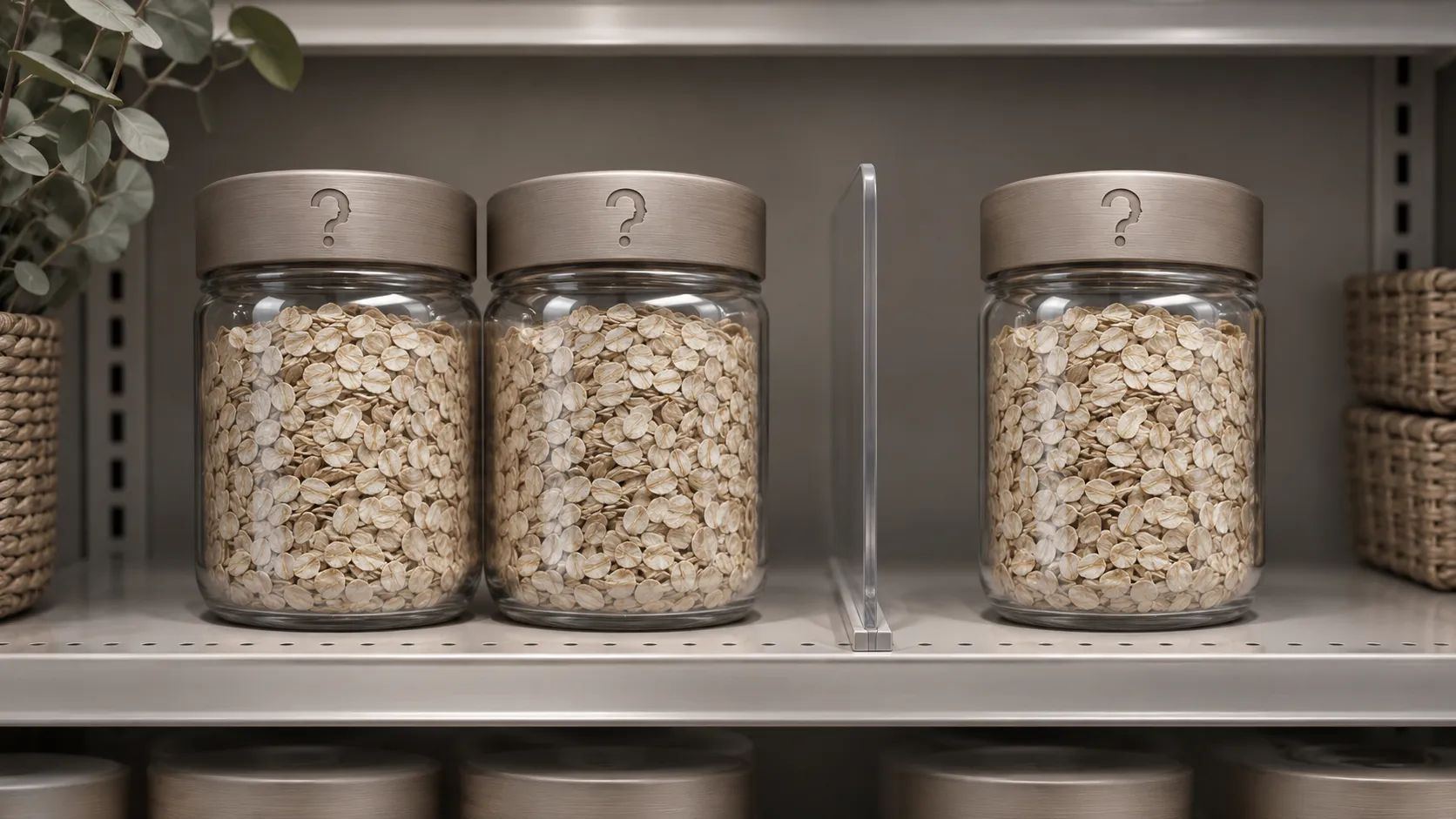
Two offers that cost the same per unit, why shoppers still lean toward the free item, and the one check that separates them at the shelf.
Is buy one get one free better than half price?
Buy one get one free and half price cost the same per unit when you want both items, yet shoppers tend to favour the free item. Researchers point to base value neglect, the habit of overlooking the quantity a percentage refers to. The free item is weaker for a shopper who wants only one unit.
Key takeaways
- On a four dollar item, buy one get one free and half price both come to two dollars a unit when the shopper wants both units.
- In a retail field experiment, a bonus pack sold substantially more units than a price discount of equal value (Chen, Marmorstein, Tsiros and Rao, 2012).
- In two eye-tracking experiments, undergraduates chose the free-item offer in about 75 per cent and about 67 per cent of trials where net value was equal (Gordon-Hecker and colleagues, 2020).
- Offers with a fixed price for several units outperformed offers with free units in sales data and a laboratory experiment, most clearly at four to five units (Drechsler and colleagues, 2017).
- Half price lets a shopper take one unit at the lower rate, while the free item has to be taken as a pair.
Take a four dollar pack of pens. Buy one get one free gives you two packs for four dollars. Half price on each pack gives you two packs for four dollars as well. Either way a pack costs two dollars and the till shows the same total, so the two deals are one deal written two ways. Shoppers do not treat them as one deal. In field and laboratory studies, the free item tends to beat the matching price cut, and the reasons lie in how people read a percentage. Half price is a rate per unit and buy one get one free is a pair, and that difference is where the rest begins.
Is buy one get one free better than half price?
For the shopper's wallet, no. For the shopper's choice, usually yes. In a retail field experiment run by Haipeng Chen, Howard Marmorstein, Michael Tsiros and Akshay Rao, a bonus pack sold substantially more units than a price discount of equal value. A mall-intercept survey and several laboratory studies pointed the same way, and the authors mapped the conditions under which the pattern is strongest.
Their explanation is base value neglect. When people process a percentage change, they tend to overlook the quantity it is a percentage of. Put plainly, one free item on a base of one is a hundred per cent more product, while half price is fifty per cent less money. The larger number belongs to the free item, and the base that would shrink it goes unstated. This is a close relative of the mistake described in What is denominator neglect.
Richard Shotton gives the same bias a bonus chapter in The Illusion of Choice and treats it as a working lesson for anyone who writes promotions: the framing of an extra quantity can outsell a price cut that gives the shopper exactly the same arithmetic.
Do shoppers choose the free item over equal savings?
They do, and an eye-tracking study shows how often. Tom Gordon-Hecker, Andrea Pittarello, Shaul Shalvi and Marieke Roskes asked undergraduates to choose between multi-buy offers of equal net value, such as buy two get one free against buy three and take a third off. Discounts ranged from 20 to 40 per cent. In the first experiment, with 30 participants, the buy one get one free offer was chosen in about 75 per cent of those trials. In the second, with 50 participants, one choice was bought for real with identical chocolate bars, and the buy one get one free offer was chosen in about 67 per cent.
The preference grew with the depth of the discount. It also survived a test of fairness to the rival offer. When the buy one get one free deal was objectively the poorer of the two, participants still picked it about 35 per cent of the time, against about 17 per cent for a poorer percentage deal. Attention followed the choice in the first experiment, where free-item offers drew more fixations at high discounts, but the pattern was less clear in the second.
When one deal was plainly better, participants found it in roughly three trials out of four, so the lean toward the free item sat on top of ordinary competence. Only chocolate bars were tested, which leaves other goods open and makes a test with everyday household goods a natural next step.
Part of the pull is the word free itself, the subject of Why is free so hard to resist. The choice task here held net value equal, though, so the format alone moved the choices. Percent off against amount off, taken up in Why 20 Off and Save 20 Don't Feel the Same, is a contrast inside one kind of price cut. This contrast sets a price cut against extra product.
When does the free item stop winning?
Buy one get one free is not always the strongest format. Salome Drechsler, Peter Leeflang, Tammo Bijmolt and Martin Natter combined store-level sales data from a Dutch retail chain, covering four product categories, with a laboratory experiment on how many units shoppers had to buy. Offers that set a fixed price for several units outperformed offers that added free units. The gap was largest at four to five units, and it held for functional products but not for hedonic ones. The authors tie the result to prospect theory and mental accounting, the filing of money into separate accounts that What is mental accounting sets out.
Who is shopping matters as well. Jun Yao, Di Wang and Brett Martin ran four studies on regulatory focus. Shoppers focused on avoiding loss leaned toward bonus packs, shoppers focused on gain leaned toward price discounts, the fit between focus and offer raised how valuable the deal seemed, and the effect weakened as involvement in the purchase rose. A shopper who cares a great deal about the product reads the offer more closely and is moved less by its form.
The extra unit has a second life after the till. Pierre Chandon and Brian Wansink studied stockpiled goods and found that how visible and how convenient a product is at home shapes whether it is used and how quickly. A free second pack that sits at the back of a cupboard is in a different position from one that sits on the counter. Whether the extra unit is used, shared or left over is the part that no price comparison captures.
What should a shopper compare at the shelf?
The unit price, worked out for the number of units actually wanted, which is the figure that offer wording leaves off the tag. The table uses a four dollar item to show where the two offers part company.
| Offer on a four dollar item | Units taken home | Total paid | Paid per unit wanted |
|---|---|---|---|
| Buy one get one free, two wanted | 2 | 4 dollars | 2 dollars |
| Half price, two wanted | 2 | 4 dollars | 2 dollars |
| Half price, one wanted | 1 | 2 dollars | 2 dollars |
| Buy one get one free, one wanted | 2 | 4 dollars | 4 dollars |
The first two rows are the same deal. The last two rows show the split: half price lets the shopper take one unit at the lower rate, while buy one get one free has to be taken as a pair. The pair is a good deal for a household that will use both and a poor one for a household that will use one, whatever the label says. A quick test is to divide the total by the number of units the household will really use, and compare that figure across the shelf.
In the eye-tracking experiments, participants with higher numeracy chose the financially better deal more often, yet the lean toward the free item remained, which makes working out the price per unit before choosing the step that the preference most often skips.
Common questions
Is buy one get one free better than half price?
On the arithmetic they match when the shopper wants both units. Studies find that shoppers still tend to pick the free item, which sold more units in a retail field experiment on bonus packs against equal discounts.
Why does buy one get one free feel like a bigger deal?
Researchers point to base value neglect. People overlook the quantity a percentage refers to, so one extra item on a base of one looks larger than half off the price.
Does the free item always sell better?
No. In sales data and a laboratory experiment, offers with a fixed price for several units beat offers with free units, most clearly at four to five units and for functional products.
What should I check before taking either deal?
Work out the price per unit for the number of units you will use. Half price lets you take one unit at the lower rate, while buy one get one free means paying for two.
Sources
Shotton, R. The Illusion of Choice. Seed book; vault hub Books/The Illusion of Choice.
Chen, H. A., Marmorstein, H., Tsiros, M., & Rao, A. R. (2012). When more is less: The impact of base value neglect on consumer preferences for bonus packs over price discounts. Journal of Marketing, 76(4), 64-77. doi:10.1509/jm.10.0443 https://doi.org/10.1509/jm.10.0443
Gordon-Hecker, T., Pittarello, A., Shalvi, S., & Roskes, M. (2020). Buy-one-get-one-free deals attract more attention than percentage deals. Journal of Business Research, 111, 128-134. doi:10.1016/j.jbusres.2019.02.070 https://doi.org/10.1016/j.jbusres.2019.02.070
Drechsler, S., Leeflang, P. S. H., Bijmolt, T. H. A., & Natter, M. (2017). Multi-unit price promotions and their impact on purchase decisions and sales. European Journal of Marketing, 51(5/6), 1049-1074. doi:10.1108/ejm-12-2013-0729 https://doi.org/10.1108/ejm-12-2013-0729
Yao, J., Wang, D., & Martin, B. A. S. (2024). The regulatory fit effect on consumer preferences for price discounts and bonus packs. Psychology & Marketing, 41(11), 2884-2895. doi:10.1002/mar.22090 https://doi.org/10.1002/mar.22090
Chandon, P., & Wansink, B. (2002). When are stockpiled products consumed faster? A convenience-salience framework of postpurchase consumption incidence and quantity. Journal of Marketing Research, 39(3), 321-335. doi:10.1509/jmkr.39.3.321.19111 https://doi.org/10.1509/jmkr.39.3.321.19111
Related concepts
People
More articles
- Why Touching It Makes Us Want It
What experiments say about touch, confidence and ownership, and the kinds of product where feel adds little.
- Why We Spend More After Payday
What daily records show about spending on the day income arrives, how a new pay cycle refills mental budgets, and why pay timing changes how well off people feel.
- Why Shoppers Skip the Unit Price
What eye tracking, online experiments and a longitudinal field study found about the small per-measure price under the ticket price, and what moves shoppers to use it.
- Why a Famous Name Can't Sell Everything
Why a well-known name moves some products easily and others not at all, what the research finds drives a brand extension, and what a poor fit can do to the parent.
In these themes
- Deals and Discounts
Why a bargain feels like a win, and what free does to a decision.