Why Touching It Makes Us Want It
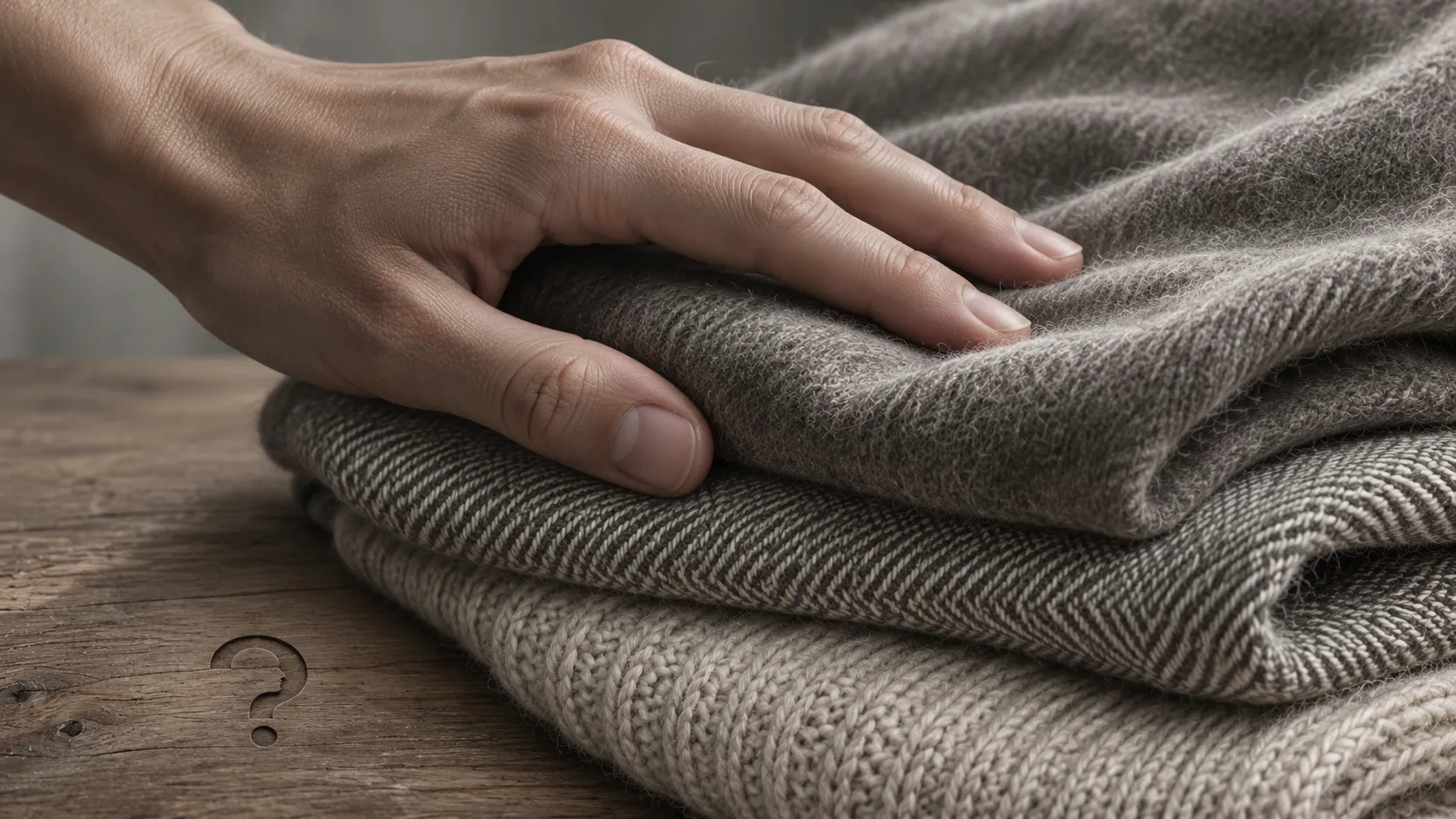
What experiments say about touch, confidence and ownership, and the kinds of product where feel adds little.
Does touching a product make you more likely to buy it?
Touching a product can make a purchase more likely when the feel of the item carries information or pleasure. In experiments, barriers to touch lowered confidence, and touch raised ownership and persuasion, mostly for people who enjoy touching. Where feel tells little about a product, touch did not move judgements.
Key takeaways
- In two experiments published in 2003, barriers to touch such as a display case lowered shoppers' confidence in their evaluations and raised frustration, especially for consumers who were more motivated to touch (Peck and Childers).
- Touch can persuade even when it carries no product detail: people who enjoy touch for its own sake responded more strongly to messages that included touch (Peck and Wiggins, 2006).
- Imagining touching an object produced a sense of ownership similar to physical touch, through perceived control, and touchscreen interfaces heightened ownership and the endowment effect in laboratory studies.
- In four experiments, touch influenced judgements only for product categories where feeling the item is informative (Grohmann, Spangenberg and Sprott, 2007).
- Texture and weight changed the personality people read into a product, and that perceived personality carried the effect of touch on willingness to purchase (Ranaweera, Martin and Jin, 2021).
A glass case between a shopper and a product lowers confidence in judging it and raises frustration, most for consumers who like to handle things. Joann Peck and Terry Childers found this in two experiments published in 2003, and it opened a line of research on a plain question.
Does touching a product make you more likely to buy it?
The research says touch helps in some settings and adds little in others, and it is specific about which. The studies measured confidence, liking, persuasion and the value people place on an item, which are steps toward buying and not purchases themselves.
When does touching a product help?
The 2003 experiments sat inside a framework. Haptic information, meaning what the hands learn about texture, hardness, temperature and weight, matters for products that differ on those qualities, and how much it matters depends on the product, the person and the situation. Written descriptions and pictures filled part of the gap that a barrier left, depending on the kind of product. A screen rules out touching altogether, which is part of why shoppers lean on other cues online, a theme in How People Decide What to Buy Online.
Touching can also persuade without telling the shopper anything about the product. Peck and Jennifer Wiggins tested touch as an emotional tool in cases where it carried no useful product detail. People who enjoy touching for its fun or interest showed a stronger emotional response and were more persuaded by messages that included touch, especially when the touch felt neutral or positive. People who were not drawn to touch could still be persuaded once they understood how the touch related to the message. The authors repeated the effects on attitudes and behaviour in a real-world setting and pointed to packaging, point-of-purchase displays, direct marketing and print as places to use them.
That widens the question. If touch works through pleasure as well as information, a pack, a card or a display that is agreeable to handle can matter even for a product whose feel says nothing about its quality, a reading that fits the 2006 results and not one the authors tested directly.
Can imagined touch build ownership?
Imagining touching can stand in for touching. Peck, Victor Barger and Andrea Webb found that imagining touching an object produced a sense of ownership similar to touching it, that the effect ran through perceived control, and that vivid imagery strengthened both. Close shots of hands lifting an item are a candidate for that kind of imagery, though the studies did not test video, and the habit is part of Why do we love unboxing videos.
Ownership matters because it raises what an item seems worth, the endowment gap taken up in Why Owning It Makes It Worth More. S. Adam Brasel and James Gips ran two laboratory studies across a range of touch technologies and found that touchscreen interfaces can heighten perceived psychological ownership, which in turn strengthens the endowment effect. The effect was stronger for products where touch matters most, and tablets could lead to higher valuations than traditional computers. The authors argued that the interface people use to reach a product deserves as much research attention as the content they see on it.
Martin Lindstrom's Buyology argues that engaging several senses at once does more for a brand than a logo does, and it cites the retail researcher Paco Underhill on touch. The studies in this article take the touching part of that argument and vary one condition at a time: the barrier, the product, the person and the interface.
Where does touch add little?
The same literature draws a boundary. In four experiments, Bianca Grohmann, Eric R. Spangenberg and David E. Sprott found that touch influenced judgements only for product categories where feeling the item is informative, and that the effect varied with product quality. A person's general need for touch moderated the result, but only when shoppers could not compare several products side by side, and the data gave no sign that emotion explained it.
Sorted by situation, the findings fall like this.
| Situation | What the research found | Study |
|---|---|---|
| A display case blocks touch | Lower confidence and more frustration, most for people who like to touch | Peck and Childers, 2003 |
| Touch carries no product detail | More persuasion for people who enjoy touch | Peck and Wiggins, 2006 |
| The item cannot be held | Imagined touch raised ownership through perceived control | Peck, Barger and Webb, 2013 |
| The item sits on a touchscreen | Higher ownership and a stronger endowment effect | Brasel and Gips, 2014 |
| Feel tells little about the category | Touch did not move judgements | Grohmann and colleagues, 2007 |
| Products are shown side by side | Need for touch did not change the result | Grohmann and colleagues, 2007 |
Peck and Childers reached the same boundary from the other side, since written descriptions and pictures partly compensated for lost touch depending on the product. That fits a simple reading: handling adds most where quality shows in the hand, and little where the value of a product rests on what it does or what is written on it.
People differ as well. Touching for its own sake is the autotelic end of the scale Peck and Childers built, and it is part of the story in Why are adults buying squishy fidget toys, where there is no product to judge at all. In work on surface texture and weight by Achini Ranaweera, Brett A. S. Martin and Hyun Seung Jin, what the hand felt changed the personality people read into a product, and that perceived personality carried the link between touch, the need for touch and willingness to purchase. A smooth surface with a heavy weight suited people who touch for pleasure and an exciting brand, while a smooth surface with a light weight suited a sophisticated one.
Common questions
Does touching a product make you more likely to buy it?
Touch can make a purchase more likely when the feel of the product carries information or pleasure. In experiments, barriers to touch lowered confidence, and touch raised ownership and persuasion, mostly for people who enjoy touching. Where feel tells little about a product, touch did not move judgements.
Does it matter if the product can only be seen on a screen?
Imagining touch raised perceived ownership in experiments on haptic imagery, and touchscreen interfaces raised ownership and the endowment effect in laboratory studies. Screens carry part of the effect and not all of it.
Do all shoppers respond to touch in the same way?
No. People who enjoy touch for its own sake responded more strongly in experiments on persuasion and on texture, while people low on that dimension preferred touch cues that matched what they expected.
Are there products where touch hardly matters?
Experiments found touch influenced judgements only for product categories where feeling the item is informative, and written descriptions and pictures partly made up for lost touch for some products.
Sources
Lindstrom, M. Buyology. Seed book; vault hub Books/Buyology.
Peck, J., & Childers, T. L. (2003). To have and to hold: The influence of haptic information on product judgments. Journal of Marketing, 67(2), 35-48. doi:10.1509/jmkg.67.2.35.18612 https://doi.org/10.1509/jmkg.67.2.35.18612
Peck, J., & Wiggins, J. (2006). It just feels good: Customers' affective response to touch and its influence on persuasion. Journal of Marketing, 70(4), 56-69. doi:10.1509/jmkg.70.4.56 https://doi.org/10.1509/jmkg.70.4.56
Grohmann, B., Spangenberg, E. R., & Sprott, D. E. (2007). The influence of tactile input on the evaluation of retail product offerings. Journal of Retailing, 83(2), 237-245. doi:10.1016/j.jretai.2006.09.001 https://doi.org/10.1016/j.jretai.2006.09.001
Peck, J., Barger, V. A., & Webb, A. (2013). In search of a surrogate for touch: The effect of haptic imagery on perceived ownership. Journal of Consumer Psychology, 23(2), 189-196. doi:10.1016/j.jcps.2012.09.001 https://doi.org/10.1016/j.jcps.2012.09.001
Brasel, S. A., & Gips, J. (2014). Tablets, touchscreens, and touchpads: How varying touch interfaces trigger psychological ownership and endowment. Journal of Consumer Psychology, 24(2), 226-233. doi:10.1016/j.jcps.2013.10.003 https://doi.org/10.1016/j.jcps.2013.10.003
Ranaweera, A. T., Martin, B. A. S., & Jin, H. S. (2021). What you touch, touches you: The influence of haptic attributes on consumer product impressions. Psychology & Marketing, 38(1), 183-195. doi:10.1002/mar.21433 https://doi.org/10.1002/mar.21433
Related concepts
People
More articles
- Why We Spend More After Payday
What daily records show about spending on the day income arrives, how a new pay cycle refills mental budgets, and why pay timing changes how well off people feel.
- Why Shoppers Skip the Unit Price
What eye tracking, online experiments and a longitudinal field study found about the small per-measure price under the ticket price, and what moves shoppers to use it.
- Why Bundles Feel Like a Better Deal
How one price and one saving change what a buyer sees, where a bundle discount does most, and what a single payment does to use afterwards.
- Why Heavier Feels Better
How the weight of a spoon, a pack or a clipboard becomes a judgement of density, flavour and worth.
In these themes
- Shopping and Retail
How the shop, the shelf and the checkout shape what ends up in the basket.
- The Senses
How colour, sound, scent and touch shape what we think of things.