Why Cute Things Make Us Reach for Our Wallet
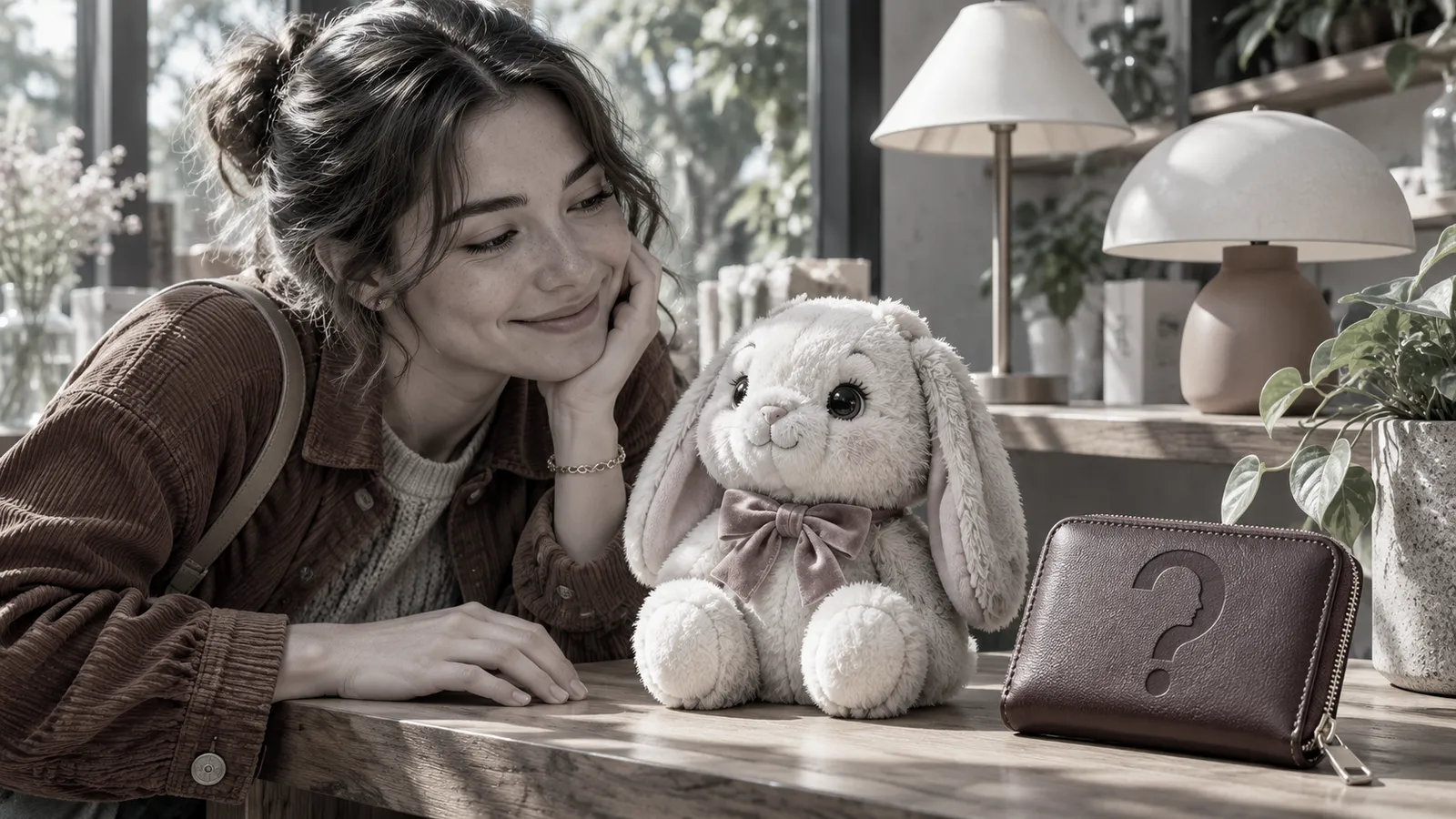
Large heads, large eyes and rounded cheeks make faces look cute and draw care. In product research the same proportions slowed hands, narrowed attention and, when playful, shifted choices towards treats.
What is the baby schema effect in marketing?
The baby schema effect in marketing is the response people show to infant-like proportions, such as a large head, large eyes and rounded cheeks, in products and characters. In experiments these cues raised cuteness ratings and care, and for playful designs they shifted choices towards self-rewarding options.
Key takeaways
- Infants given more baby-schema features in edited photographs were rated cuter and prompted stronger motivation to care for them among 122 undergraduates (Glocker and colleagues, 2009).
- More baby-schema features in infant faces went with more activity in the nucleus accumbens, a reward structure, in women who had not had children (Glocker and colleagues, 2009).
- Viewing very cute puppies and kittens improved fine-motor dexterity in two experiments (Sherman, Haidt and Coan, 2009).
- Whimsically cute products led consumers to choose more indulgent, self-rewarding options across four studies, but cute stimuli that primed vulnerability did not (Nenkov and Scott, 2014).
- Across five experiments with 1,030 participants, exposure to cuteness raised patience while waiting when time pressure was low (Wang, Jiang and Zhang, 2024).
Two desk lamps stand on a shelf here, offered as an illustration and not as real products. One is tall, narrow and angular. The other is short and round, a wide shade set low on a broad base, like a large head on a small body. Most people call the second lamp cute before they can say why, and that quick judgement is the subject of a body of experiments.
The reason is the baby schema, a set of proportions found in infants: a large head, large eyes and full rounded cheeks. The studies below follow the baby schema from infant photographs to puppies and kittens and on to the choices people make about products, and they show that cuteness does not push everyone the same way.
Infant-like proportions are what make a face look cute
Konrad Lorenz, the ethologist, proposed that infant proportions work as a signal that draws care from adults. A direct test came from Melanie Glocker and colleagues in 2009, who altered the baby-schema features in photographs of real infants while leaving everything else about each face alone. In their sample of 122 undergraduates, infants given more of the features were rated cuter and prompted stronger motivation to take care of them. Because only the proportions changed, the study ties the response to the features themselves and not to a particular baby, a smile or a mood. That separation is what lets the idea travel from photographs to objects, since a designer can copy proportions far more easily than expressions.
Children respond to the same configuration. Marta Borgi and colleagues varied the features in pictures of human infants, dogs and cats, showed them to children aged 3 to 6 and tracked where the children looked. The configuration shaped both cuteness ratings and gaze, and it did so for all three kinds of face, which puts the pattern in the proportions and not in the species. Young children therefore share part of the response that adults show, which fits the idea that the cue is picked up early.
Ingrid Fetell Lee, in Joyful, places the baby schema within a wider family of play cues. She argues that round forms read as playful and that exaggerated versions of an appealing feature pull harder than the real thing, which is why a cartoon head or a bobblehead is drawn larger than any head could be. That argument explains why designers push the baby schema beyond the proportions of a real infant, and why rounded shapes have a record of their own, which Why We Trust Rounded Logos follows through to logo design.
The result is a response to a look, and a look can be copied: a designer can borrow the proportions without borrowing anything else about an infant, so the cue is easy to carry into products, characters and packaging.
Cute images steady the hands and narrow attention
Seeing a cute face does more than produce a pleasant label, and the effect is not limited to faces, since Why We See Faces in Products covers how people read eyes and mouths into objects. In a brain-imaging study, Glocker and a larger team showed women who had not had children infant faces with the baby-schema features raised or lowered. More of the features meant more activity in the nucleus accumbens, a structure central to reward, and the authors suggested a mechanism that promotes caregiving whether or not the child is kin, which is the baby schema acting on a reward system.
The reward response is only half of the story, because cute images also change what the hands do next. In two experiments, people who first looked at very cute puppies and kittens did better at a game of fine-motor dexterity than people who had looked at less cute animals (Sherman, Haidt and Coan, 2009).
In three further experiments by Hiroshi Nittono and colleagues, viewers showed a gain in dexterity again, and a gain in visual search as well, while pleasant pictures of food did not produce it. They also found that attention narrowed towards local detail, a pattern the authors link to approach motivation and careful processing. A person who has just looked at something cute may therefore look more closely and move more carefully for a short while, whatever the next task happens to be.
Carefulness fits the job that the baby schema is thought to have done, since a small, delicate being needs slow and precise handling. The first of the two responses a cute design can set off is therefore the one that says handle with care, and a product that looks delicate may invite exactly that treatment from the person holding it.
In marketing, baby schema pulls two different ways
A second line of work found something that looks like the opposite. Gergana Nenkov and Maura Scott ran four studies on whimsically cute products. Seeing them led consumers to choose more indulgent options and to reward themselves, and the authors explain this through priming: cute products bring up ideas of fun, which shifts attention to approach goals. The effect did not appear with cute stimuli that primed caretaking and vulnerability, which separates playful cuteness from the fragile kind.
Earlier baby-schema work had found restraint and care, so this result marks a boundary and does not overturn it: the same family of looks leads to different goals depending on whether the cue says fun or says fragile. The term itself is used loosely, which a 2024 review by Yuri Kawaguchi and Bridget Waller points out: it sometimes names the look of infants and sometimes a continuous scale of cuteness features, so each study here is described by the features it changed. It also helps to remember that the looks people rated pretty or appealing tend to be judged as better made, a pattern that Why Pretty Things Seem to Work Better lays out.
A different setting gave a third result. Across five experiments with 1,030 participants, Xiaoran Wang, Jing Jiang and Xiadan Zhang found that exposure to cuteness made people more patient while waiting. Perceived social support carried the effect, which appeared only when time pressure was low, and cuteness also raised positive word of mouth. Here the cute cue acted less like a prompt to indulge and more like company during an unwelcome delay, which is a third reading beside care and play.
The tasks were experimental ones, with ratings, games and choices made in a study, and none of the studies measured sales.
Proportions travel from faces to everyday objects
A product does not need a face to borrow the baby schema. Rounded bodies, oversized heads on characters and low, wide shapes carry the same proportions, as the lamp does, and the studies suggest that the reading a viewer takes from them depends on the kind of cute on offer.
| Kind of cute | Likely fit | Where it may misfire |
|---|---|---|
| Infant-like and delicate | Fragile objects, precision tools | A buyer may handle the item too gently to use it |
| Whimsical and playful | Treats, games, small gifts | Fun may not suit a serious purchase |
| Cute while waiting | Queues, loading screens, delivery updates | Little effect when time is short |
Because the research points more than one way, a design brief has to start with the response wanted. A fragile object gains from the care reading, where the product asks to be handled gently. A treat or a game gains from the playful reading, where the buyer is invited to reward themselves. A wait gains from the company reading, where something friendly sits alongside the delay. The studies supply each reading and when it appeared, and pairing a reading to a product remains a hypothesis for each team to test.
Common questions
What is the baby schema effect in marketing?
It is the response people show to infant-like proportions, such as a large head, large eyes and rounded cheeks, when those proportions appear in products, characters and packaging. In experiments, such cues raised cuteness ratings and prompted care, and in some studies they also shifted choices towards playful rewards.
What is baby schema?
Baby schema is the set of infant features, mainly a large head, large eyes and full rounded cheeks, that adults tend to find cute. When researchers raised these features in infant photographs, people rated the faces cuter and reported stronger motivation to care for the infants.
Does cuteness make people spend more?
In four studies, whimsically cute products led people to choose more indulgent, self-rewarding options. Cute stimuli that stressed vulnerability did not do this, and other studies found care and patience instead. The research measured choices in experiments and not sales, so it supports a tendency and not a forecast.
Sources
Lee, I. F. Joyful. Seed book.
Glocker, M. L., Langleben, D. D., Ruparel, K., Loughead, J. W., Gur, R. C., & Sachser, N. (2009). Baby schema in infant faces induces cuteness perception and motivation for caretaking in adults. Ethology, 115(3), 257-263. doi:10.1111/j.1439-0310.2008.01603.x https://doi.org/10.1111/j.1439-0310.2008.01603.x
Glocker, M. L., Langleben, D. D., Ruparel, K., Loughead, J. W., Valdez, J. N., Griffin, M. D., Sachser, N., & Gur, R. C. (2009). Baby schema modulates the brain reward system in nulliparous women. Proceedings of the National Academy of Sciences, 106(22), 9115-9119. doi:10.1073/pnas.0811620106 https://doi.org/10.1073/pnas.0811620106
Borgi, M., Cogliati-Dezza, I., Brelsford, V., Meints, K., & Cirulli, F. (2014). Baby schema in human and animal faces induces cuteness perception and gaze allocation in children. Frontiers in Psychology, 5, 411. doi:10.3389/fpsyg.2014.00411 https://doi.org/10.3389/fpsyg.2014.00411
Kawaguchi, Y., & Waller, B. M. (2024). Lorenz's classic 'baby schema': a useful biological concept? Proceedings of the Royal Society B, 291(2025), 20240570. doi:10.1098/rspb.2024.0570 https://doi.org/10.1098/rspb.2024.0570
Sherman, G. D., Haidt, J., & Coan, J. A. (2009). Viewing cute images increases behavioral carefulness. Emotion, 9(2), 282-286. doi:10.1037/a0014904 https://doi.org/10.1037/a0014904
Nittono, H., Fukushima, M., Yano, A., & Moriya, H. (2012). The power of kawaii: Viewing cute images promotes a careful behavior and narrows attentional focus. PLoS ONE, 7(9), e46362. doi:10.1371/journal.pone.0046362 https://doi.org/10.1371/journal.pone.0046362
Nenkov, G. Y., & Scott, M. L. (2014). So cute I could eat it up: Priming effects of cute products on indulgent consumption. Journal of Consumer Research, 41(2), 326-341. doi:10.1086/676581 https://doi.org/10.1086/676581
Wang, X., Jiang, J., & Zhang, X. (2024). So cute, I could wait: The effect of cuteness on consumer patience. Frontiers in Psychology, 15, 1380505. doi:10.3389/fpsyg.2024.1380505 https://doi.org/10.3389/fpsyg.2024.1380505
Related concepts
People
More articles
- Why Doing Someone a Favour Makes Us Like Them
A person who does a small favour often comes to like the one helped. The research on how people explain their own behaviour shows where in the chain that change happens.
- Why Closing the Menu Makes Us Happier
A lid on a tray, a closed menu, a turned page: small physical acts that tell the mind a choice is over. Studies of choice closure and of reversible decisions show what that sense of an ending does…
- Why Elite Status Keeps Us Loyal
A status tier is a position, not a balance. The research on tiers finds a reward in visible standing and a recurring effort in holding it.
- Why the First Bite Tastes Best
A food loses appeal as it is eaten, and the loss follows that food alone. Neurons, brain scans and ratings show the same pattern, and it starts within minutes.