Why a Sold-Out Option Changes What We Pick
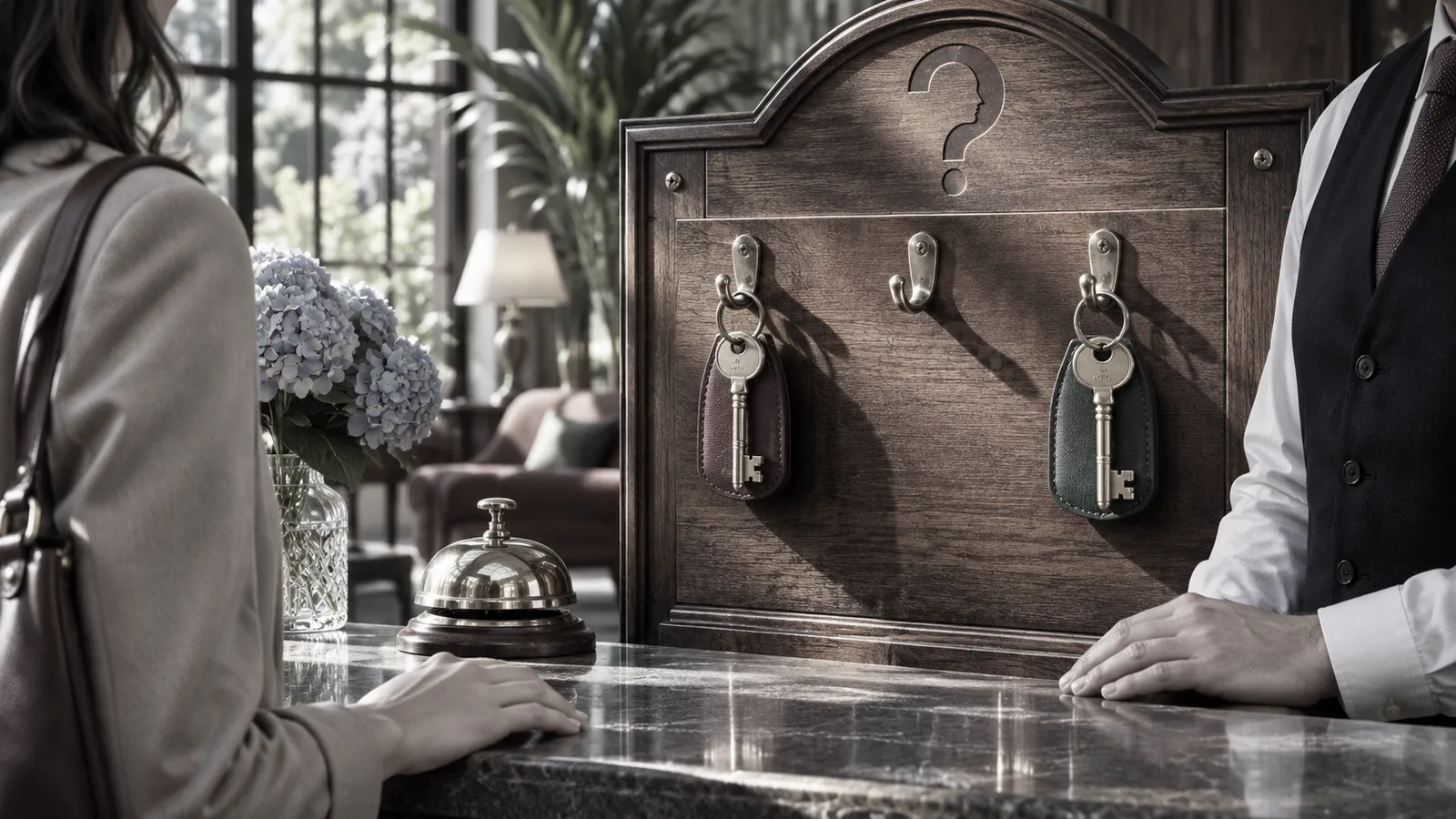
A room that has just sold out still sits in the comparison. Research on phantom alternatives asks what an option nobody can buy does to the options that remain.
What is the phantom decoy effect?
The phantom decoy effect is the shift in choice among available options caused by an attractive option that cannot be had, such as a sold-out room or an out-of-stock item. Studies find that it appears even when people know the option is unavailable, and in real in-store purchases, and that honeybees show it too.
Key takeaways
- Phantom alternatives are options that seem available but are not at the moment of decision, and they can help a decision maker learn the boundaries of a problem as well as introduce bias (Farquhar and Pratkanis, 1993).
- A decoy that respondents recognised as unavailable still shifted preference, and the effect appeared in real in-store purchases (Doyle and colleagues, 1999).
- Across most of five positions of the phantom in attribute space, the effect held, and the results matched an account built on loss aversion most closely (Pettibone and Wedell, 2007).
- Participants preferred the target in value-based choices and showed the opposite pattern in perceptual choices (Trueblood and Pettibone, 2017).
- In honeybees, attractive phantom feeders consistently moved preferences toward the feeder most like the phantom, while unattractive ones had no influence (Tan and colleagues, 2015).
A guesthouse lists three rooms, and one is marked sold out. The first costs ninety a night and sits a twenty-minute walk from the beach. The second costs a hundred and fifty and sits two minutes away. The third, the sold-out room, costs eighty-five and sits fifteen minutes from the sand, better than the first on both counts and gone from the booking page.
Research on the phantom decoy effect finds that a listing like this can nudge choice toward the cheap, distant room closest to it, though nothing about rooms A and B has changed and only the list around them differs. The table sets the three side by side, with invented figures.
| Room (invented figures) | Price per night | Walk to the beach | Status |
|---|---|---|---|
| A | 90 | 20 minutes | Available |
| B | 150 | 2 minutes | Available |
| C | 85 | 15 minutes | Sold out |
How does a missing option shift choice?
Room C does what an ordinary decoy does, with one difference. The ordinary decoy sits on the page, worse than one neighbour and chosen by almost nobody, and it makes that neighbour look better by comparison. Dan Ariely's Predictably Irrational builds its opening chapter on that logic, using holiday cities and a trip that copies one of them with a small catch added. The ordinary version has its own walk-through in What is the decoy effect. The phantom version turns the roles round: the third option is better than its neighbour, and it is out of reach.
Seen next to room C, room A looks like the closest thing still on offer, and the comparison that follows tends to run in its favour. The phantom decoy effect works through that comparison. Room B, with its two-minute walk, may lose some of the attention it would have had if the booking page had only ever shown two rooms.
Peter Farquhar and Anthony Pratkanis named the category in a 1993 paper on decision structuring. They described phantom alternatives as options that seem available but are not at the moment of decision, and they argued that these illusory options belong in any account of how people structure a choice. Phantoms, they wrote, can help a decision maker learn the boundaries of a problem and generate new options, and they can also introduce bias and deception. The same paper offered guidelines for recognising, using and counteracting them.
Everyday sources of the phantom decoy effect are easy to list. A sold-out room, an out-of-stock item, an offer that ended last week and a model that has been discontinued all leave a better option in view or in memory while taking it out of the choice set. Each gives the remaining options a reference point they would not otherwise have.
Does the phantom decoy effect hold in real shops?
Whether context effects survive outside the laboratory is argued over for the ordinary decoy in The Option You Were Never Meant to Buy, and the phantom version has been tested in its own right. A 1999 study in Psychology and Marketing by Doyle and colleagues found the effect under two buying frames, one asking what the respondent would buy and the other asking what most people would buy. It appeared when the extra option was recognised as unavailable, and it appeared in real in-store purchases, a different kind of test from hypothetical choices because the item changes hands.
The authors concluded that the effect is robust, wide in scope, sizeable and of practical significance. For the guesthouse, the second finding is the one that counts: a guest who knows that room C cannot be booked can still be moved by it.
The same shape turns up outside shopping. Ken Tan and colleagues tested eastern honeybees at artificial feeders. Between two feeders that differed strongly, the bees showed no significant preference. An unattractive phantom feeder had no influence, but an attractive one consistently moved their preference toward the feeder most like the phantom. The authors noted that unavailable food sources could alter foraging among the rest, which matters in the wild because flowers are sometimes empty. That a bee shows the pattern suggests the phantom decoy effect does not depend on any understanding of sold-out signs.
The effect sits close to scarcity, the subject of Which Kind of Scarcity Works on You, but the two ask different questions. Scarcity asks how much a missing item is wanted, and the phantom decoy effect asks what the missing item does to the options that remain. A sold-out sign can set off both the scarcity response and the phantom decoy effect at once.
Why would an option nobody can buy matter?
Three accounts compete to explain the phantom decoy effect. Jonathan Pettibone and Douglas Wedell compared them in a 2007 paper in the Journal of Behavioral Decision Making: relative advantage, which rests on loss aversion; similarity substitution; and range weighting. In their first experiment the phantom was moved through five positions in the space of attributes, and in the second the manipulation was within subjects, so that each participant met several. The effect held at most of the locations, and the pattern of results matched the relative advantage account most closely.
On that account the pull of a phantom runs through loss aversion: the options left behind are judged partly by what they lack compared with the option that went.
The phantom decoy effect also depends on what kind of judgement is being made. Jennifer Trueblood and Pettibone ran three experiments that set value-based decisions beside perceptual ones, in which people judge what they see instead of what something is worth. Participants preferred the target in the value-based choices and showed the opposite pattern in the perceptual choices. Four models were compared, and accumulation models, which build up evidence for each option over the course of a decision, explained the results best and could carry over to other context effects. The same missing item can therefore pull one way when people judge worth and the other when they judge what is in front of them.
The missing room is also evidence. It shows that a room cheaper than A and nearer than A exists, and that it might return if a reservation is cancelled. A guest who reads it that way can wait, ask or search elsewhere, and has then used the phantom in the manner Farquhar and Pratkanis described, to learn where the edge of the problem lies and to produce a new option, instead of letting it tilt a choice between the two rooms left.
Common questions
What is the phantom decoy effect?
The phantom decoy effect is the shift in choice among available options caused by an attractive option that cannot be had, such as a sold-out room or an out-of-stock item. Studies find that it appears even when people know the option is unavailable, and that it has been found in real in-store purchases.
Is a phantom decoy the same as an ordinary decoy?
No. An ordinary decoy is available and worse than one of its neighbours. A phantom decoy is unavailable and, in the usual setup, better than the option it sits near. Both change how the remaining options compare, and Doyle and colleagues tested the two forms in one paper.
Does the phantom decoy effect work on animals?
In a study of eastern honeybees, attractive phantom feeders consistently moved preferences toward the feeder most like the phantom, while unattractive phantoms had no influence. That suggests the pattern does not rely on understanding shops or sold-out signs.
Sources
Ariely, D. Predictably Irrational. Seed book.
Farquhar, P. H., & Pratkanis, A. R. (1993). Decision structuring with phantom alternatives. Management Science, 39(10), 1214-1226. doi:10.1287/mnsc.39.10.1214 https://doi.org/10.1287/mnsc.39.10.1214
Doyle, J. R., O'Connor, D. J., Reynolds, G. M., & Bottomley, P. A. (1999). The robustness of the asymmetrically dominated effect: Buying frames, phantom alternatives, and in-store purchases. Psychology & Marketing, 16(3), 225-243. doi:10.1002/(SICI)1520-6793(199905)16:3<225::AID-MAR3>3.0.CO;2-X https://doi.org/10.1002/(SICI)1520-6793(199905)16:3<225::AID-MAR3>3.0.CO;2-X
Pettibone, J. C., & Wedell, D. H. (2007). Testing alternative explanations of phantom decoy effects. Journal of Behavioral Decision Making, 20(3), 323-341. doi:10.1002/bdm.557 https://doi.org/10.1002/bdm.557
Trueblood, J. S., & Pettibone, J. C. (2017). The phantom decoy effect in perceptual decision making. Journal of Behavioral Decision Making, 30(2), 157-167. doi:10.1002/bdm.1930 https://doi.org/10.1002/bdm.1930
Tan, K., Dong, S., Liu, X., Chen, W., Wang, Y., Oldroyd, B. P., & Latty, T. (2015). Phantom alternatives influence food preferences in the eastern honeybee Apis cerana. Journal of Animal Ecology, 84(2), 509-517. doi:10.1111/1365-2656.12288 https://doi.org/10.1111/1365-2656.12288
Related concepts
People
More articles
- Why Seasonal Flavours Sell Out Every Year
A seasonal product is absent most of the year. Research on waiting, nostalgia, ritual and deadlines describes how the absence, the return and the end date each add to demand.
- Why Awe Makes Us Choose Experiences
A vast scene changes how much time a person feels they have and how much a rare offer matters. The experiments show what that does to the next choice.
- Why Some Ads Promise Gains and Others Prevent Losses
Some ads offer something to gain and others offer something to keep. Regulatory focus theory explains why both can work, and why a line lands harder when its frame matches the reader.
- Why an Almost-Human Face Feels Wrong
A robot or digital face that is nearly human can please less than one that is clearly artificial. The experiments point to a single feature out of step with the rest of the face.