What is the pseudo-environment?
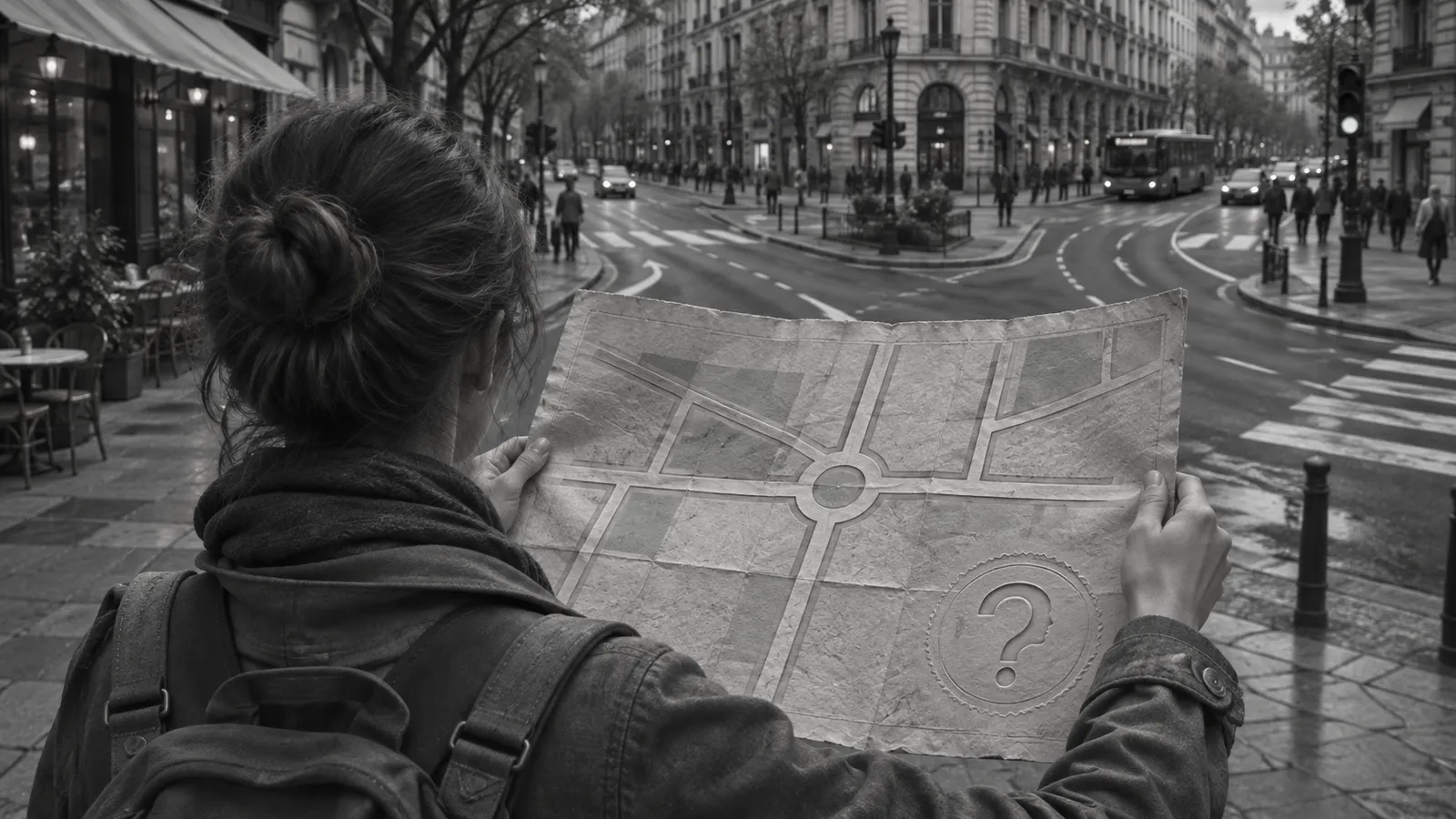
How a 1922 idea about the picture between a person and the world travelled into psychology and into the way brands are read.
Answer to the question
What is the pseudo-environment?
The pseudo-environment is Walter Lippmann's term, from his 1922 book Public Opinion, for the mental picture of the world that sits between a person and reality. People respond to that picture, while the results of their actions fall in the real world. The picture is built from limited contact, scarce attention and short reports, and it is neither a lie nor optional.
Key takeaways
- Walter Lippmann's Public Opinion (1922) holds that people deal with a reduced picture of the world, the pseudo-environment, and that behaviour answers to the picture while its consequences land in the real world.
- Lippmann used the word fiction for any representation people make of their surroundings, from a loose impression to a careful model, and did not mean a lie.
- Edward Tolman's 1948 paper Cognitive maps in rats and men carried a similar structure into the laboratory: behaviour follows an internal representation.
- In a two-stage wine tasting study with fourteen groups, brand familiarity affected sighted ratings directly and through brand knowledge (Priilaid and colleagues, 2017).
- Lippmann's constraints of limited contact, scarce attention, compression and routine translate into the shopping aisle, and clear labels improve the fidelity of the picture.
Walter Lippmann's Public Opinion opens with a plain observation: nobody deals with the world directly. Each person works from a reduced version of it, assembled from reports, habits and expectations. Lippmann named that version the pseudo-environment, and he argued that behaviour answers to it while the results of behaviour arrive in the real world. A shopper choosing a bottle from a shelf, a reader scanning a headline and a manager reading a dashboard are all doing the same thing: acting on a picture, and then finding out what the scene itself was like. This piece follows that gap from Lippmann's first statement to the work of brands.
Lippmann named the picture between a person and the world
The book was careful about the prefix, which did not mean false. Lippmann took care to say that a fiction, in his sense, is any representation of the environment that people make for themselves, and that representations range from a loose impression to a carefully built scientific model. A map of a city is a fiction in this sense, and a good one. His worry was never that people use maps. It was that people forget they are using one, and so cannot judge how faithful it is.
He then listed what shapes the pseudo-environment. Contact is limited, because nobody can visit most of what they have views about. Attention is scarce, because a day has few spare hours for the news of the world. Events reach people compressed into short messages, described with a small vocabulary that cannot hold their detail. And familiar routines make some facts easy to take in and others easy to leave out. Where these limits leave a gap in the pseudo-environment, he said, a ready-made pattern fills it, which is the work of the stereotype, a term he introduced in the same book.
That is why Public Opinion still reads as a book about everyday perception more than about any single institution. Its claim is structural, and the pseudo-environment is the name for the structure.
Psychology kept the structure and measured the picture
Edward Tolman published Cognitive maps in rats and men in Psychological Review, and the title carried the same shape of claim into the laboratory. Behaviour, on his account, is steered by an internal representation of surroundings and not only by the surroundings themselves. The two authors worked in different fields, one on public life and one on animal learning, and the shared word map reflects a shared structure: a representation sits in the middle, and conduct follows it.
Psychology has kept the structure under many names since. Mental models, schemas and expectations all describe a stored picture that guides what a person notices and what they do next, and mental models is the commonest of the names. What the field added to Lippmann's essay was measurement. A picture in the head can be manipulated in an experiment, and the resulting behaviour can be recorded.
That is the useful step for anyone who sells, designs or communicates. If conduct answers to the pseudo-environment, then the picture is part of the product. A price tag, a label or a headline does not only report on the thing it sits beside. It adds to the map the buyer carries away.
A label and an expectation shape the glass
A tasting study makes the point concrete. David Priilaid and colleagues ran a two-stage tasting experiment with fourteen groups, in which each group tasted seven white wines of one grape first blind and then sighted, with the labels visible. The results showed that brand familiarity affected the sighted ratings directly and also indirectly, through brand knowledge, and that brand knowledge carried the effect of brand exposure. The authors suggest that spreading knowledge of a brand through mass media may not be enough unless it also builds a sense of familiarity in customers' minds.
In Lippmann's terms, the glass in front of the drinker is the real environment and the label belongs to the pseudo-environment. Familiarity is one of the things that fills in the map, and it does so before the first sip, as a price does in Why the Dearer Wine Tastes Better and a first definition does in We Define First, Then We See. Wording shifts the map in the same way, as What is the framing effect explains.
Lippmann's list of limits translates into the shopping aisle almost point for point:
- Limited contact: a shopper rarely sees how a product is made or who else uses it, so reputation stands in for visit.
- Scarce attention: few hours go to any one category, so a quick look decides most choices.
- Compression: a pack, a rating or a headline holds a whole product in a few words.
- Familiar routine: the brand a person already knows is the easiest fact to take in.
Each item names a place where the picture is built from what is cheap to reach, and a place where clear labels, honest ratings and plain descriptions improve the map.
The pseudo-environment is not a problem to be solved, and nobody lives outside it. It is the condition under which everyone, from a shopper to a reader of the morning news, acts. Lippmann's own position was that a representation does little harm when its degree of fidelity can be taken into account, and that the aim is better maps with their limits known, in place of the unreachable aim of no maps at all.
Seen that way, the experiment shows the picture doing its ordinary work, and the practical lesson is about design. A brand that wants its customers to act on an accurate picture can supply what the picture lacks: contact, through samples and open information; time, through plain summaries; and detail, through words that match the product. Customers are then better placed to act well on what they know.
Common questions
What is the pseudo-environment?
It is Walter Lippmann's term, from his 1922 book Public Opinion, for the mental picture of the world that stands between a person and reality. People respond to the picture, while the results of their actions fall in the real world.
Does pseudo mean the picture is false?
No. Lippmann said the term covers any representation people make of their surroundings, from a rough impression to a careful model. A representation is useful when its degree of fidelity is known.
Is the pseudo-environment the same as a cognitive map?
The two ideas share a structure, in which behaviour follows an internal representation. Edward Tolman used the phrase cognitive map in a 1948 paper on animal and human behaviour, and Lippmann's term came from the study of public life.
How does the pseudo-environment show up in buying?
In a two-stage wine tasting study, brand familiarity affected sighted ratings directly and through brand knowledge. The label and what a drinker already knows about it become part of the picture the drinker acts on.
Sources
Lippmann, W. Public Opinion. Seed book; vault hub Books/Public Opinion.
Tolman, E. C. (1948). Cognitive maps in rats and men. Psychological Review, 55(4), 189-208. doi:10.1037/h0061626 https://doi.org/10.1037/h0061626
Priilaid, D., Human, G., Pitcher, K., Smith, T., & Varkel, C. (2017). Are consumers' quality perceptions influenced by brand familiarity, brand exposure and brand knowledge? Results from a wine tasting experiment. South African Journal of Business Management, 48(2), 45-54. doi:10.4102/sajbm.v48i2.27 https://doi.org/10.4102/sajbm.v48i2.27