Why do we get déjà vu?
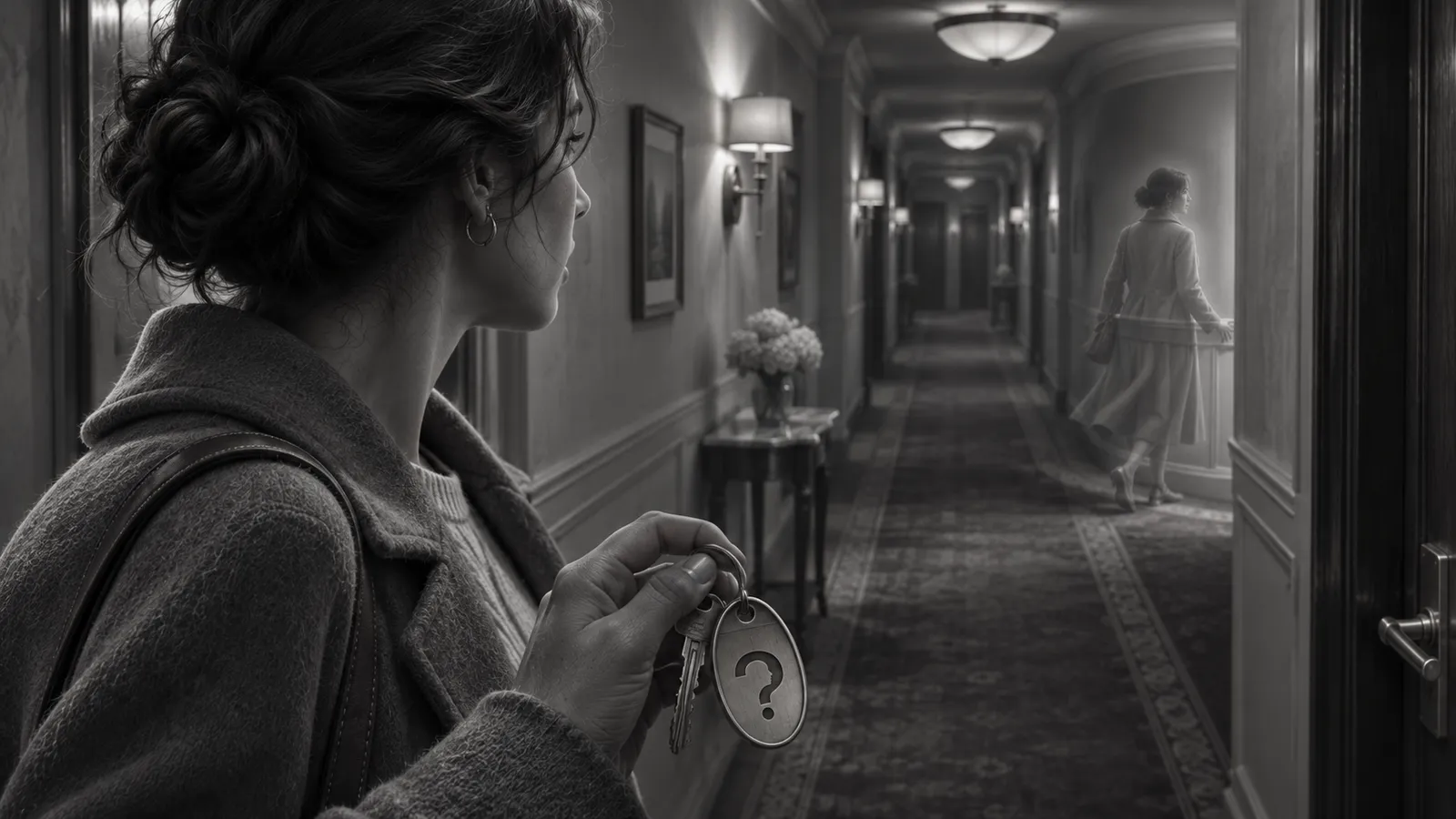
What experiments on a half-forgotten path, a feeling of knowing what comes next and a clash between memory signals say about the sense that a new moment has happened before.
Answer to the question
Why do we get déjà vu?
Déjà vu is the feeling that a new moment has happened before. Researchers propose that a scene can resemble an experience no longer recalled, so familiarity arrives with no source while the mind knows the scene is new. In one study the feeling raised confidence about what came next, not accuracy.
Key takeaways
- Alan Brown's 2003 review of déjà vu research found that the experience is common, becomes less frequent with age and is reported more often by people with more education.
- Charan Ranganath's Why We Remember treats familiarity as a signal separate from recollection, which leaves room for a feeling of knowing with no remembered source.
- In Cleary and Claxton's experiments, the more a new path resembled one people had experienced without remembering it, the more often they reported déjà vu.
- Déjà vu did not make predictions of the next turn more accurate, but it made people more confident in them (Cleary and Claxton, 2018).
- In a laboratory analogue, 16 of 21 participants reported déjà vu, and brain regions linked to conflict were active (Urquhart and colleagues).
This article is general information about research on memory and the feeling of familiarity. It is not medical or psychological advice. If you have concerns about your wellbeing, speak to a GP or another qualified professional. Medical review: Reja Batool.
A woman steps into a café in a city she has never visited and orders a coffee. As the door closes behind her, the whole moment feels known: the light, the voices, her own hand reaching for a cup. She is certain she has never been here, and just as certain this has happened before. That is déjà vu, and it is over in seconds.
The term names a feeling that the present has already been lived, held beside the knowledge that it has not. Researchers who ask why this happens treat it as a memory event, and laboratory tests have begun to show what kind.
Surveys gathered in a 2003 review by Alan Brown show that déjà vu is common, that it becomes less frequent with age, and that people with more education and higher socioeconomic status report it more often. Most of that evidence came from people looking back over their lives, which is a weak instrument for something that lasts a few seconds and cannot be ordered on demand.
What people report has two parts. One is a strong sense of familiarity. The other is the knowledge that the familiarity cannot be right. Without the second part the experience would be ordinary recognition, the kind that happens whenever someone passes a friend in the street. Without the first there would be nothing to notice. Any explanation of déjà vu has to account for both at once, and that requirement shapes the experiments described below.
Earlier laboratory attempts created partial familiarity with new material and asked people about it afterwards, without checking that they also noticed the material was new. Newer designs build in a way of knowing whether the person recognised the item as new, so that the clash between the two signals can be observed and not only assumed.
Why can a brand-new place feel familiar?
Charan Ranganath's Why We Remember supplies the starting point. He treats familiarity as a signal in its own right, separate from recollecting when and where something happened, which is why a face can seem known to a person who cannot say how. A signal that can arrive without a source can also arrive where no source exists, and that is one route to déjà vu.
Memory gives that route plenty of material. What the mind keeps of an episode is uneven, a point developed in Why You Remember the End of a Holiday and Not the Middle, and a physical trace is thought to be left in particular cells, as What is an engram explains. Details of an old scene can fade while something about its shape lingers. The route needs no vivid earlier scene, only enough overlap between the new scene and stored material to raise the signal.
Anne Cleary and Alexander Claxton tested this idea directly. Their participants navigated a path that resembled one they had experienced earlier without remembering it, and the more closely the new path resembled the old one, the more often people reported déjà vu. A resemblance too slight to bring the earlier path to mind could still produce the feeling. In the café, the layout of the room might echo somewhere long forgotten, and the echo would arrive as familiarity with no scene attached.
Does déjà vu mean something is about to happen?
Many people describe déjà vu as a sense of knowing what comes next. The same experiments checked that. Participants in a déjà vu state were asked to predict the next turn on the path. Déjà vu did not make their predictions more accurate. It did make them more confident that they knew which way the path would go. Confidence rose while accuracy stayed where it was, so the two measures separated cleanly. A sense of certainty is cheap to produce and easy to mistake for evidence, which is why this research measures accuracy beside confidence and does not rely on confidence alone. The pairing is what shows the feeling to be a judgement about knowing.
Cleary and Claxton conclude that the feeling of premonition during déjà vu is real but can be illusory, and they propose that a bias in judging one's own knowledge, set off by the experience itself, explains the link. The woman in the café may feel sure of what the person behind the counter will say next, and the feeling is a verdict about her own knowledge, not information about the conversation. The pattern fits a wider finding about memory: the sense of remembering and the fact of remembering can come apart, as Your Nostalgia Is Lying to You shows for vivid recollections. Déjà vu is the mirror case, a feeling of memory with no event behind it.
How might two memory signals end up clashing?
Brown's review sorted the proposed explanations into four groups:
- Dual processing, in which two mental processes briefly fall out of step.
- Neurological accounts, in which signalling between neurons is disrupted.
- Memory accounts, in which something feels familiar without being consciously recognised.
- Attentional accounts, in which something is noticed without focus and then noticed again with focus.
More recent work has concentrated on the second part of the experience, the knowing that the feeling is wrong. Josephine Urquhart, Akira O'Connor and colleagues built a laboratory analogue from a word-list [false memory](https://thewhyweproject.com/articles/how-do-false-memories-form) task in which a feeling of familiarity was paired with cues showing it was mistaken. Of 21 participants, 16 reported déjà vu, and the brain regions active during the task were ones linked to cognitive conflict. People were more likely to report déjà vu for lures they correctly labelled as new, which suggests that settling the clash between familiarity and knowledge may be central to the experience.
Courtney Aitken, Ines Jentzsch and O'Connor gathered this line of work into a conflict account in 2023. They define déjà vu as a conflict between a subjective evaluation of familiarity and a concurrent evaluation of novelty. Conflict monitoring in the brain peaks in young adulthood and then declines, which the authors connect to the fall in reports of déjà vu with age.
Common questions
Why do we get déjà vu?
Researchers propose that a scene can resemble a past experience that is no longer recalled, so a signal of familiarity arrives with no source. The mind also knows the scene is new, and the clash between the two is the experience.
Is déjà vu a glimpse of the future?
In experiments, people in a déjà vu state were no more accurate at predicting the next turn on a path, though they felt more confident. The sense of premonition appears to be a feeling about knowing, not knowledge.
How common is déjà vu?
Review of surveys shows that it is common, that it is reported less often with age, and that people with more education report it more often.
Does a new place ever feel familiar for a reason?
Yes. In one study, the more a new path resembled an earlier path that people did not remember, the more often they reported déjà vu.
Sources
Ranganath, C. Why We Remember. Seed book; vault hub Books/Why We Remember.
Brown, A. S. (2003). A review of the déjà vu experience. Psychological Bulletin, 129(3), 394-413. doi:10.1037/0033-2909.129.3.394 https://doi.org/10.1037/0033-2909.129.3.394
Cleary, A. M., & Claxton, A. B. (2018). Déjà vu: An illusion of prediction. Psychological Science, 29(4), 635-644. doi:10.1177/0956797617743018 https://doi.org/10.1177/0956797617743018
Urquhart, J. A., Sivakumaran, M. H., Macfarlane, J. A., & O'Connor, A. R. (2018). fMRI evidence supporting the role of memory conflict in the déjà vu experience. Memory, 29(7), 921-932. doi:10.1080/09658211.2018.1524496 https://doi.org/10.1080/09658211.2018.1524496
Aitken, C. B. A., Jentzsch, I., & O'Connor, A. R. (2023). Towards a conflict account of déjà vu: The role of memory errors and memory expectation conflict in the experience of déjà vu. Neuroscience & Biobehavioral Reviews, 155, 105467. doi:10.1016/j.neubiorev.2023.105467 https://doi.org/10.1016/j.neubiorev.2023.105467