David Schkade
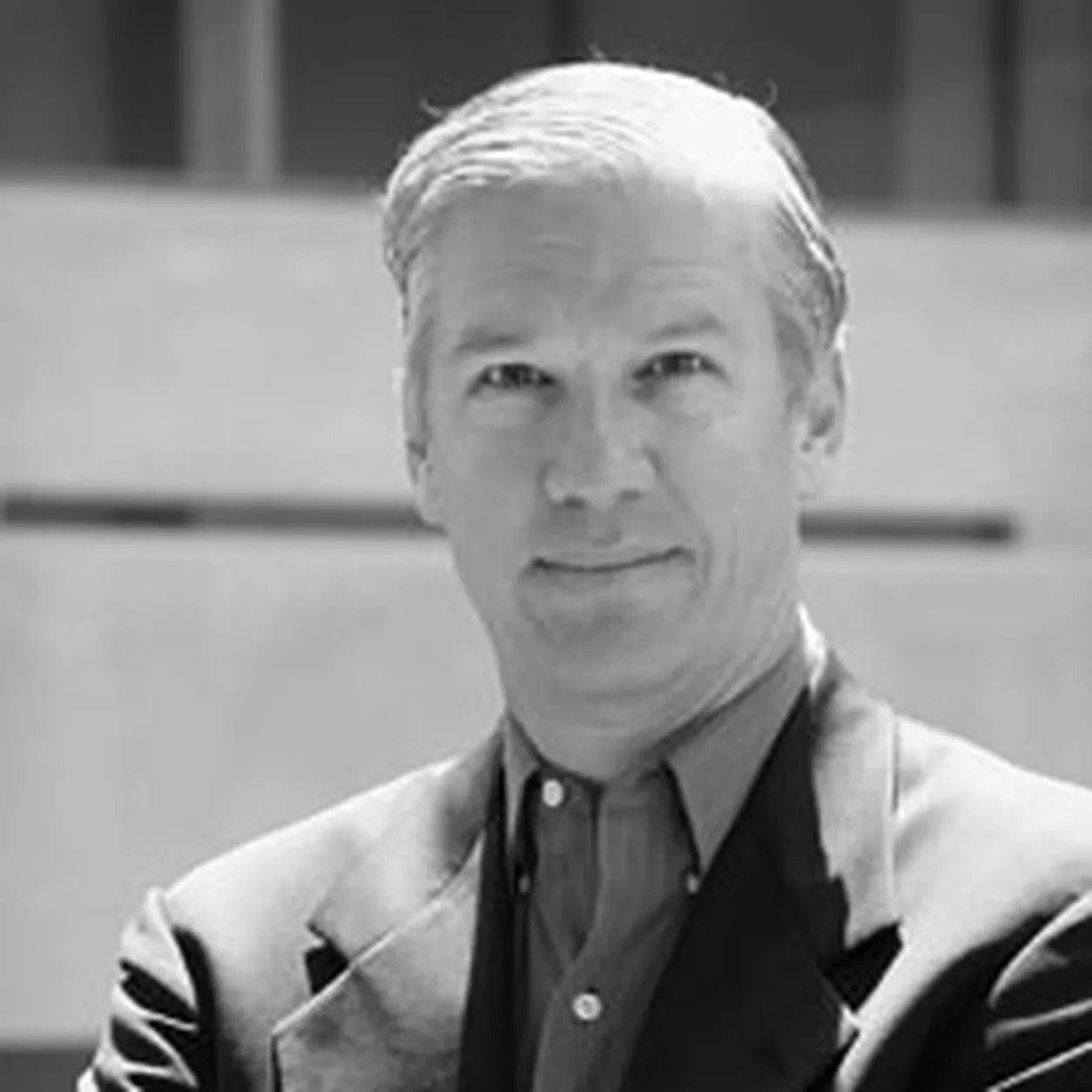
David Schkade is a decision researcher, now Professor Emeritus at the Rady School of Management, University of California, San Diego. He is first author, with Daniel Kahneman, of the 1998 study Does living in California make people happy? A focusing illusion in judgments of life satisfaction, the demonstration on which Kahneman's account of the focusing illusion rests. He is also an author of the 2006 Science paper on income and the focusing illusion and of the 2004 paper that introduced the Day Reconstruction Method.
Who they are
The Rady School's faculty page lists his research areas as the psychology of judgment and decision making, measuring subjective experience, and improving decision making, with industry interests in public policy, the environment and law. It credits him with more than 60 published papers and two books.
His work reaches outside wellbeing. The page lists research on how juries set punitive damages, which has been cited in court opinions including decisions of the US Supreme Court, and a book on that subject, Punitive Damages: How Juries Decide (2002, with Cass Sunstein and others). It lists Are Judges Political? An Empirical Analysis of the Federal Judiciary (2006, with Sunstein, Ellman and Sawicki), work on valuing environmental resources and health for cost-benefit analysis, and research on why people choose to become organ donors. He has served on National Academy of Sciences committees, including on organ donation and the cost-effectiveness of federal health policy.
This page covers only the part of that work that bears on The Why We Project, which is the research on how people judge and forecast wellbeing. Biographical detail beyond the faculty page has not been verified and is not given here.
Key papers
Schkade, D. A., & Kahneman, D. (1998). Does living in California make people happy? A focusing illusion in judgments of life satisfaction. Psychological Science, 9(5), 340-346. The study surveyed 1,993 undergraduates, 492 at the University of Michigan, 499 at Ohio State, 503 at UCLA and 499 at UC Irvine. Students rated life satisfaction for themselves or for a similar student in the other region. Overall satisfaction did not differ by region, but students in both regions predicted that a similar student in California would be more satisfied, and climate and cultural opportunities accounted for the predicted gap.
Kahneman, D., Krueger, A. B., Schkade, D., Schwarz, N., & Stone, A. A. (2006). Would you be happier if you were richer? A focusing illusion. Science, 312(5782), 1908-1910. doi:10.1126/science.1129688. Respondents predicted that people earning under $20,000 would spend 32 per cent more time in a bad mood than people earning over $100,000, and the measured gap was 12 per cent.
Kahneman, D., Krueger, A. B., Schkade, D. A., Schwarz, N., & Stone, A. A. (2004). A survey method for characterizing daily life experience: The Day Reconstruction Method. Science, 306(5702), 1776-1780.
Kleinmuntz, D. N., & Schkade, D. A. (1993). Paper on information displays and decision processes in Psychological Science, listed on the Rady School page.
Key ideas
The attended part is overweighted. Schkade and Kahneman define the focusing illusion as a judgment about a whole made with attention on a subset, so that the attended subset is overweighted relative to the unattended subset. People who imagined living elsewhere gave more weight to the visible differences, climate and cultural opportunities, than people who lived there gave to them in judging their own lives.
Own lives and other lives are judged differently. Ratings of overall satisfaction for the students' own lives ran well above their predictions for similar others, which the authors linked to optimism, and that gap is separate from the regional one.
Momentary experience and overall judgment can diverge. The Day Reconstruction Method asks people to record the previous day's activities and how they felt during each, which yields a measure built from daily experience in place of a single overall judgment of one's life. In the 2006 paper, income correlated more weakly with that momentary measure than with overall life satisfaction.
Caution on the sources. Kahneman's popular account of the California study describes large samples and prints no figures. The figures above come from the paper.
Sources
- Rady School of Management, University of California, San Diego, faculty page for David Schkade (Emeritus), consulted 2026-10-27.
- Schkade, D. A., & Kahneman, D. (1998). Psychological Science, 9(5), 340-346. doi:10.1111/1467-9280.00066.
- Kahneman, D., Krueger, A. B., Schkade, D., Schwarz, N., & Stone, A. A. (2006). Science, 312(5782), 1908-1910. doi:10.1126/science.1129688. Sample sizes and predicted-gap figures as reported in the Princeton University news release of 29 June 2006.
Studies on this site by Schkade
- Does living in California make people happy? A focusing illusion in judgments of life satisfaction
Schkade (1998) · Psychological Science
Articles that cite David Schkade
- Will a New Car Make You Happier
A new car looms large while it is being chosen and recedes once it is owned. The California study, a football-fan experiment and a survey of working women show where that idea comes from and what…
Concepts on this site
- The Focusing Illusion
Daniel Kahneman's own one-sentence version, and he intended it to be quotable, is that nothing in life matters quite as much as you think it does while you are thinking about it. Direct attention at…