Henry Beecher
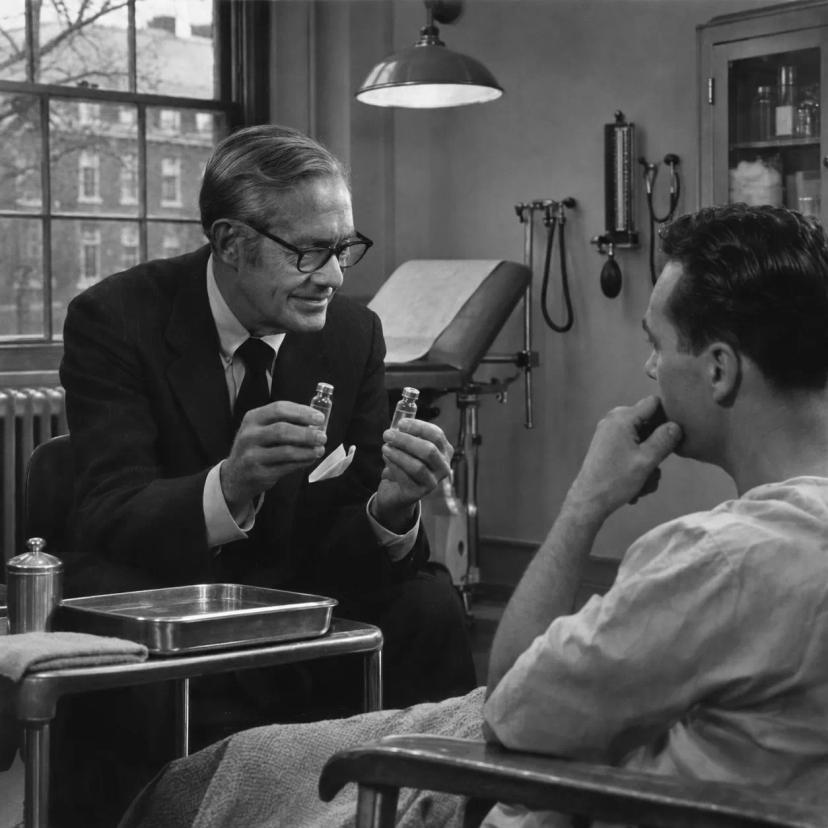
American anaesthesiologist (1904 to 1976) and Dorr Professor of Anaesthesia at Harvard Medical School, known for wartime research on pain, a 1955 paper on the placebo, and a 1966 paper on ethics in clinical research.
Who they are
Henry Beecher worked as an army anaesthetist in the Second World War and, at a forward hospital, recorded the reports of 225 consecutively admitted soldiers with major wounds. The resulting paper, published in the Annals of Surgery in 1946, found that the severity of a wound did not track reported pain and that a large majority of the men did not want pain relief.
His 1955 paper in the Journal of the American Medical Association, titled The Powerful Placebo, pooled fifteen trials covering 1,082 patients and reported that a placebo relieved about 35 per cent of them. The figure entered teaching and popular accounts of the placebo effect, and the paper is the starting point for much later work on how that effect should be measured.
A third strand of his work concerns research ethics. His 1966 paper in the New England Journal of Medicine, Ethics and Clinical Research, set out twenty-two published studies conducted without meaningful consent and is regarded as one of the founding documents of modern research ethics.
Key papers
Beecher, H. K. (1946). Pain in men wounded in battle. Annals of Surgery.
Beecher, H. K. (1955). The powerful placebo. Journal of the American Medical Association.
Beecher, H. K. (1966). Ethics and clinical research. New England Journal of Medicine.
Key ideas
The 1955 paper proposed that a placebo can relieve symptoms in a substantial share of patients, and it gave the proportion of about 35 per cent from its pooled trials. The wartime paper proposed that the meaning of an injury shapes how it is felt. How the 1955 figure has been read since is set out on the Placebo Effect page, attributed to the later papers that reanalysed it.
Sources
- Kienle, G. S., & Kiene, H. (1997). The powerful placebo effect: fact or fiction? Journal of Clinical Epidemiology, 50(12), 1311-1318. doi:10.1016/s0895-4356(97)00203-5 (for the figures of the 1955 paper).
- Beecher, H. K. (1946), (1955) and (1966), as listed under Key papers.
Articles that cite Henry Beecher
- What is the placebo effect?
A famous figure for the size of the placebo effect came from fifteen trials in which a later reanalysis found no placebo effect. Comparisons with untreated groups give a smaller and more specific…
Concepts on this site
- Placebo Effect
The placebo effect is an improvement that follows a treatment because of what the patient expects from it rather than because of what the treatment does. The single most useful thing to know about…
- The Pleasure-Pain Balance
The pleasure-pain balance is Anna Lembke's central device in Dopamine Nation and the spine of the whole book. Pleasure and pain are drawn as a seesaw: tip it one way and the brain, which wants the…