J. R. R. Tolkien
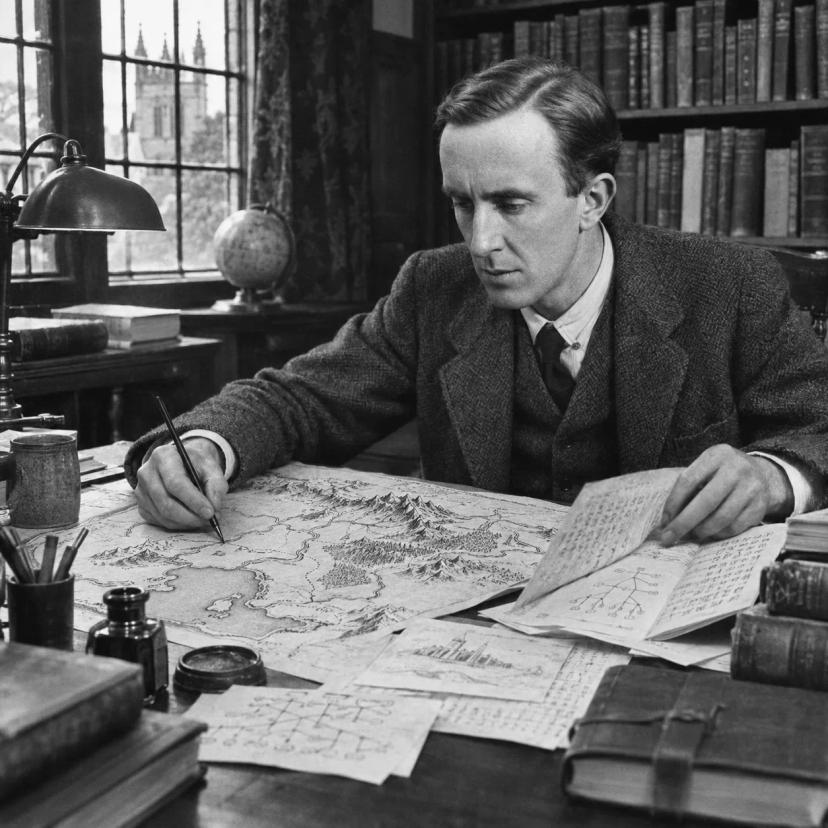
J. R. R. Tolkien wrote The Lord of the Rings, published in three volumes in 1954 and 1955, and the essay On Fairy-stories, published in 1947, in which he coined the word eucatastrophe.
Who they are
Tolkien is the author of The Lord of the Rings, the book at the centre of the article on why so many readers call it the best book ever written. The book is known for the world around its story: languages, maps and histories that sit behind the plot. That built world is what the article connects to research on absorption in stories and on perceived realism.
His essay On Fairy-stories grew from a lecture of 1939 and appeared in print in 1947. In it he set out the idea of a sudden upward turn in a story, which he named eucatastrophe.
Key papers
Tolkien, J. R. R. (1947), On Fairy-stories. The essay in which the word eucatastrophe appears.
Tolkien, J. R. R. (1954 and 1955), The Lord of the Rings, published in three volumes.
Key ideas
Eucatastrophe is a sudden upward turn that changes an apparent defeat into joy, and it works only if disaster has seemed a real possibility.
A story world built with its own languages, maps and histories gives readers many fixed points, which the article reads through research on perceived realism.
Sources
- Tolkien, J. R. R., On Fairy-stories.
- Tolkien, J. R. R., The Lord of the Rings.
Articles that cite J. R. R. Tolkien
- Why We Call The Lord of the Rings the Best Book Ever Written
A built world of languages, maps and histories, what research says about being absorbed in a story, and why readers return to Middle-earth.
Concepts on this site
- Eucatastrophe
Eucatastrophe is J. R. R. Tolkien's word for a sudden upward turn in a story, a reversal that changes what looked like a falling course into joy. He coined it in his essay On Fairy-stories, which…