Jeff Galak
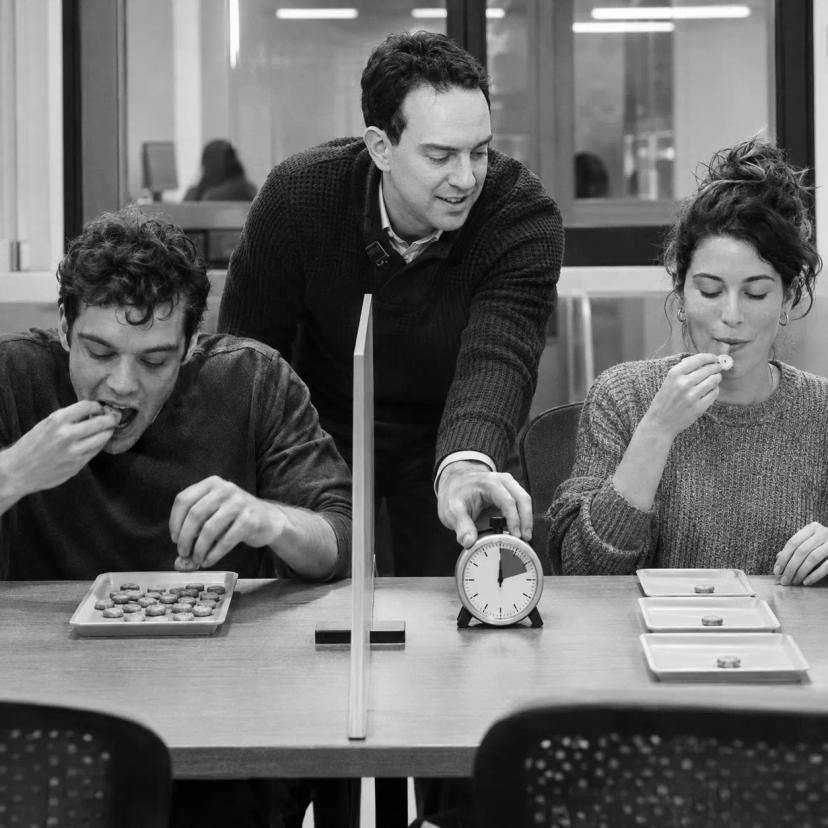
Jeff Galak is a consumer researcher and the first author, with Justin Kruger and George Loewenstein, of a 2013 Journal of Consumer Research paper on how people pace their consumption of things they enjoy.
Who they are
Galak is first author of the 2013 paper Slow down! Insensitivity to rate of consumption leads to avoidable satiation. The publication record used for this page is limited to that paper, and the page holds no other biographical detail.
Key papers
Slow down! Insensitivity to rate of consumption leads to avoidable satiation, with Justin Kruger and George Loewenstein, Journal of Consumer Research, 2013, volume 39, issue 5.
Key ideas
The paper reported that people who chose how fast to consume a favourite snack or a video game went too quickly and tired of it sooner than they would have at a slower pace. The authors traced this to people not recognising that longer breaks between episodes slow satiation. People who set their own pace enjoyed the experience less than people whose pace was set for them at a slower rate.
Sources
- Galak, J., Kruger, J., & Loewenstein, G. (2013). Slow down! Insensitivity to rate of consumption leads to avoidable satiation. Journal of Consumer Research, 39(5), 993-1009. https://doi.org/10.1086/666597
Studies on this site by Galak
- Variety amnesia: Recalling past variety can accelerate recovery from satiation
Galak (2009) · Journal of Consumer Research
- Slow down! Insensitivity to rate of consumption leads to avoidable satiation
Galak (2013) · Journal of Consumer Research
- Why certain gifts are great to give but not to get: A framework for understanding errors in gift giving
Galak (2016) · Current Directions in Psychological Science
Articles that cite Jeff Galak
- Why We Order the Same Lunch Every Day
A lunch plan made on Sunday and a lunch ordered on Thursday are different choices. Studies of variety-seeking behaviour show how timing, audience and memory pull between variety and routine.
- Why We Regift
A gift passed on to someone else looks rude to the person holding it and much less so to the person who gave it. The research on regifting traces the gap to beliefs about who owns a gift once it has…
- Why do advent calendars work?
How a shut door, a daily limit and a visible end date turn waiting into the reward, step by step.
- Why is rewatching a favourite film so satisfying?
Rewatching a favourite film is a choice made with the ending known. Studies of repeated experiences point to control, anticipation and the gap between viewings, and show where plain familiarity…
Concepts on this site
- Consumption Pace
The rate at which a person uses up something they enjoy.