Kitty Genovese
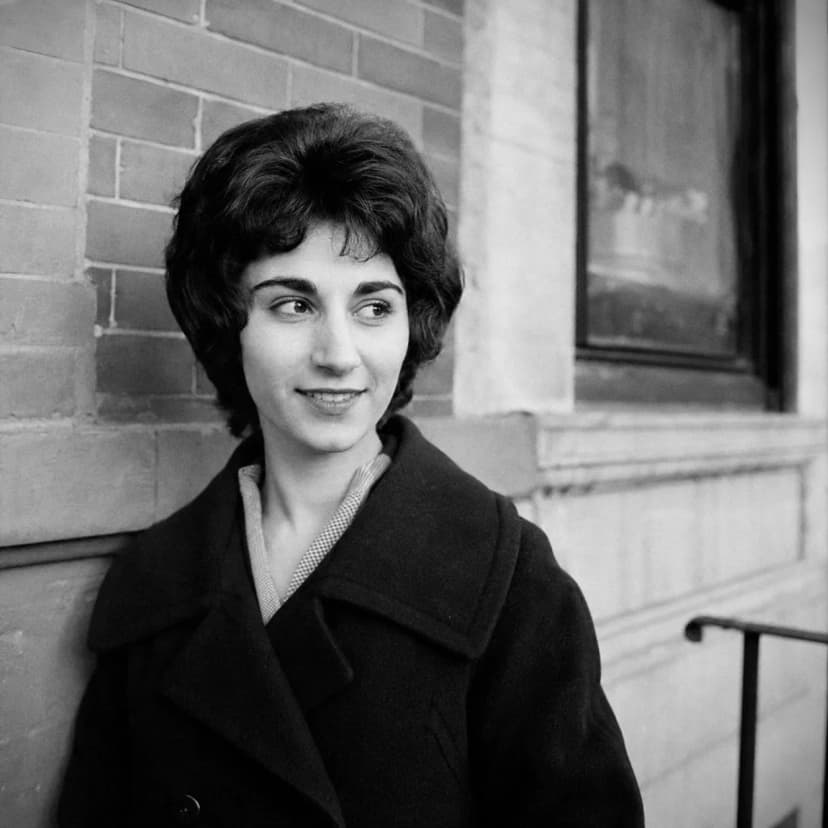
Kitty Genovese was murdered in the Kew Gardens neighbourhood of Queens, New York, in the early hours of 13 March 1964. Two weeks later the New York Times reported that 38 of her neighbours had watched the attack and that not one of them had called the police. That account was wrong, and it took more than forty years for the correction to reach the textbooks that had built a field on it. She has a page here for one reason: the story told about her death is far better known than her death, and the record should be stated plainly.
Who they are
Catherine Susan Genovese, known as Kitty, was born in New York in 1935 and was twenty-eight when she was killed. She was returning home from work in the early hours of the morning when she was attacked outside her building.
She was not a psychologist, not a research subject, and not a volunteer in anything. Her name entered the discipline because a newspaper account of her death was picked up as a convenient illustration of urban indifference, and it stayed there through two generations of introductory textbooks. Almost everything those textbooks said about the people around her that night was false.
When Rachel Manning, Mark Levine and Alan Collins went back to the trial record, the police files and the contemporary press in 2007, what they found was this. The attack happened in two parts, roughly ten minutes apart. The second and fatal attack took place in a vestibule that almost nobody could have seen into. At least two neighbours telephoned the police. One man shouted from a window and drove the attacker off, which is the reason there was a second attack at all rather than a single uninterrupted one. And a friend came down and stayed with her, holding her, until help arrived.
None of that is a small correction to a mostly sound story. It removes the story. What remains is a young woman who was killed, and neighbours who behaved a good deal better than the account that made them famous.
What the record shows
Three claims carried the parable for forty years. The 2007 reconstruction found support for none of them.
That there were 38 witnesses. The figure appears nowhere in the police records. The original New York Times headline said 37; the article said 38; neither number is traceable to the investigation.
That they watched the murder. The fatal attack took place out of sight of the windows the story places its witnesses at.
That they did nothing. At least two calls were made to the police, one man shouted and interrupted the first attack, and a friend came to her.
The correction arrived in stages. Kevin Cook's 2014 book reconstructed the night hour by hour and reached the same place. The 2016 documentary The Witness, which follows her brother William Genovese's long attempt to establish what actually happened, reached it again. The New York Times has since acknowledged serious flaws in its original reporting.
Key papers
She was not a researcher, and there are no papers of hers to list. What belongs here instead is the literature written about her case and about the question it raised, because the page exists to put the record next to the story.
Manning, R., Levine, M., & Collins, A. (2007). "The Kitty Genovese Murder and the Social Psychology of Helping: The Parable of the 38 Witnesses." American Psychologist, 62(6), 555-562. The archival reconstruction, built from the trial record, the police files and the contemporary press. It found no support for the figure of 38 witnesses, none for the claim that witnesses observed the attack, and none for the claim that they did nothing.
Darley, J. M., & Latané, B. (1968). The bystander intervention experiments, which the newspaper account prompted. The research is sound and stands on its own evidence. It is not affected either way by the correction above, and this site keeps the two apart.
Philpot, R., Liebst, L. S., Levine, M., Bernasco, W., & Lindegaard, M. R. (2020). "Would I Be Helped? Cross-National CCTV Footage Shows That Intervention Is the Norm in Public Conflicts." American Psychologist. The field evidence, and the answer to the question a person in trouble would actually ask. Across 219 recorded public conflicts in Amsterdam, Cape Town and Lancaster, someone intervened in about nine cases in ten, usually more than one person, at similar rates in all three cities. More bystanders present went with a greater chance that somebody acted.
Taken together these are the reason the parable should not outlive the correction. What happened to her was real and it was terrible. What was said afterwards about the people around her was not true, and the best current evidence says that people in public conflicts are usually helped.
Key ideas
The parable of the 38 witnesses is a claim about her neighbours, not about her, and it was not true of them.
The archival correction is now nearly twenty years old and is still losing to the version in the textbooks.
The experiments the story inspired are a separate matter, and they were sound. See John Darley and Bibb Latane.
She is written about here as a person who was killed, not as a case. The purpose of the page is the record.
Concepts on this site
The Parable of the 38 Witnesses
Find them elsewhere
Lifespan: 1935 to 1964. No social accounts, and none are claimed on their behalf.
Deceased, so no social accounts. No authoritative reference page recorded, as no archive, estate or scholarly biography page could be confirmed
Checked 2026-09-10. Handles and affiliations go out of date, so treat this block as a snapshot rather than a standing fact.
Sources
- Gansberg, M. (27 March 1964), "37 Who Saw Murder Didn't Call the Police," New York Times. The original report.
- Manning, R., Levine, M., & Collins, A. (2007), "The Kitty Genovese Murder and the Social Psychology of Helping: The Parable of the 38 Witnesses," American Psychologist, 62(6), 555-562.
- Cook, K. (2014), Kitty Genovese: The Murder, the Bystanders, the Crime That Changed America, W. W. Norton.
- Solomon, J. (dir.) (2016), The Witness. Documentary following William Genovese's investigation into his sister's death.