Somebody Notices When You Are Missing
Twenty years of the same men on the same pitch every Wednesday night, and the biggest comparison anybody has run says the group adds nothing. Which leaves the part of a team that nobody has got round to measuring
By Torsten Smolcic · Former academy footballer in the German youth system, scout, and founder of a sports management company
Key takeaways
- Generic company adds nothing measurable. The largest direct comparison of group and individual exercise, Kritz and colleagues in Nature Human Behaviour (2026), pooled 71 studies and more than twenty-two thousand people and found no advantage for the group that the study could detect. The true figure could sit anywhere between a slight edge for training alone and a small edge for the group, and that range includes nothing happening at all. Walking groups, supervised classes, group counselling and team programmes all enter that design as a single variable.
- The narrower thing does predict adherence: identification with one particular group that has a claim on you, rather than the general pleasantness of exercising near other people. Across 21 studies of adult group fitness classes, Gao and colleagues found group identification, social attraction and social integration predicting attendance where broad cohesion scores mostly predicted nothing, with self-efficacy the most consistently supported predictor of all (Behavioral Sciences, 2026).
- Relatedness is the weakest leg of Self-Determination Theory in the exercise evidence. In Ntoumanis et al. (2021), interventions shifted autonomy by a small to moderate amount and competence by slightly less, both solidly enough that chance is an unlikely explanation. Relatedness shifted least of the three, by too little for the analysis to tell apart from nothing at all, and by the follow-up measurement what little there had been was down to almost exactly zero. The reviewers argue the trials manipulated warmth rather than the need itself.
- Exercise identity and physical activity move together about as strongly as anything in this literature does (Rhodes and colleagues, 2016), the measure belongs to Deborah Kendzierski rather than to any trade book, and the direction of the relationship is unsettled. Golaszewski et al. (2022), the cross-sectional survey most often used to argue the social case, found group membership predicting neither activity nor exercise identity among the men of its 506-person sample.
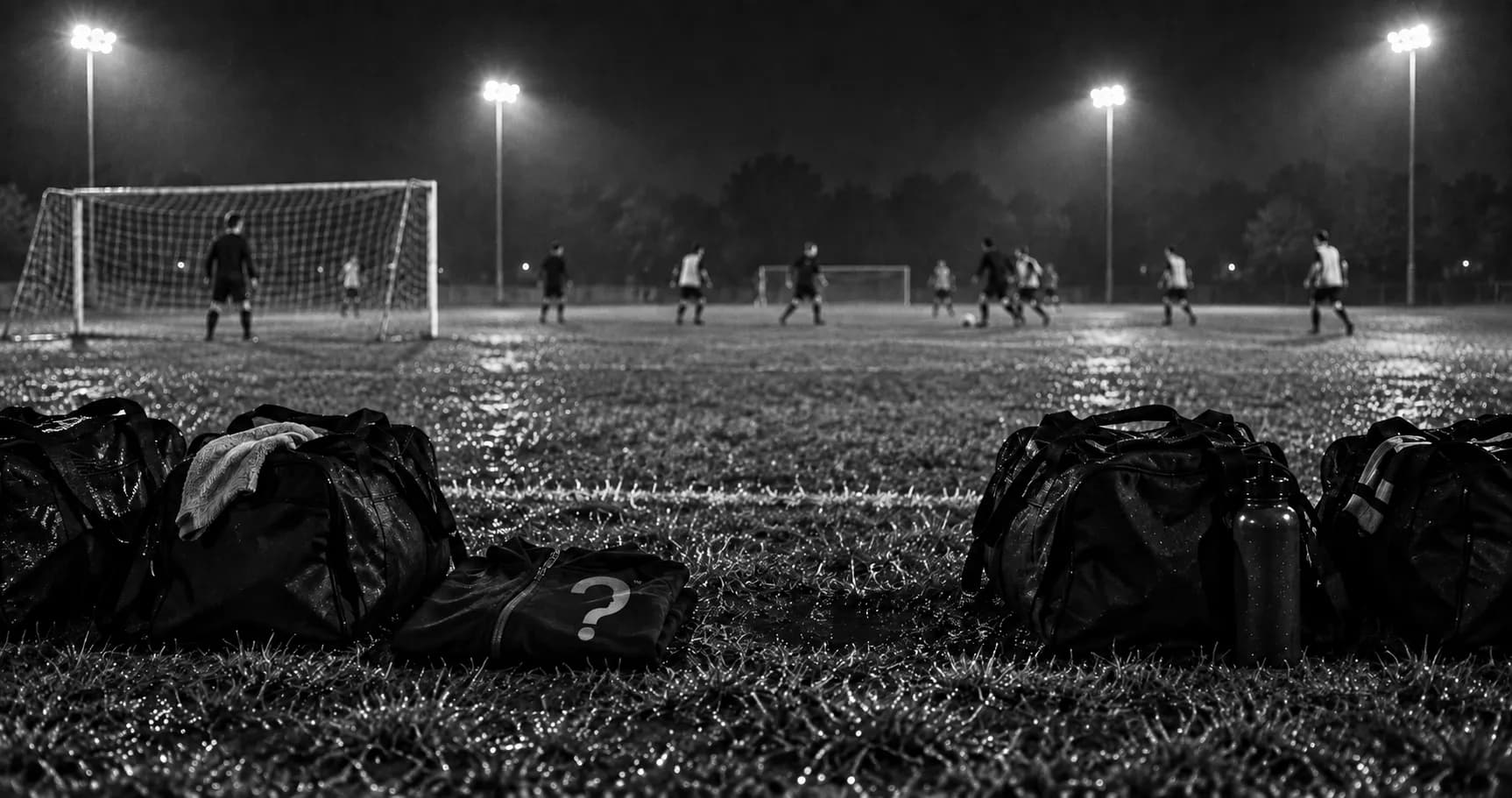
Eight o'clock on a Wednesday, on a municipal pitch twenty minutes from where I grew up, and the floodlights have been on since half past seven. The men playing are in their forties, fifties and sixties. A few still move well. Most do not, and one of the centre-halves keeps a beer in the boot of his car for afterwards. The game stops twice while somebody argues about a handball nobody else saw. They do not really train any more. They play, they lose or they win, and then they sit down somewhere with something to eat and stay longer than any of them meant to.
That fixture has survived jobs, divorces, two knee replacements and a pandemic, and it is coming up on twenty years. I came up through the German academy system, spent years inside it at VfB Stuttgart, then scouted and later built a company around player management, so I have watched a great many people arrange their lives around a time on a Wednesday. I assumed the lesson was obvious, and I had most of an essay written on it before I went looking for the comparison.
The comparison had been run, and it did not say what I expected. Marlene Kritz and colleagues pooled 71 studies and 523 effect sizes for Nature Human Behaviour in 2026, and across 22,042 people the group finished a hair in front of the individual on physical activity, by an amount so slight that a study this size could not tell it apart from nothing at all. The range of true values the data will support runs from a slight advantage for training alone through to a small advantage for the group, and it passes through zero on the way. A gap that small could easily have turned up by chance. That needs stating carefully, because a null gets misread. Nobody is waiting on more evidence to confirm a small win for the group. Seventy-one studies and twenty-two thousand people are enough to find a real effect of that size several times over, and there was nothing there to find. It is the largest head-to-head test of group against individual exercise anybody has run, and anybody can look it up, which is how I found it.
So the essay I had is gone, and what is left is a narrower question and a better one: why the Wednesday men keep turning up at all, and what a meta-analysis has to average away to arrive at zero.