Is Neuroplasticity a Selling Point
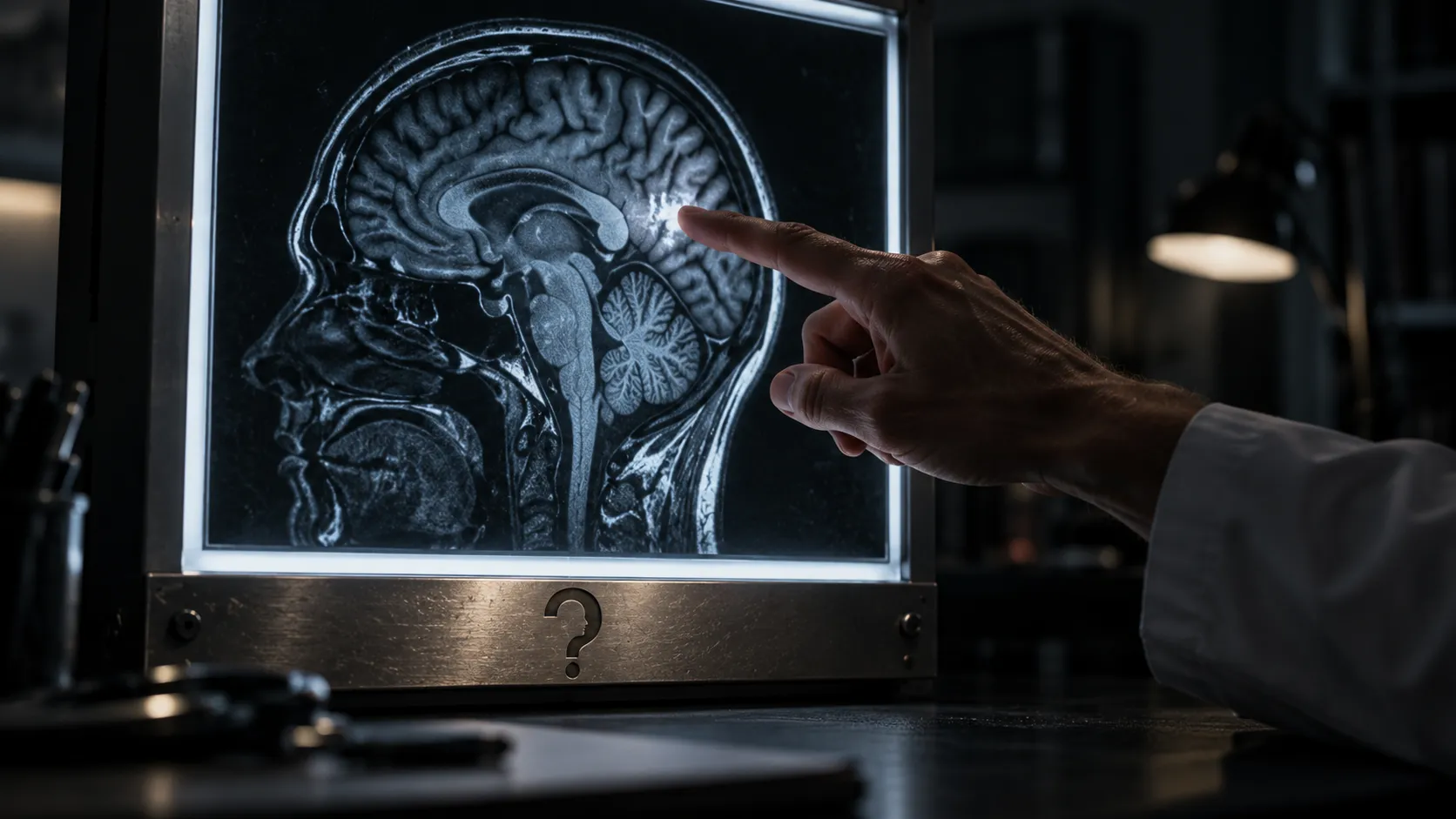
Neuroplasticity is real, and the strongest evidence for it took years of a specific task. Products that cite it as proof of rewiring are making two further claims, and the game trials, a regulator's action and a scan study that did not repeat bear on those.
Answer to the question
Is neuroplasticity proof that brain products work?
No. Neuroplasticity shows that adult brains change with use: London taxi trainees who qualified gained posterior hippocampal grey matter over three to four years. It does not show that a short programme changes a given region or improves everyday thinking, and large trials of training games found gains confined to the trained tasks.
Key takeaways
- Woollett and Maguire (2011) scanned 79 trainee London taxi drivers and 31 controls. The 39 who qualified, after three to four years of training, had more posterior hippocampal grey matter than before. Trainees who failed and the controls showed no such change.
- Maguire and colleagues (2000) found larger posterior hippocampi in licensed taxi drivers than in controls, with volume rising with time spent driving a taxi and anterior volume falling.
- The US Federal Trade Commission (2016) said Lumos Labs claimed its games would improve performance at work, at school and in athletics and delay age-related decline without the science to back it. The company paid 2 million dollars, and a 50 million dollar judgment was suspended.
- Owen and colleagues (2010): of 52,617 people who joined a six-week online trial, 11,430 completed it. Trained groups improved on the trained tasks, effects on untrained tests were no larger than 0.35, and the control group improved by similar amounts.
- Kral and colleagues (2022) combined two randomised trials of 218 adults and found no structural brain change from an eight-week mindfulness course against either control group. The 2011 study by Hölzel and colleagues, with 16 participants in the course group, had reported a left hippocampal increase.
A hippocampal change that scanners could measure took London taxi trainees three to four years of study, and it appeared only in those who qualified. Products that cite neuroplasticity can be read against that standard, and the evidence on games and short courses sold on rewiring falls short of it.
Years of Study, One Region
The clearest demonstration of neuroplasticity in adult humans is a study of taxi drivers. Eleanor Maguire and colleagues scanned the brains of licensed London taxi drivers and compared them with people who did not drive taxis. The drivers had larger posterior hippocampi, and the controls had larger anterior ones. Time spent as a taxi driver correlated positively with posterior volume and negatively with anterior volume (Proceedings of the National Academy of Sciences, 2000). The authors concluded that the structure of the healthy adult human brain can undergo local plastic change in response to environmental demands, which is the claim that neuroplasticity research rests on.
A correlation of that kind could mean that people with larger hippocampi choose the job. The follow-up addressed the objection. Katherine Woollett and Maguire, in Current Biology in 2011, scanned 79 trainees for the London licence, known as the Knowledge, before and after training, together with 31 controls who were not training. Training typically takes three to four years, and only 39 of the trainees qualified.
Those 39 had more grey matter in the posterior hippocampus afterwards than before. Trainees who did not qualify showed no such change, nor did the controls, and the anterior hippocampus did not change in any group. The effect was tied to a long, specific, demanding task, it sat in a named region, and it appeared in the people who finished the task.
Where Does Rewiring Language Come From?
For much of the twentieth century the opposite view held. Santiago Ramón y Cajal, the Nobel laureate histologist, wrote in his work on degeneration and regeneration of the nervous system that in adult centres the nerve paths are something fixed, ended, immutable.
In adult centers the nerve paths are something fixed, ended, immutable.
Against that background, evidence of change in adult brains reads as news, and the word neuroplasticity carries some of the news's authority into any sentence that uses it. Commercial claims can borrow the same authority. The inference runs in three steps: adult brains can change, so a particular exercise can change them, so the change will show up in everyday thinking. Neuroplasticity is a statement about capacity: it says change is possible, not that a given activity produces it or how much. The taxi studies support the first step. The second and third are separate empirical claims, and each needs its own test.
A product that cites neuroplasticity can be asked to name the change it claims, the people in whom it was measured, the time it took and the comparison group that did not receive it. Neither taxi study involved a product or a course lasting weeks.
The Distracted Mind, by Adam Gazzaley and Larry Rosen, makes the case for cognitive training in its tenth chapter, building on adult brain plasticity. The same chapter prints two of the studies that test that case, the 2010 trial by Adrian Owen and colleagues and a paper by Walter Boot and colleagues on placebo effects in training research. The book makes the argument and cites its own tests.
What Did the Game Trials Find?
On 5 January 2016 the US Federal Trade Commission announced that Lumos Labs, maker of Lumosity, would pay 2 million dollars to settle deceptive advertising charges, with a 50 million dollar judgment suspended because of the company's financial condition. The Commission said the company had claimed its games would improve performance at work, at school and in athletics, and would delay age-related cognitive decline, without the science to back the advertisements. The order requires competent and reliable scientific evidence for future claims.
A 2016 review in Psychological Science in the Public Interest, led by Daniel Simons with six co-authors, examined the peer-reviewed studies cited on the websites of leading brain-training companies, which are presumably the strongest evidence those firms hold. It found extensive evidence of improvement on the trained tasks, less on closely related tasks, and little on distantly related tasks or everyday cognition. None of the studies met all the best practices the authors identified.
The largest single test was a six-week online trial run with a BBC programme. Of 52,617 people aged 18 to 60 who joined, 11,430 completed the required sessions and both test batteries. Trained groups improved on the trained tasks. Improvement on untrained tests was small, with effect sizes no larger than 0.35, and a control group that looked up answers to obscure questions improved by similar amounts (Owen and colleagues, Nature, 2010).
A consensus statement from the Stanford Center on Longevity and the Max Planck Institute for Human Development, dated 20 October 2014, described claims promoting brain games as frequently exaggerated and at times misleading. A cognitive training programme can still be sold truthfully for what it does, which is to improve the practised task. The claim the trials do not support is far transfer, the move from neuroplasticity to better performance at work, at school or in old age. The full record is in [Do Brain Training Games Work](https://thewhyweproject.com/articles/do-brain-training-games-work).
When the Scan Result Was Retested
Structural claims have their own history, and results that did not repeat are a wider problem, covered in [The Psychology You Learned Didn't Replicate](https://thewhyweproject.com/articles/the-psychology-you-learned-didnt-replicate). In 2011 Britta Hölzel and colleagues scanned 16 adults with no meditation experience before and after an eight-week mindfulness-based stress reduction course, and compared them with 17 people on a waiting list. Grey-matter density rose in the left hippocampus within a region chosen in advance, and whole-brain analyses reported further regions (Psychiatry Research: Neuroimaging). The authors linked the regions to learning and memory, emotion regulation, self-referential processing and perspective taking. With 16 participants in the course group, it was a first result, and a first result is what a larger trial exists to test.
In 2022 Tammi Kral, Richard Davidson and eight colleagues combined two randomised trials with 218 meditation-naive adults, assigned after a baseline scan to a waiting list, the eight-week course or a matched active control. They found no evidence that the course changed brain structure relative to either control group, in the whole brain or in regions taken from earlier studies (Science Advances). The authors note that a healthy sample that was not seeking help may have had less room to change, and that structural change might appear only after longer or more focused training, and that the result concerns brain structure alone.
The three sets of studies answer the three steps differently. The taxi work shows that change can follow a long, specific task and appear in one region, at a price: the drivers who passed did worse than controls on other memory tasks. The game trials show gains that stay with the trained task. In the scan trials, the structural effect of a short course did not appear once the comparison was randomised, which is the outcome a buyer would want checked before paying for a promise of brain change.
Common questions
Is neuroplasticity proof that brain products work?
No. Neuroplasticity shows that adult brains change with use. London taxi trainees who qualified gained posterior hippocampal grey matter over three to four years. It does not show that a short programme changes a given region or improves everyday thinking, and large trials of training games found gains confined to the trained tasks.
How long did the taxi drivers' brain change take?
Training for the London licence typically takes three to four years. Woollett and Maguire (2011) found more posterior hippocampal grey matter in the 39 trainees who qualified than they had before training, and no such change in the trainees who did not qualify or in the controls.
Did mindfulness courses change brain structure in the largest trial?
Not in the two combined randomised trials of 218 adults reported by Kral and colleagues in 2022. They found no structural difference from either control group. The earlier 2011 study by Hölzel and colleagues, with 16 participants, had reported an increase in the left hippocampus.
Sources
Maguire, E. A., Gadian, D. G., Johnsrude, I. S., Good, C. D., Ashburner, J., Frackowiak, R. S. J., & Frith, C. D. (2000). 'Navigation-related structural change in the hippocampi of taxi drivers.' Proceedings of the National Academy of Sciences, 97(8), 4398-4403. doi:10.1073/pnas.070039597
Woollett, K., & Maguire, E. A. (2011). "Acquiring the Knowledge of London's layout drives structural brain changes." Current Biology, 21(24), 2109-2114. doi:10.1016/j.cub.2011.11.018
Ramón y Cajal, S. Degeneration and Regeneration of the Nervous System (R. M. May, trans.). Oxford University Press. The passage is quoted as given in The Scientist, 'The paper trail'.
Gazzaley, A., & Rosen, L. D. (2016). The Distracted Mind: Ancient Brains in a High-Tech World. MIT Press, chapter 10.
Federal Trade Commission (2016). 'Lumosity to Pay $2 Million to Settle FTC Deceptive Advertising Charges for Its 'Brain Training' Program.' Press release, 5 January 2016
Simons, D. J., Boot, W. R., Charness, N., Gathercole, S. E., Chabris, C. F., Hambrick, D. Z., & Stine-Morrow, E. A. L. (2016). 'Do brain-training programs work?' Psychological Science in the Public Interest, 17(3), 103-186. doi:10.1177/1529100616661983
Owen, A. M., Hampshire, A., Grahn, J. A., Stenton, R., Dajani, S., Burns, A. S., Howard, R. J., & Ballard, C. G. (2010). 'Putting brain training to the test.' Nature, 465(7299), 775-778. doi:10.1038/nature09042
Boot, W. R., Simons, D. J., Stothart, C., & Stutts, C. (2013). 'The pervasive problem with placebos in psychology: Why active control groups are not sufficient to rule out placebo effects.' Perspectives on Psychological Science, 8(4).
Stanford Center on Longevity & Max Planck Institute for Human Development (2014). 'A Consensus on the Brain Training Industry from the Scientific Community.' 20 October 2014
Hölzel, B. K., Carmody, J., Vangel, M., Congleton, C., Yerramsetti, S. M., Gard, T., & Lazar, S. W. (2011). 'Mindfulness practice leads to increases in regional brain gray matter density.' Psychiatry Research: Neuroimaging, 191(1), 36-43. doi:10.1016/j.pscychresns.2010.08.006
Kral, T. R. A., Davis, K., Korponay, C., Hirshberg, M. J., Hoel, R., Tello, L. Y., Goldman, R. I., Rosenkranz, M. A., Lutz, A., & Davidson, R. J. (2022). 'Absence of structural brain changes from mindfulness-based stress reduction: Two combined randomized controlled trials.' Science Advances, 8(20), eabk3316. doi:10.1126/sciadv.abk3316