Why Doing Harm Feels Worse Than Allowing It
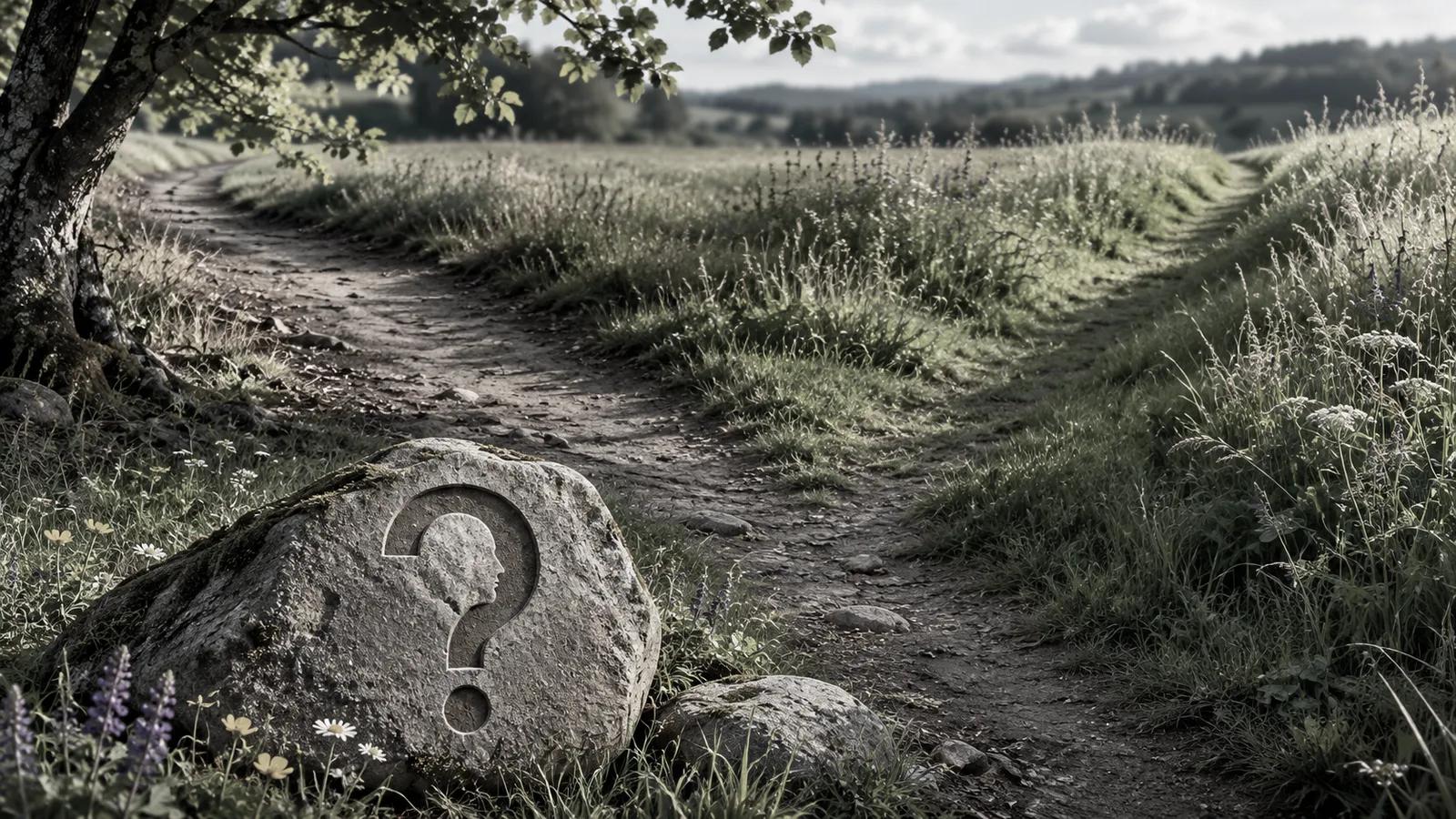
Harm that follows an action is judged more harshly than the same harm that follows inaction. The research on omission bias shows where that comes from, why it can work as cover, and when it reverses.
What is omission bias?
Omission bias is the tendency to judge harm caused by acting as worse than the same harm caused by not acting. In experiments with intentions and consequences held constant, people often rated harmful omissions as less immoral than harmful commissions, and later work suggests that choosing omission can also be a way of avoiding blame.
Key takeaways
- With intentions, motives and consequences held constant, people often rated harmful omissions as less immoral than harmful commissions (Spranca, Minsk and Baron, 1991).
- In an economic game, taking money by omission became more frequent when a third player could punish the taker, which led the authors to describe omission as a strategy for avoiding condemnation (DeScioli, Christner and Kurzban, 2011).
- Kahneman reports that people expect stronger regret from an outcome that follows action than from the same outcome that follows inaction, and argues that departing from the default is what matters most.
- After a risky choice went badly, the person who did nothing was rated as more competent and more normative, but the preference flipped when earlier outcomes had also been negative (Fillon, Strauch and Feldman, 2023).
- In a randomised trial of payment reminders, payment reached 23.2 per cent when not responding was framed as a deliberate choice and 12 per cent when it was framed as an oversight (Hallsworth and colleagues, 2024).
A payment reminder arrives with a balance owed. In one version, ignoring it is described as an oversight, and in the other as a choice. In a randomised trial with tens of thousands of responses, nearly twice as many people paid under the choice wording than under the oversight wording, though nothing about the debt changed.
The gap points to omission bias, the tilt toward judging harm from acting more harshly than the same harm from letting something pass. It shapes plans, reminders and offers, and the research on it is older than the trial.
Does omission bias judge acting harshly?
The label comes from experiments by Mark Spranca, Elisa Minsk and Jonathan Baron. They gave volunteers pairs of scenarios in which the actor's intentions, motives and consequences were held constant and only the route differed: harm caused by doing something, or harm caused by leaving something undone. Volunteers often rated the harmful omission as less immoral than the harmful commission. The authors read this as a useful rule of thumb stretched too far. In daily life, causing harm usually does deserve more concern than failing to prevent it, and the rule keeps applying after the difference has been taken out.
Follow-up experiments in the same paper asked what the judgment depends on. Three features of the scenarios were examined:
- whether the harmful act involved physical movement
- whether another cause of the outcome stood out
- whether the outcome would have happened anyway
Each feature shifted how much weight the act carried in the judgment, which suggests omission bias is not one reflex but a bundle of intuitions about responsibility. A person who cancels a booking that then falls through feels the gap between acting and waiting more sharply than an observer who only reads the outcome, and the experiments were built to pull those intuitions apart so each could be seen on its own.
Can inaction work as cover?
Peter DeScioli, John Christner and Robert Kurzban asked whether the preference for omission is a mistake at all. In two experiments, participants played an economic game in which one player, the taker, could take money from another, the owner, either by acting or by letting it happen through omission. When a third player could punish the taker by reducing their payment, taking by omission became more frequent. The authors concluded that omission works as a strategy for avoiding condemnation, and that the same logic explains why observers go easier on omissions.
Seen this way, omission bias is partly a form of cover, and the early finding and the strategy account fit together: observers see less harm in waiting, and actors seem to know it. Leaving a setting alone, letting a plan renew or ignoring an offer leaves no act to point to, which is one reason the explanations in What is status quo bias include omission alongside loss aversion. A shopper who keeps a plan that no longer fits can say nothing was decided, while one who cancels it has made a decision with their name on it.
The cost of staying may be the larger of the two, yet only the cancellation has an author, and that asymmetry holds even when nobody is watching, because the person can still imagine being asked.
Can context reverse the pull?
The pull toward inaction is not fixed. Adrien Fillon, Luna Strauch and Gilad Feldman ran three preregistered experiments with more than 1,100 participants on how people judge decision-makers after a risky choice goes badly. The familiar result appeared first: acting after a bad outcome drew more regret than not acting, and the person who did nothing was rated as more competent and more normative than the person who acted. When earlier outcomes had also been negative, the preference flipped and the person who acted was favoured.
Reading a bad result as a sign of the chooser has its own research, in Why Do We Blame People for Bad Luck, and these experiments add that the route matters too, because a record of poor outcomes makes waiting look like the riskier path.
Daniel Kahneman's Thinking, Fast and Slow offers a way to hold these results together. He reports that people expect a stronger emotional reaction, regret included, to a bad outcome that follows from an action than to the same outcome that follows from inaction. He then narrows the claim: what seems to matter most is whether a choice departs from the default, because departing from a default makes the road not taken easy to imagine. Regret depends on how easily the alternative comes to mind, which is also why a purchase can sting after the fact, as Why We Regret What We Just Bought shows.
On his account, acting feels costly in part because acting is usually the departure. When doing nothing is the departure, as it was after a run of bad outcomes, the feeling can turn around.
Omission bias is hard to catch in the person holding it, because from the inside not acting rarely feels like a decision at all. The sense of having stayed out of it arrives with the choice, before any reasoning does, and it lends the quiet option an innocence that the evidence does not support.
A harm that follows from a long delay is still a harm that follows from a stance, even when that stance was never spoken aloud and nobody signed it. Treating the quiet option as a real option, with an author and a cost like any other, is what allows both routes to be judged by the same standard and not by the comfort each one offers, which matters most where nobody involved would say they had decided anything, and where the person who stayed still is the last to see that staying still was a way of choosing.
Common questions
What is omission bias?
Omission bias is the tendency to judge harm caused by acting as worse than the same harm caused by not acting. In experiments with intentions and consequences held constant, people often rated harmful omissions as less immoral than harmful commissions. Later work suggests choosing omission can also be a way of avoiding blame.
Is omission bias the same as status quo bias?
They are related but not identical. Status quo bias is a preference for the current state of affairs, and omission is one proposed explanation for it, since keeping things as they are usually means not acting. Other explanations, such as loss aversion, have been proposed as well, and researchers continue to separate them.
Does omission bias always favour doing nothing?
No. In experiments on judging decision-makers after a risky choice went badly, people rated the person who did nothing as more competent and more normative. When earlier outcomes had also been negative, the preference flipped toward the person who acted, so context decides which side feels safer.
Sources
Kahneman, D. Thinking, Fast and Slow. Seed book.
Spranca, M., Minsk, E., & Baron, J. (1991). Omission and commission in judgment and choice. Journal of Experimental Social Psychology, 27(1), 76-105. doi:10.1016/0022-1031(91)90011-T https://doi.org/10.1016/0022-1031(91)90011-T
DeScioli, P., Christner, J., & Kurzban, R. (2011). The omission strategy. Psychological Science, 22(4), 442-446. doi:10.1177/0956797611400616 https://doi.org/10.1177/0956797611400616
Fillon, A. A., Strauch, L., & Feldman, G. (2023). Evaluations of action and inaction decision-makers in risky decisions resulting in negative outcomes: Inaction agents are preferred to and perceived as more competent and normative than action agents. Collabra: Psychology, 9(1), 74817. doi:10.1525/collabra.74817 https://doi.org/10.1525/collabra.74817
Hallsworth, M., List, J. A., Metcalfe, R. D., Rotaru, K., & Vlaev, I. (2024). The making of Homo Honoratus: From omission to commission. Journal of Consumer Psychology, 34(4), 588-600. doi:10.1002/jcpy.1392 https://doi.org/10.1002/jcpy.1392
Related concepts
People
More articles
- Why a Cliffhanger Keeps Us Watching
A cliffhanger ends a story at its most unresolved point. Research on suspense and curiosity shows why viewers want the next instalment, and what the ending does not change.
- Why an Unexpected Extra Delights More Than a Promised One
A promised extra is counted into the stay before it arrives. An unannounced one is measured against nothing, and experiments on reward, mood and gifts suggest that gap is where the extra delight…
- Why a Small Win Softens a Big Loss
A credit of 5 beside a charge of 100 can be booked as one net loss or as two separate entries. The research on the silver lining effect sets out when the second booking feels better.
- Why We Trust a Site That Shows Its Work
A search page that lists what it is checking can feel worth more than one that does not. The research shows when visible effort, explanation and a pause build trust, and for whom.