What the Flow Studies Measured
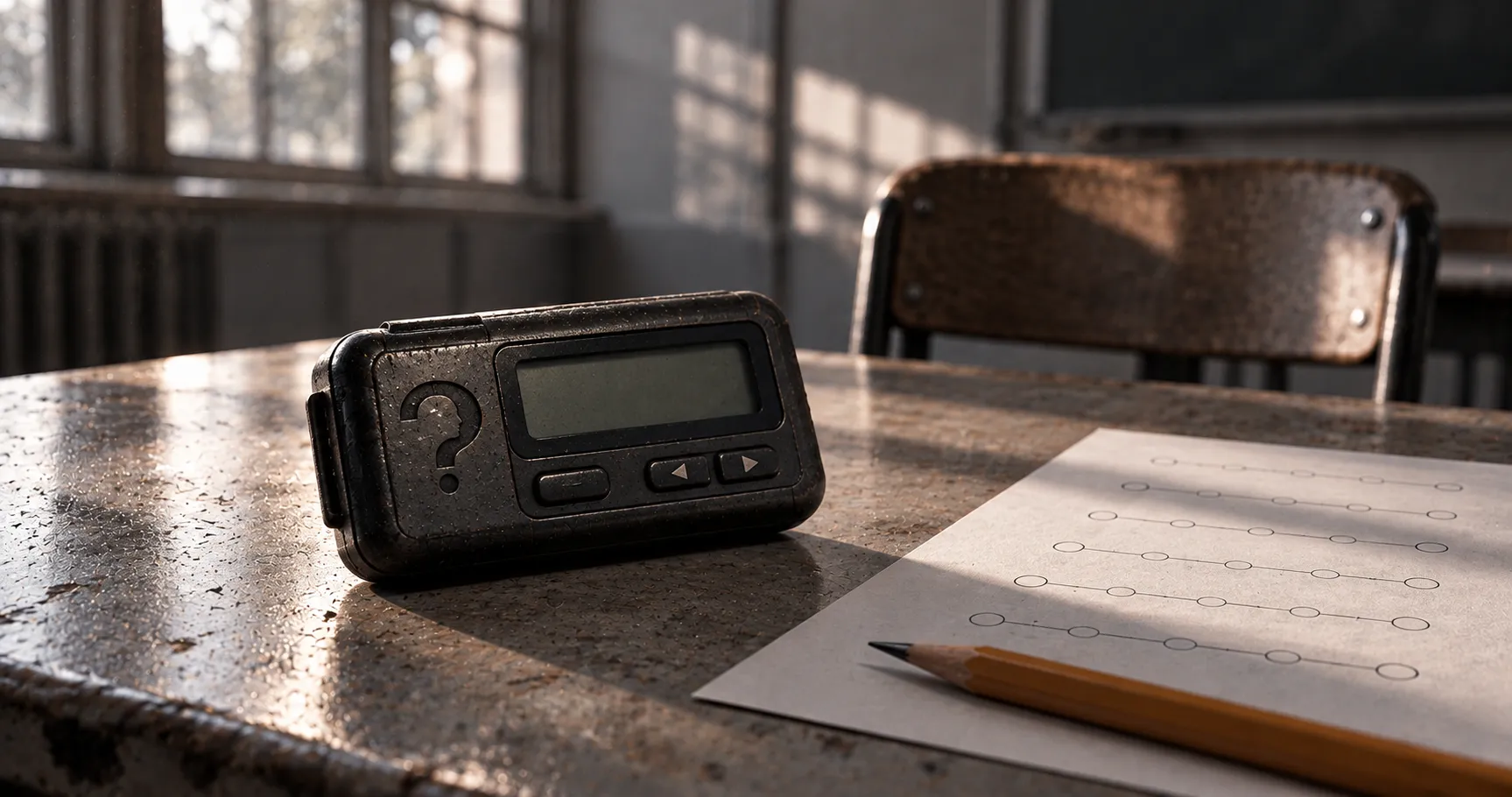
The experience-sampling design that made flow famous contains no flow question at all, and the challenge-skill balance at the centre of the book has not held in the experiments built to test it. The five hundred per cent productivity figure traces to a workshop exercise about executives' own best days.
Answer to the question
What did the flow state studies actually measure?
In the foundational experience-sampling work, a flow state was recorded whenever a person marked both challenge and skill above their own weekly average on two ten-point scales. Nobody was asked about absorption or enjoyment, so that data cannot separate a distinct state from a pleasant mood, and Csikszentmihalyi called the criterion rather liberal on the page where he set it out.
Key takeaways
- The experience-sampling studies that made the flow state famous contain no flow question at all.
- A person counted as being in flow whenever both challenge and skill were marked above their own weekly average, on two ten-point scales.
- Csikszentmihalyi called that criterion rather liberal on the same page, page 158 of Flow.
- The balance of challenge and skill has not held in the designs built to test it, including a preregistered experiment with 311 players.
- The experience-sampling studies that made the flow state famous contain no flow question at all.
- A person counted as being in flow whenever both challenge and skill were marked above their own weekly average, on two ten-point scales.
- Csikszentmihalyi called that criterion rather liberal on the same page, page 158 of Flow.
- A meta-analysis of twenty-eight studies calls the balance of challenge and skill a dependable contributor, and the designs built to test it directly, one of them preregistered with 311 players, have not found the optimum it predicts.
The method first reached print in 1977: give people a pager, signal them at intervals, ask what they are doing and how it feels. In 1990 it underwrote the book that made flow famous. In 2013 a McKinsey Quarterly essay reported what executives recalled of their best days. In 2014 that recollection became a percentage on a magazine blog. In 2020 it entered a peer-reviewed journal as a ten-year longitudinal study. Somewhere on that line the flow state stopped being a measurement.
Here is where we land. Something real is being measured, and nobody has fixed the threshold at which it starts. Absorption exists, you have felt it, and three meta-analyses report associations of moderate size. What the foundational data cannot settle is when a flow state begins, because that data holds no report of one.
The pager and the two scales
The design sits in chapter 7 of Flow, at page 158. Over a hundred full-time workers carried a pager for a week. At each of eight daily signals they rated on ten-point scales how many challenges they saw at that moment and how many skills they felt they were using. A person counted as being in flow every time both numbers sat above that person's own mean for the week.
Nobody was asked whether they were absorbed, or whether they had enjoyed it. The flow state in that dataset is two separate ratings clearing two separate thresholds, both thresholds set by the person's own week and applied afterwards, and everything downstream inherits that.
> "Of course, this method of defining flow is rather liberal."
That sentence is Csikszentmihalyi's own, on the same page as the definition. He adds that a strict criterion admitting only extremely complex experiences might qualify fewer than one per cent of responses.
The method was still an advance.
It removed recall bias, which is not a small thing, and Reed Larson and Suzanne Prescott are co-authors of its first publication.
It removed nothing else.
The signal is an interruption and the construct is uninterrupted absorption, a tension no response rate resolves. [Why Ten Quiet Minutes Feel So Long](https://thewhyweproject.com/articles/why-ten-quiet-minutes-feel-so-long) meets the problem from the other side: what a person says afterwards is the data.
What the construct has going for it
Take the popular claim seriously and follow it. If a flow state is real and consequential, the measured record should show associations, and it does.
Harris and colleagues pooled twenty-two studies of flow and performance in sport and gaming in 2021, with 2,462 participants in the meta-analysis. The pooled correlation was 0.31, which the authors describe as a medium-sized association and gloss as about ten per cent of shared variance.
Sweeny and colleagues pooled eighty-five studies and 255 effect sizes on flow and wellbeing, for a pooled correlation of 0.36. Publication-bias tests came back clean, and nothing about the flow measure, the activity, the study design or the sample moderated the result, though the kind of wellbeing did. Its journal and year rest on the manuscript itself rather than on a publisher record.
Fong and colleagues pooled twenty-eight studies and reported, in an abstract that gives no figure, that the relationship between challenge-skill balance and flow was moderate, naming balance a dependable contributor alongside clear goals and a sense of control.
Nothing resembling the ego-depletion collapse has happened to flow.
| What was pooled | What was measured | Size reported |
|---|---|---|
| Twenty-two studies, flow and performance | Post-event questionnaire against task scores | Pooled correlation 0.31 |
| Eighty-five studies, flow and wellbeing | Questionnaire against questionnaire | Pooled correlation 0.36 |
| Twenty-eight studies, challenge-skill balance | A balance measure against a flow report | Moderate, reported without a figure |
Each of those pooled figures comes with limits its own authors state. Harris and colleagues say in print that no design in their set could establish causal direction, that not one included study reported a negative relationship, and that studies generally did not control for baseline ability. In the wellbeing pooling the weakest association of all is with happiness, at 0.11.
The golden ratio, under test
The book's central mechanism is testable. Enjoyment is supposed to arrive where perceived challenge meets perceived skill, what Csikszentmihalyi called the golden ratio between challenges and skills. Three designs went looking for it.
Engeser and Rheinberg ran three studies in 2008, and one choice made the test fair: they measured flow in its components with the Flow Short Scale instead of defining it by the challenge-to-skill ratio. In the first, 246 students were caught ten minutes into revision for a statistics exam. Skill predicted flow strongly. Difficulty predicted it slightly negatively. The interaction came out nowhere near conventional significance.
> "Thus, neither the channel model nor the quadrant model was empirically supported, and difficulty even had a negative influence on flow."
Their conclusion is the hardest line in this literature: the strong reliance on the skill-challenge balance needs to be questioned.
Flow predicted performance in two of their three studies.
Lovoll and Vittersoe took the question into the field in 2014, following 64 outdoor students across two trips for 698 reports, then 26 more for 260. Neither of their flow indicators peaked in the balance condition. The eight-channel refinement built by the Milan group explained two per cent of the variance in a pleasure measure in the first study.
Then the cleanest test of the three. Cutting and colleagues built a two-player game whose artificial-intelligence opponent could hit targeted difficulty-to-skill ratios, preregistered the study, and ran 311 participants who did not notice the manipulation. Different ratios had no significant effect on enjoyment or engagement. Their conclusion is hedged: balance does not always affect engagement and enjoyment.
The meta-analysis that supports the balance carries moderators of its own. Fong and colleagues report the correlations weaker in work and education settings, weaker under the experience sampling method, and weaker for state flow than for trait flow.
The effect shrinks as the measurement approaches the moment.
The supportive meta-analysis finds the challenge-skill effect weakest under experience sampling and weakest for state flow. The effect shrinks as the measurement approaches the moment.
That is consistent with part of the relationship belonging to how people describe themselves in general.
The body, asked many times
If the questionnaire is shaky, physiology ought to arbitrate. It has been tried for two decades and the answers do not line up.
Khoshnoud and colleagues reviewed thirty-eight studies of video-game flow in 2020 and found heart rate variability reported as lower, higher and moderate in flow by different laboratories. The one measure pointing consistently in one direction is electrodermal activity, a generic arousal index that cannot separate a flow state from any absorbing task.
Alameda and colleagues reviewed the neural work in 2022, in the author preprint we read rather than the journal version: twenty-five studies, 471 participants in all, more than half of them with fewer than twenty people. They state that pooling would be meaningless at present.
Three reviews call the evidence inconsistent and underpowered.
Twenty-four ways to say flow
The sharpest criticism comes from inside the field. Sami Abuhamdeh is a flow researcher and a former co-author of Csikszentmihalyi's. Reviewing the studies published in the five years to 2020, he counted forty-two using twenty-four distinct operationalisations, so that the meaning of flow often changes drastically from one study to the next.
He is precise about why it matters. Any cutoff involves arbitrariness, a sharp boundary is unlikely to exist, and one has to be set anyway, because flow is optimal by definition. The quadrant criterion, he notes, often designates a quarter or more of daily experience as flow.
The field's escape was to make flow continuous, so that every observation enters the analysis and power stops being a problem. Abuhamdeh calls that a retreat: low flow is a contradiction in terms, as mild rage and moderate ecstasy are, because intensity is built into the construct.
He traces the habit to the original practice of sometimes defining flow by challenge and skill alone, which left the state and the conditions said to produce it indistinguishable. Work that names the causes of a state gets called a model, or a theory. On Abuhamdeh's reading the original work has earned neither label while cause and effect stay tangled:
> "Without distinguishing cause from effect, however, it is neither."
Others in the field stop one step short of that. Swann and colleagues described flow research as approaching a crisis point in 2018 and argued that the original work is best characterised as a model rather than a theory, an argument a 2024 paper by Farrokh and colleagues relays. The two readings differ over whether the weaker label survives, and agree on the missing causal account.
The instruments have been failed by name three times over. Vlachopoulos and colleagues put the Flow State Scale to 1,231 aerobic dance participants in 2000 and tested three competing measurement models: the single-factor one fitted poorly, and neither the nine-factor nor the hierarchical model fitted adequately.
Lee-Shi and Ley published a dedicated critique of the two standard scales in 2022, an opinion article by its own label. A high score may mean an intense experience or an experience very likely to be flow, depending on the researcher. And because the state and trait items differ only in verb tense, both are assessments of memory.
Wonders and colleagues reviewed sixty-nine studies in 2025 and found eight non-validated verification instruments in use across thirty-three of them. Their charge is also structural: these problems make it impossible to accurately validate hypothesised flow states using physiological approaches. They propose protocol guidelines and expect a marker to be findable.
Abuhamdeh does something more telling than any of it.
In a footnote he records that despite a longstanding interest in flow he has resisted operationalising it altogether in his own empirical work.
Five hundred per cent, traced
Which leaves the number on the slide: people in a flow state are five hundred per cent more productive, usually attributed to a ten-year McKinsey study. The trail ends at a 2013 essay in the McKinsey Quarterly by Cranston and Keller.
> "When we ask executives during the peak-performance exercise how much more productive they were at their peak than they were on average, for example, we get a range of answers, but the most common at senior levels is an increase of five times."
We read that page in full, endnotes included. The words five hundred per cent do not appear, no citation is attached to the figure, and none of the seven endnotes sits beside it. There is no sample frame, no instrument, no dates and no definition of productivity. The comparison is an executive's peak against their own average, and the decade is the span over which the workshops ran.
The conversion happened in public. A Psychology Today post of February 2014 carries a parenthesis reporting that a ten-year McKinsey and Company study found top executives five hundred per cent more productive in flow; in the same paragraph its author calls his own organisation's seven-times creativity figure gaudy. A later blog post hyperlinks the words McKinsey and Co. study to a Forbes column rather than to McKinsey.
In 2020 the figure reached a peer-reviewed journal. A review by Gold and Ciorciari opens by describing a ten-year longitudinal study by Cranston and Keller showing people in flow states were five hundred per cent more productive, and cites the essay correctly. The citation points at the right document and misstates its properties.
We looked six ways for a published correction and found none. This publication has followed a trail like it before, in [Self-Interruption Is Half the Story](https://thewhyweproject.com/articles/self-interruption-is-half-the-story), where a widely repeated statistic led back to a paywalled study of eighteen people.
Set the slide figure aside and ask what the measured literature will bear as advice. The answer is narrow, and it is about the conditions rather than the state. Fong and colleagues put clear goals and a sense of control at the same standing as the challenge-skill balance, and that is the half the popular version drops.
Inside those conditions, the lever everybody reaches for is the weakest one. Raising difficulty to meet your skill is what the direct tests keep failing to confirm, and in the statistics-revision study difficulty carried a slight negative weight where perceived skill carried a strong positive one. Engeser and Rheinberg also found the balance mattered more where the activity mattered to the person.
So the defensible reading inverts the usual advice.
Pick something you are already competent at and already care about, with the goal and the amount of control over it settled in advance, rather than tuning the difficulty upward until it bites.
Two limits sit on that. All of it comes from ratings collected alongside flow ratings, so these are conditions that accompany a report of absorption rather than conditions shown to produce it. [Cruel Optimism and Your Attention](https://thewhyweproject.com/articles/cruel-optimism-and-your-attention) is about what happens when nobody checks.
The word is worth keeping, because it names something real and no replacement has arrived. What it does not yet name is a moment anyone can locate from the outside.
Common questions
What did the flow state studies actually measure?
Two ten-point ratings, in the foundational experience-sampling work: how much challenge you saw at that moment and how much skill you were using. Both above your own weekly average counted as a flow state. No question about absorption or enjoyment was asked, so that data cannot separate a distinct state from a pleasant mood.
Is the challenge-skill balance supported by evidence?
Partly. Fong and colleagues' meta-analysis of twenty-eight studies found the relationship moderate and called balance a dependable contributor. The designs built to test it directly came up short: no interaction among 246 students, no peak at balance in two field studies, and a preregistered experiment with 311 players finding nothing.
Does a flow state make people five hundred per cent more productive?
There is no study behind that figure. It traces to a 2013 McKinsey Quarterly essay reporting that executives in a workshop most commonly recalled being five times more productive at their peak than on average. No instrument, no dates, no definition of productivity. A blog turned it into a percentage in 2014; a review printed it as a longitudinal study in 2020.
Sources
Csikszentmihalyi, M. (1990). Flow: The Psychology of Optimal Experience. New York: Harper and Row.
Abuhamdeh, S. (2020). 'Investigating the "Flow" Experience: Key Conceptual and Operational Issues.' Frontiers in Psychology, 11, article 158.
Engeser, S., & Rheinberg, F. (2008). 'Flow, performance and moderators of challenge-skill balance.' Motivation and Emotion, 32, 158-172.
Lovoll, H. S., & Vittersoe, J. (2014). 'Can Balance be Boring? A Critique of the "Challenges Should Match Skills" Hypotheses in Flow Theory.' Social Indicators Research, 115(1), 117-136.
Cutting, J., Deterding, S., Demediuk, S., & Sephton, N. (2023). 'Difficulty-skill balance does not affect engagement and enjoyment: a pre-registered study using artificial intelligence-controlled difficulty.' Royal Society Open Science, 10(2), article 220274.
Fong, C. J., Zaleski, D. J., & Leach, J. K. (2015). 'The challenge-skill balance and antecedents of flow: A meta-analytic investigation.' The Journal of Positive Psychology, 10(5), 425-446.
Harris, D. J., Allen, K. L., Vine, S. J., & Wilson, M. R. (2021). 'A systematic review and meta-analysis of the relationship between flow states and performance.' International Review of Sport and Exercise Psychology, 16(1), 693-721.
Sweeny, K., Medina Huerta, J., Hawes, J., & Susoeff, S. 'Just Keep Flowing: A Meta-Analysis on the Relationship Between Flow and Well-Being.' Emotion, 2026.
Lee-Shi, J., & Ley, R. G. (2022). 'A critique of the Dispositional Flow Scale-2 (DFS-2) and Flow State Scale-2 (FSS-2).' Frontiers in Psychology, 13, 992813.
Vlachopoulos, S. P., Karageorghis, C. I., & Terry, P. C. (2000). 'Hierarchical confirmatory factor analysis of the Flow State Scale in exercise.' Journal of Sports Sciences, 18(10), 815-823.
Swann, C., Piggott, D., Schweickle, M., & Vella, S. A. (2018). 'A Review of Scientific Progress in Flow in Sport and Exercise: Normal Science, Crisis, and a Progressive Shift.' Journal of Applied Sport Psychology, 30(3), 249-271.
Farrokh, D., Stone, J. A., Davids, K., Strafford, B. W., & Rumbold, J. L. (2024). 'Why isn't flow flowing? Metatheoretical issues in explanations of flow.' Theory & Psychology, 34(2).
Wonders, M., Hodgson, D., & Whitton, N. (2025). 'Measuring flow: Refining research protocols that integrate physiological and psychological approaches.' Human Behavior and Emerging Technologies, 2025(1), article 6464984.
Khoshnoud, S., Alvarez Igarzabal, F., & Wittmann, M. (2020). 'Peripheral-physiological and neural correlates of the flow experience while playing video games: a comprehensive review.' PeerJ, 8, e10520.
Alameda, C., Sanabria, D., & Ciria, L. F. (2022). 'The brain in flow: A systematic review on the neural basis of the flow state.' Cortex, 154, 348-364.
Cranston, S., & Keller, S. (2013). 'Increasing the "meaning quotient" of work.' McKinsey Quarterly, 2013, issue 1, pages 48-59.
Kotler, S. (2014). 'Flow States and Creativity.' Psychology Today, The Playing Field blog, 25 February 2014.
Glaveski, S. 'How to Increase Productivity by 500% and Boost Innovation.' steveglaveski.com, undated on the page, internal links consistent with roughly 2016.
Gold, J., & Ciorciari, J. (2020). 'A Review on the Role of the Neuroscience of Flow States in the Modern World.' Behavioral Sciences, 10(9), 137.
Csikszentmihalyi, M., & Larson, R. (1987). 'Validity and Reliability of the Experience-Sampling Method.' The Journal of Nervous and Mental Disease, 175, 526-536.
Csikszentmihalyi, M., & LeFevre, J. (1989). 'Optimal experience in work and leisure.' Journal of Personality and Social Psychology, 56(5), 815-822.