Why is everyone nostalgic for the 2000s and 2016?
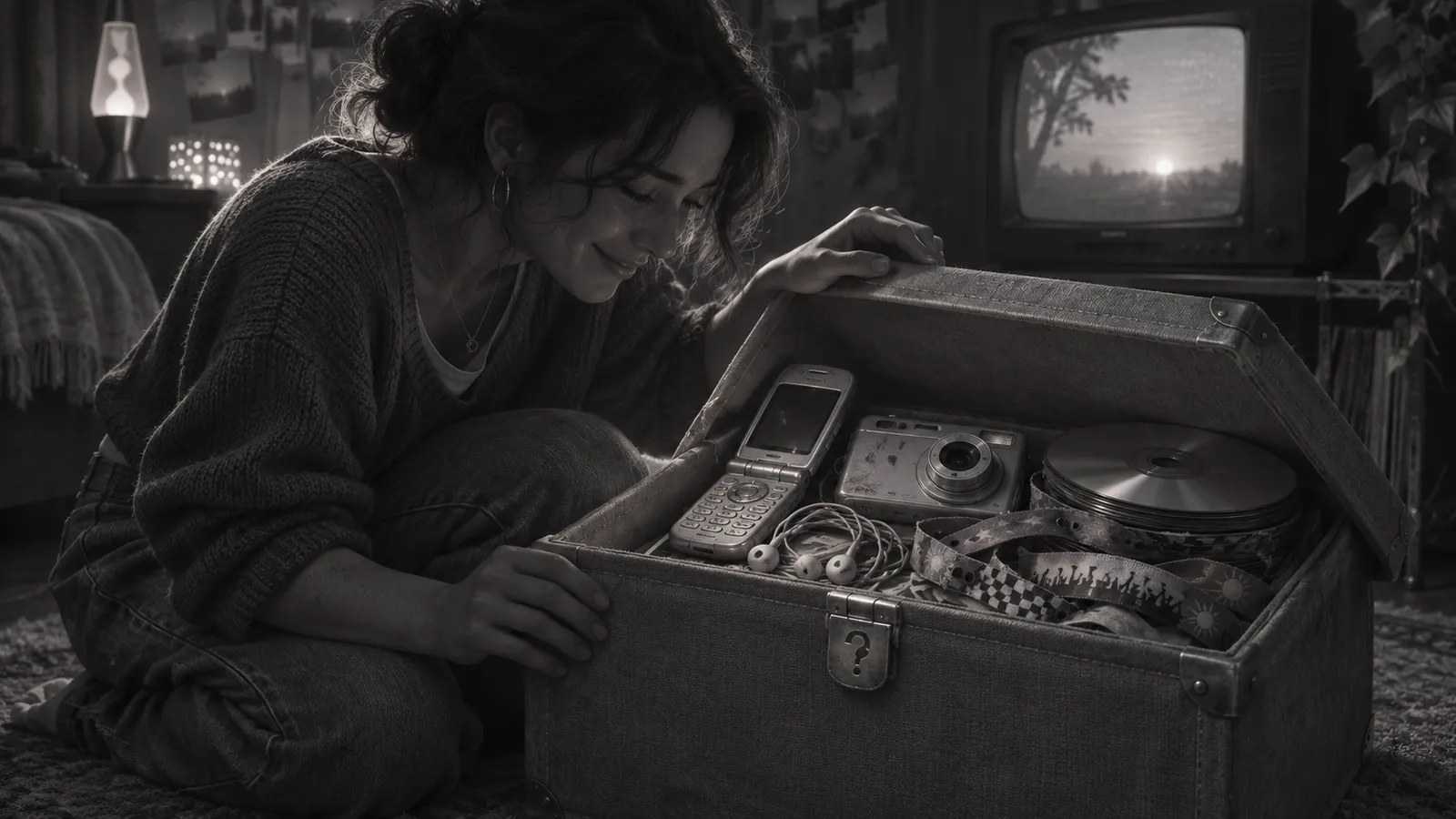
What studies of nostalgia say about why a whole age group looks back together, and where the explanation for the 2000s and 2016 holds less well.
Answer to the question
Why is everyone nostalgic for the 2000s and 2016?
Many people are nostalgic for the 2000s and 2016 because studies find nostalgia rises with a low mood and loneliness, and that shared memories bind an age group together. Nostalgia for the 2000s mixes lived and borrowed memories. Why those particular years were chosen has not been tested.
Key takeaways
- In seven studies, Tim Wildschut and colleagues found that a negative mood and loneliness bring on nostalgic memories, which usually centre on the self with close others and carry more positive feeling than negative (2006).
- In four studies, recalling a nostalgic event shared with a group made people view that group more favourably and want to approach its members more (Wildschut and colleagues, 2014).
- A 2013 replication of a classic music study confirmed a preference peak but moved it from about 17 years old to about 23.5 (Hemming).
- Marchegiani and Phau argued in 2010 that personal nostalgia and historical nostalgia differ in their effects and should be studied separately.
- Students in 18 countries, 1,704 in all, agreed strongly on what nostalgia is, supporting the view that it is found across cultures (Hepper and colleagues, 2014).
In January 2026, photo and video feeds filled with pictures from ten years earlier. A public radio report on the trend described people posting clips of their own 2016, and a pop culture writer it cited gave a plain reason: that year felt like the last time audiences widely followed the same films, music and television. The pull toward the early 2000s was reported four years before, when a business magazine reported a surge of short videos tagged with that era, with young shoppers hunting for its clothes and gadgets. Being nostalgic for the 2000s and for 2016 looks like one wave, and the research points to two forces inside it.
What makes a whole age group nostalgic together
Nostalgia has a reliable trigger. In seven studies published in 2006, Tim Wildschut and colleagues found that a negative mood and loneliness bring nostalgic memories on, that those memories usually centre on the self with close others or on turning points, and that they carry more positive feeling than negative. The same studies found that the memories strengthen social bonds, self-regard and positive feeling.
The New Psychology, by Adrian Furnham, reaches the same place and presents nostalgia as a past-oriented emotion with three jobs: connecting a person to others, giving life meaning and keeping a sense of being the same person over time. His account has loneliness raising nostalgia, and it notes that retailers use scent, sound and lighting to bring it on, while the effects of such cues are modest and fade quickly.
Apply that to a decade. When many people in one age group meet the same strain at the same time, they also share the same reason to look back. The business magazine report on the 2000s revival ties the throwback to young people seeking comfort in a period of disruption and notes that researchers see nostalgia rising in a crisis.
Memories can belong to a group as well as a person. In a 2014 paper with four studies, recalling a nostalgic event shared with fellow members of a group made people view that group more favourably and want to approach its members more, compared with personal nostalgia or other positive shared memories. A generation that grew up on the same shows, songs and early internet holds a large store of such events, so a photo from 2016 reads as a shared joke and not a private one.
The pop culture writer's point about 2016 fits that logic. If fewer films and songs now reach everyone at once, a year when many did becomes the obvious place to meet. The content of the memories matters too. Nostalgic recall in the 2006 studies centred on people and events, so a feed that shows friends, parties and shared jokes from a given year gives viewers more to attach a nostalgic memory to than a feed of headlines would. Early photo apps and group chats left a large record of exactly that kind of moment, which makes the year easy to revisit.
Where the explanation holds less well
A fixed golden age does not hold up cleanly. A classic study of music preference found a peak at a certain age, and a 2013 replication by Jan Hemming confirmed a peak but moved it from about 17 years old to about 23.5. Someone who was 23 in 2016 is in their early thirties now, and the article Why We Love the Music of Our Teens covers the older version of this window.
The 2000s add a second complication. Christopher Marchegiani and Ian Phau argued in 2010 that personal nostalgia, for a time a person lived, and historical nostalgia, for a time known through stories and media, differ in their effects on thoughts, feelings and purchase intentions, and that treating them as one concept can mislead. People who were children in the 2000s and people too young to remember them are both nostalgic for the same decade, though not in the same way.
Looking back is also not particular to this moment. Erica Hepper and colleagues asked students in 18 countries, 1,704 in all, to rate 35 features of nostalgia and found strong agreement on which features are central, supporting the view that nostalgia is a pancultural emotion. If the emotion is that widespread, a decade-specific story has to add something to it.
How accurate those memories are is a separate matter, weighed in Your Nostalgia Is Lying to You. The question here is which years get picked, and for that the evidence is partial. What the studies support is the mechanism: a group that is nostalgic needs a trigger, a shared store of memories and a place to meet. What they do not yet supply is a reason for the particular calendar year, and the claim about 2016 as the last widely shared year of culture is a writer's observation that a researcher could test with viewing and listening records.
How the accounts line up side by side
| Account | Source | What it explains | What it leaves open |
|---|---|---|---|
| Nostalgia is triggered by a low mood and loneliness | Wildschut and colleagues, 2006 | Why looking back rises when times feel unsettled | Which year a group picks |
| Shared memories bind a group | Wildschut and colleagues, 2014 | Why a decade becomes a common reference | Whether a generation behaves like a lab group |
| The preference peak sits in the early twenties | Hemming, 2013 | Why a year from a person's early twenties may stand out | A link to calendar years |
| Personal and historical nostalgia differ | Marchegiani and Phau, 2010 | Why the 2000s pull people who lived them and people who did not | Size of each |
| The emotion is found across cultures | Hepper and colleagues, 2014 | Why the pull is not unique to one era | Why this decade now |
| 2016 was the last widely shared culture | Public radio report, 2026 | Why that year in particular | Not tested in a study |
Why both decades can feel true at once
The two decades draw on different material. For the people who were young in the 2000s, the pull is a mix of remembered childhood and a borrowed picture assembled from films, clothes and old videos. For 2016, it is mostly a person's own recent past, close enough to recognise every detail and far enough that the old phone and the old apps feel foreign. Neither pull needs the other to be true, which is why one feed can carry both. The research behind both is the same: a low or unsettled mood sends people toward memories shared with others, and a group with common memories finds them in common places.
A decade is a long span and a year is a short one, so the two pulls do not need the same explanation. Generation labels explain less than they seem to, as Are Generational Differences Real shows, so the safer reading is about shared experience and not about a type of person. That experience is also why a familiar film or series gets watched again, the habit behind Why is rewatching a favourite film so satisfying.
It is also worth noticing who is nostalgic for what. A person in their thirties can be nostalgic for 2016 as a recent chapter of their own life and for the 2000s as childhood, and a person in their twenties can be nostalgic for the 2000s as a time borrowed from older siblings and screens.
Common questions
Why is everyone nostalgic for the 2000s and 2016?
Studies find nostalgia rises with a low mood and loneliness, and that shared memories bind a group. When one age group shares both a strain and a stock of memories, a decade or a year becomes a common place to meet. Why those years in particular is not settled.
Is nostalgia for a time you never lived through the same thing?
Researchers distinguish personal nostalgia, for a time lived, from historical nostalgia, for a time known through media. A 2010 review argued the two have different effects and should be studied separately.
Is nostalgia different in different countries?
A study of students in 18 countries found strong agreement on what nostalgia is, supporting the view that it is found across cultures.
Why might 2016 appeal to people now in their thirties?
One replication of a music study placed the preference peak at about 23.5 years old. Someone of that age in 2016 is in their thirties now, though the link to calendar years has not been tested.
Sources
Furnham, A. The New Psychology. Seed book; vault hub Books/The New Psychology.
Wildschut, T., Sedikides, C., Arndt, J., & Routledge, C. (2006). Nostalgia: Content, triggers, functions. Journal of Personality and Social Psychology, 91(5), 975-993. doi:10.1037/0022-3514.91.5.975 https://doi.org/10.1037/0022-3514.91.5.975
Wildschut, T., Bruder, M., Robertson, S., van Tilburg, W. A. P., & Sedikides, C. (2014). Collective nostalgia: A group-level emotion that confers unique benefits on the group. Journal of Personality and Social Psychology, 107(5), 844-863. doi:10.1037/a0037760 https://doi.org/10.1037/a0037760
Hemming, J. (2013). Is there a peak in popular music preference at a certain song-specific age? A replication of Holbrook & Schindler's 1989 study. Musicae Scientiae, 17(3), 293-304. doi:10.1177/1029864913493800 https://doi.org/10.1177/1029864913493800
Marchegiani, C., & Phau, I. (2010). Away from Unified Nostalgia: Conceptual differences of personal and historical nostalgia appeals in advertising. Journal of Promotion Management, 16(1-2), 80-95. doi:10.1080/10496490903572991 https://doi.org/10.1080/10496490903572991
Hepper, E. G., Wildschut, T., Sedikides, C., Ritchie, T. D., Yung, Y.-F., Hansen, N., and others (2014). Pancultural nostalgia: Prototypical conceptions across cultures. Emotion, 14(4), 733-747. doi:10.1037/a0036790 https://doi.org/10.1037/a0036790
Public radio report (16 January 2026). Why reliving 2016 is the new social media trend. https://www.kasu.org/education-and-community-culture/2026-01-16/why-reliving-2016-is-the-new-social-media-trend
Khan, M. (7 March 2022). Gen Z fuels the Y2K fashion trend. Fortune. https://fortune.com/2022/03/07/gen-z-fuels-y2k-fashion-trend/