Jan Gehl
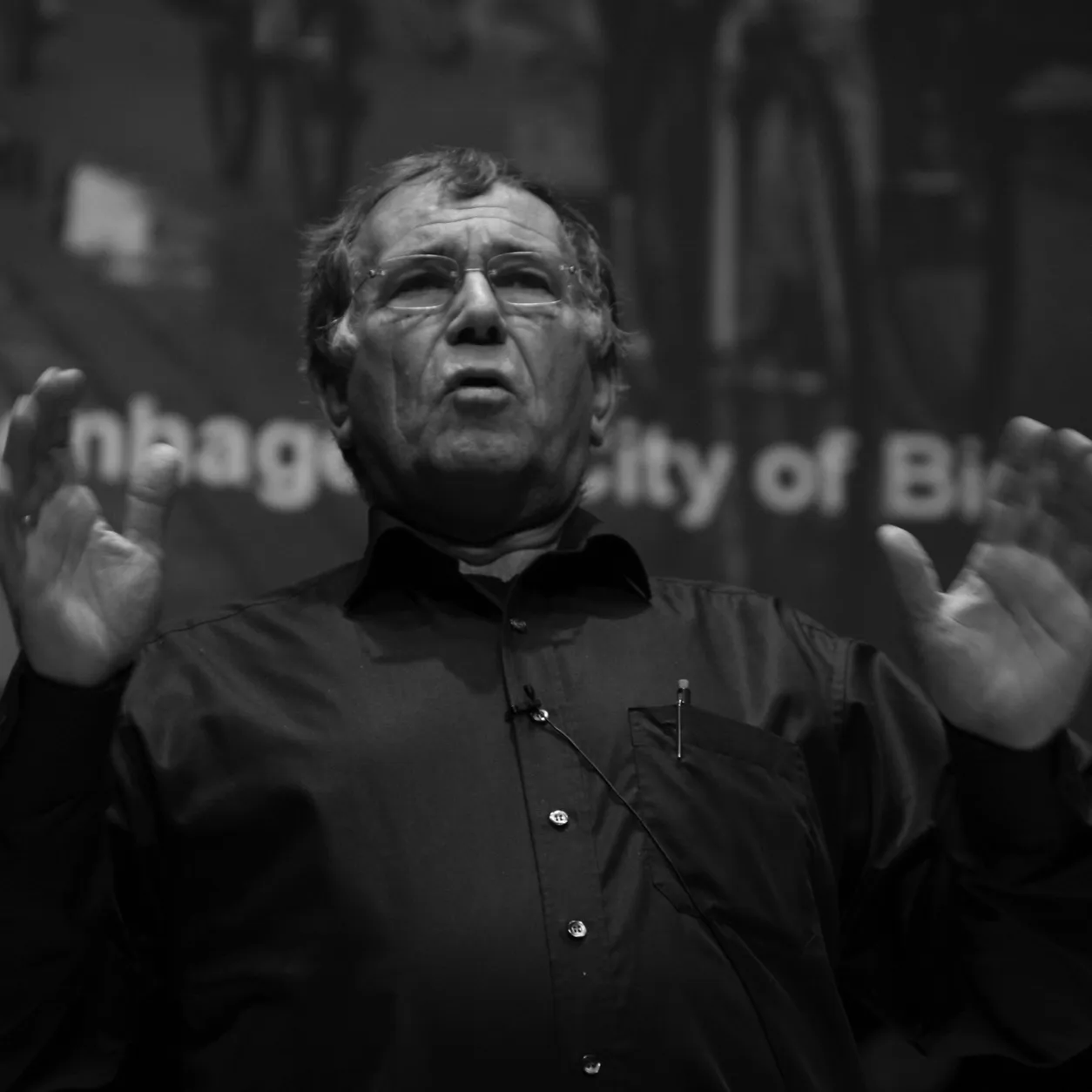
Jan Gehl is a Danish architect and urban designer. On this site he appears as first author, with Kaefer and Reigstad, of Close encounters with buildings (2006), the source of the finding that stops are far more frequent in front of active facades.
Who they are
The vault note records that he studied public life from the 1960s, with his wife Ingrid, an environmental psychologist. His facade observations are cited by Charles Montgomery in Happy City.
Key papers
- Gehl, J., Kaefer, L. J., & Reigstad, S. (2006). Close encounters with buildings. Urban Design International, 11(1), 29-47.
Key ideas
The paper argues that large buildings must meet people of small stature and slow pace at the ground floor, which needs welcoming design. The published summary reports that in front of active facades pedestrians walk more slowly and more of them stop, and that stops and other activities are about seven times as frequent as in front of passive facades. The summary was published with Gehl's permission in The City at Eye Level. Montgomery also repeats Gehl's point that people are drawn by the sight of other people.
Sources
- Gehl, J., Kaefer, L. J., & Reigstad, S. (2006). Close encounters with buildings. Urban Design International, 11(1), 29-47. https://doi.org/10.1057/palgrave.udi.9000162
- Montgomery, C. Happy City: Transforming Our Lives Through Urban Design. Penguin, 2013.
Studies on this site by Gehl
- Close encounters with buildings
Gehl (2006)
Articles that cite Jan Gehl
- Why Some Streets Make Us Slow Down
The pace of a street is set at eye level. Open, varied ground floors slow people down, and seats, shelter and familiar businesses give them a reason to stay.
Concepts on this site
- Active Frontage
Active frontage is a ground floor with frequent doors, windows, displays and uses facing the pavement, as opposed to blank walls or long uniform fronts. In reported observations, people walked more…
- People Attract People
People attract people is the observation that people are drawn by the sight of other people doing things in a public space. A seated, talking group becomes part of what makes a street worth stopping…